

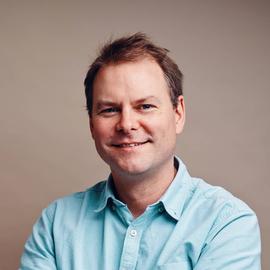
 Jamie Shotton
· 4 previous affiliations
- WayveSince 2021
- Chief Scientist · Since 2021
- Microsoft (United States)2008–2021
- Partner Director of Science · 2018–2021
- Partner Scientist Lead · 2016–2021
- Researcher · 2008–2016
- Toshiba (Japan)2007–2008
- Toshiba Fellow · 2007–2008
- University of Cambridge1999–2007
- Doctor of Philosophy (PhD), Computer Vision · 2003–2007
- Graduate Student · 1999–2007
- Master of Arts (M.A.), Computer Science · 1999–2002
Research Overview
Jamie Shotton focuses on computer vision, 3D scene understanding, and human pose estimation. His early research developed foundational techniques for semantic segmentation and depth-based tracking using decision forests and conditional random fields. More recently, his focus has shifted toward differentiable camera localization and generative world models for autonomous systems.
Research Trajectory
Jamie Shotton’s research trajectory demonstrates a sustained focus on extracting structured 3D information from visual data, evolving from early work in 2D semantic segmentation to real-time 3D tracking and neural camera localization.
In the late 2000s, Shotton led efforts in multi-class object recognition and image understanding. As first author of TextonBoost for Image Understanding: Multi-Class Object Recognition and Segmentation by Jointly Modeling Texture, Layout, and Context., he developed a discriminative model that combined novel texture-layout filters with conditional random fields (CRFs). This approach allowed for the joint modeling of shape, texture, and spatial context. By utilizing shared boosting for unary classification and feature selection, the system provided a highly efficient classifier capable of handling a large number of object classes, while the CRF ensured accurate, spatially consistent image segmentation.
By the early 2010s, Shotton’s focus expanded to depth data and human pose estimation, coinciding with the rise of commodity RGB-D sensors. He was the first author on Efficient Human Pose Estimation from Single Depth Images., a highly influential project that predicted 3D body joint positions from single depth images without relying on temporal information. A key innovation of this work was the use of a massive, highly varied synthetic dataset to train models invariant to body shape, clothing, and pose. The methodology explored both an intermediate body parts representation—where per-pixel classification localized the joints—and the direct regression of joint positions. During this period, his methodological toolkit frequently incorporated randomized decision forests, contributing to the broader research direction of Decision Graphs for Compact Logic Representation to achieve fast, pixel-wise classification and interest point detection in depth data.
Moving into the mid-2010s, Shotton took on senior leadership roles in real-time 3D tracking. As the principal investigator and last author of Model-Based Tracking at 300Hz Using Raw Time-of-Flight Observations., he guided research that bypassed the low frame-rate limitations of standard consumer depth cameras. By utilizing raw infrared captures from phase-based time-of-flight (ToF) sensors, the system reconstructed the object's depth at an order of magnitude higher frame rate. This innovation enabled the robust model-based tracking of rigid, articulated, and deformable 3D objects even during fast and unpredictable motions.
In subsequent years, Shotton participated in the transition toward deep learning and differentiable pipelines for spatial computing. He was a co-author on DSAC - Differentiable RANSAC for Camera Localization, which addressed the non-differentiable nature of traditional RANSAC hypothesis selection. Inspired by reinforcement learning, this work introduced a probabilistic selection mechanism that allowed researchers to derive the expected loss, enabling robust optimization algorithms to be trained end-to-end within deep neural networks. This marked a growing engagement with the area of Scene Agnostic Neural Camera Relocalization. He continued to explore this domain as a co-author of Multi-Output Learning for Camera Relocalization. This work framed camera relocalization as the inversion of a generative rendering procedure—a nonconvex optimization problem with many local optima. The proposed hybrid discriminative-generative architecture generated multiple camera pose hypotheses and utilized an aggregator to infer the best pose based on a similarity function.
Throughout this evolution, Shotton's collaborative work has frequently intersected with several advanced themes in 3D vision. His trajectory reflects a continuous effort to overcome computational bottlenecks in spatial representation, touching upon themes such as Implicit Neural Representations for Compact and Queryable Data and the broader area of Scaling 3D Representations Beyond the Memory Wall. His research interests have also encompassed related fields like the research direction of Dense Visual SLAM with 3D Gaussian Splatting and work in the area of Low-Rank Tensor Decomposition for Efficient Scene Representation.
Current Directions
The most recent papers in the evidence indicate a shift toward generative AI and its application to autonomous systems. Recent work investigates the development of scalable generative world models capable of simulating complex, multi-agent environments. As a co-author of GAIA-2: A Controllable Multi-View Generative World Model for Autonomous Driving, Shotton has contributed to latent diffusion frameworks designed to meet the strict domain requirements of autonomous driving. This research addresses open problems in fine-grained control and multi-camera consistency, enabling the generation of high-resolution, spatiotemporally consistent videos. These models are conditioned on a rich set of structured inputs, including ego-vehicle dynamics, agent configurations, environmental factors, and road semantics. This current direction represents a synthesis of his historical expertise in 3D scene understanding with modern generative paradigms, focusing on the scalable simulation of physical worlds.
Profile updated
Loading new papers…
Other researchers whose papers cluster into the same research directions — a proxy for overlapping technical interests and shared intellectual neighborhoods.
See something wrong? Report a mistake