

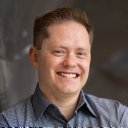
 Jake C. Snell
· 2 previous affiliations
- Princeton UniversitySince 2022
- Postdoc · Since 2022
- University of Toronto2012–2022
- Postdoc · 2021–2022
- PhD student · 2014–2021
- MS student · 2012–2014
Research Overview
Jake C. Snell focuses on trustworthy deep learning, probabilistic modeling, and meta-learning. His research trajectory bridges Bayesian inference with modern neural architectures to improve model robustness in limited-data environments. Currently, he investigates distribution-free risk control and scalable Bayesian adaptation for large language models to ensure reliable AI deployment.
Research Trajectory
During his doctoral studies at the University of Toronto, Snell's early research addressed the challenge of generalizing to unseen classes with minimal data. As first author, he developed Prototypical Networks for Few-shot Learning (2017), which introduced a metric space approach where classification is performed by computing distances to class prototype representations. This work demonstrated that a simpler inductive bias could outperform more complex architectural approaches in the limited-data regime, establishing a foundational method in few-shot classification.
Recognizing the need to better quantify uncertainty and mitigate overfitting in few-shot scenarios, his focus shifted toward probabilistic modeling. This evolution culminated in Bayesian Few-Shot Classification with One-vs-Each Pólya-Gamma Augmented Gaussian Processes (2021). In this work, he proposed a Gaussian process classifier that avoids the slow, memory-intensive posterior maintenance of contemporary Bayesian methods, enabling more efficient adaptation to new tasks by allowing practitioners to specify and update prior beliefs.
Building on these probabilistic foundations, Snell began investigating how to accelerate Bayesian inference using deep learning architectures. He led the development of A Metalearned Neural Circuit for Nonparametric Bayesian Inference (2023), which distilled the inductive biases of nonparametric models into a recurrent neural network. This approach achieved significant speedups over traditional particle filters while maintaining strong clustering performance in open-set environments. Concurrently, he contributed to advancing Bayesian filtering techniques in high-dimensional spaces. As second author on Implicit Maximum a Posteriori Filtering via Adaptive Optimization (2023), he helped frame the filtering problem as an optimization over a time-varying objective, bypassing the need for large matrix operations or particle simulations.
More recently, Snell's trajectory has expanded to address the reliability of large language models (LLMs). He participated as a co-author in Prompt Risk Control: A Rigorous Framework for Responsible Deployment of Large Language Models (2024), contributing to a statistical framework that bounds worst-case outcomes and generation disparities to ensure safer prompt selection. Returning to his core expertise in meta-learning and probabilistic modeling, he recently led Amortized Bayesian Meta-Learning for Low-Rank Adaptation of Large Language Models (2025). This paper introduced a scalable framework combining LoRA adapters with a generative probabilistic model, improving generalization to unseen tasks and uncertainty quantification with minimal memory overhead.
Current Directions
The most recent papers in the evidence indicate a strong focus on the reliability, transparency, and safety of deployed AI systems. A major current direction involves the research area of Distribution-Free Risk Control for Reliable Machine Learning, where Snell investigates statistical guarantees for model performance, particularly concerning how algorithmic decisions impact different subpopulations and how to control the dispersion of loss distributions.
Additionally, his recent work addresses the broader theme of Calibrating Neural Network Confidence for Reliable Predictions. This includes developing post-hoc recalibration methods to ensure that deep learning systems accurately express their predictive uncertainty, moving beyond simple temperature scaling to more expressive feature embedding spaces.
Finally, he is actively engaged in the research direction of Fairness and Reliability in Selective Classification, exploring how models can safely abstain from making predictions when uncertain, thereby minimizing catastrophic failures in high-stakes environments.
Profile updated
Loading new papers…
Other researchers whose papers cluster into the same research directions — a proxy for overlapping technical interests and shared intellectual neighborhoods.
See something wrong? Report a mistake