

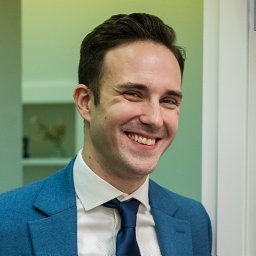
 Jake A Vasilakes
· 5 previous affiliations
- University of SheffieldSince 2023
- Postdoc · Since 2024
- Research Associate in Natural Language Processing and Machine Learning · Since 2023
- University of Manchester2020–2024
- Postgraduate Researcher in Natural Language Processing · 2020–2024
- University of Minnesota2017–2020
- Natural Language Processing Researcher · 2017–2020
- Research Assistant - Speech Processing · 2016
- University of Edinburgh2014–2015
- Master of Science (MSc), Speech and Language Processing · 2014–2015
Research Overview
Jake A Vasilakes focuses on clinical natural language processing, biomedical knowledge extraction, and representation learning. His early collaborative work centered on developing knowledge bases and interactive visualizations for dietary supplements. More recently, his research investigates advanced extraction methods for clinical text, emphasizing the modeling of linguistic phenomena such as negation and uncertainty in medical contexts.
Research Trajectory
Jake A Vasilakes’s research trajectory begins in biomedical informatics, with an initial focus on structuring and visualizing consumer health information. Between 2018 and 2020, he participated in several collaborative projects aimed at organizing scattered online information regarding dietary supplements. This work involved analyzing consumer questions from social media platforms using unsupervised topic modeling to identify public information needs, as detailed in Analyzing Social Media Data to Understand Consumers' Information Needs on Dietary Supplements. These insights contributed to broader efforts to build accessible health resources, culminating in his second-author contribution to iDISK: the integrated DIetary Supplements Knowledge base, a curated resource designed to integrate scientific data on dietary supplements for both consumer and clinical use.
In 2021, Vasilakes’s focus shifted more directly toward clinical natural language processing (NLP) and entity recognition. He collaborated on An Empirical Study of UMLS Concept Extraction from Clinical Notes using Boolean Combination Ensembles, which evaluated how combining outputs from multiple NLP systems affects the performance of Named Entity Recognition for Unified Medical Language System (UMLS) concepts across different clinical corpora.
By 2022, his work transitioned to leading methodological research in clinical NLP, focusing on the nuanced representation of medical events and their linguistic modifiers. As first author, he led Learning Disentangled Representations of Negation and Uncertainty. In clinical text, determining whether a symptom is present, absent, or merely suspected is critical for accurate data extraction. This research addresses the challenge of separating the core semantic meaning of a medical concept from its certainty or negation status. Work on uncertainty in NLP frequently intersects with the broader research direction of Learning from the Distribution of Human Annotations, as annotators often diverge when interpreting subjective or ambiguous clinical language, touching on related themes such as Learning from Noisy Crowdsourced Annotations.
Building on this foundation in clinical event representation, Vasilakes led further first-author research in 2023 with Contextualized medication event extraction with levitated markers. This work advanced the extraction of complex medication events from clinical notes, utilizing levitated markers to better capture the contextual relationships between medications, dosages, and related clinical attributes.
Current Directions
Based on the most recent papers in the evidence, which date to 2023, Vasilakes’s current research directions center on advanced information extraction from clinical text. His recent work investigates how to accurately capture complex, multi-part clinical events—such as medication regimens—using contextualized language models. A major ongoing theme is the robust modeling of linguistic modifiers, ensuring that NLP systems can accurately distinguish between affirmed, negated, and uncertain medical events. This focus suggests a continued interest in improving the precision and reliability of automated clinical data extraction for downstream healthcare applications.
Profile updated
| Title | Venue | Year |
|---|---|---|
| Contextualized medication event extraction with levitated markers | Journal of Biomedical Informatics | 2025 |
| Learning Disentangled Representations of Negation and UncertaintyGitHub resource | ACL | 2022 |
| An Empirical Study of UMLS Concept Extraction from Clinical Notes using Boolean Combination Ensembles | arXiv | 2021 |
| iDISK: the integrated DIetary Supplements Knowledge base | J. Am. Medical Informatics Assoc | 2020 |
| ALOHA: developing an interactive graph-based visualization for dietary supplement knowledge graph through user-centered design | Bmc Medical Informatics Decis. Mak | 2019 |
| Analyzing Social Media Data to Understand Consumer Information Needs on Dietary Supplements | Medinfo | 2019 |
| Prototyping an Interactive Visualization of Dietary Supplement Knowledge Graph | BIBM | 2018 |
Loading new papers…
Other researchers whose papers cluster into the same research directions — a proxy for overlapping technical interests and shared intellectual neighborhoods.
See something wrong? Report a mistake