

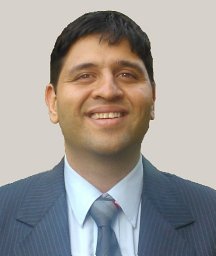
 Jaideep Vaidya
· 2 previous affiliations
- Vice Dean for Faculty Affairs and Research · Since 2025
- Distinguished Professor · Since 2022
- Director of the Rutgers Institute for Data Science, Learning, and Applications · Since 2020
- Full Professor · 2015–2022
- Purdue University West Lafayette1999–2004
- Ph.D., Computer Science · 1999–2004
Research Overview
Jaideep Vaidya focuses on privacy-preserving data mining, secure distributed computation, and applied cryptography for sensitive domains. His research trajectory spans early foundational toolkits for distributed data privacy to advanced cryptographic protocols for secure record linkage. Most recently, his work addresses computational integrity, verifiability, and trust in outsourced genomic and healthcare systems.
Research Trajectory
Vaidya’s early research established foundational approaches to privacy-preserving data mining, exploring how distributed entities could collaboratively analyze data without exposing sensitive underlying records. By the early 2010s, this focus expanded into specific applications of differential privacy and secure multi-party computation. In Differentially private search log sanitization with optimal output utility, Vaidya and colleagues addressed the tension between privacy and data utility in web search logs, proposing techniques designed to maximize the analytical value of sanitized logs while adhering to strict privacy models. Concurrently, he investigated secure optimization problems, co-authoring Secure and efficient distributed linear programming. This work enabled collaborative agents in distributed and cloud environments to jointly optimize resource allocation without revealing their private local constraints or capacities.
In the late 2010s, Vaidya’s research increasingly targeted the healthcare domain, where the need to integrate fragmented patient data often conflicts with stringent privacy regulations. As senior author, he led the development of Perfectly Secure and Efficient Two-Party Electronic-Health-Record Linkage, which introduced a portable, garbled-circuit-based method for privacy-preserving record linkage. This approach allowed different clinical sites to accurately match patient records without centralizing the data. He continued to refine these cryptographic matching techniques in Efficient determination of equivalence for encrypted data, contributing to less computationally intensive protocols that utilize precomputation to securely evaluate equivalence relations, thereby meeting regulatory risk criteria for medical data.
Moving into the 2020s, Vaidya’s focus broadened to encompass computational integrity and verifiability in outsourced scientific workflows, particularly in genomics. As principal investigator on Privacy-Preserving and Efficient Verification of the Outcome in Genome-Wide Association Studies, he designed frameworks that allow researchers to prove the correctness of their statistical tests while protecting individual participant privacy through local differential privacy mechanisms. He extended this focus on genomic data security in Efficient verification for outsourced genome-wide association studies, where his lab proposed novel techniques for detecting dishonest server operations during outsourced genomic analyses, incorporating game-theoretic incentive mechanisms to encourage honest computational behavior.
Current Directions
The most recent papers in the evidence indicate a strong focus on ensuring trust, reproducibility, and transparency in genomic research and outsourced computation. Recent work investigates the multifaceted challenges of genome-wide association studies (GWAS), where privacy protection, quality control, and verifiability must be balanced without inadvertently compromising one another. Additionally, Vaidya continues to participate in research on generalized cryptographic frameworks for data outsourcing, exploring property-preserving encryption schemes designed to secure diverse datasets—ranging from DNA sequences to geolocation data—against emerging inference attacks while maintaining high utility for complex downstream analyses.
Profile updated
Loading new papers…
Other researchers whose papers cluster into the same research directions — a proxy for overlapping technical interests and shared intellectual neighborhoods.
See something wrong? Report a mistake