

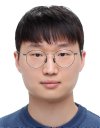
 Jaewoong Choi
· 3 previous affiliations
- Sungkyunkwan UniversitySince 2025
- Assistant Professor · Since 2025
- Korea Institute for Advanced Study2022–2025
- Postdoc · 2022–2025
- Seoul National University2011–2022
- PhD student · 2016–2022
- Undergrad student · 2011–2016
Research Overview
Jaewoong Choi focuses on generative modeling, optimal transport, and the geometric properties of latent spaces. His early work explored architectural improvements in capsule networks and the disentanglement of semantic representations in generative adversarial networks. More recently, his research centers on scaling neural optimal transport and leveraging unbalanced optimal transport to improve the stability, robustness, and efficiency of generative models and inverse problems.
Research Trajectory
Choi’s early research explored architectural improvements in deep learning, specifically addressing the computational bottlenecks of capsule networks. In Attention Routing Between Capsules (2019), he introduced a single-pass attention routing mechanism to replace traditional iterative dynamic routing and orientation-preserving "squash" activations. This approach significantly reduced parameter counts and training times while improving classification accuracy on complex datasets like CIFAR-10 and affNIST.
Following this architectural work, Choi shifted his focus toward the geometric properties of generative models, particularly analyzing the latent spaces of Generative Adversarial Networks (GANs). He investigated how local geometry relates to disentanglement, contributing to the research direction of Deterministic Latent Inversion for Semantic Manipulation. In Do Not Escape From the Manifold: Discovering the Local Coordinates on the Latent Space of GANs (2022), he proposed an unsupervised method to find semantic-factorizing directions based on local principal variations in the neighborhood of a base latent variable. He expanded on this geometric approach in Finding the Global Semantic Representation in GAN through Fréchet Mean (2023), deriving a global semantic basis using the Fréchet mean to enable sample-independent, meaningful perturbations across the entire latent space. He later continued to refine latent space evaluation with Analyzing the latent space of GAN through local dimension estimation for disentanglement evaluation (2025), proposing a layer-wise unsupervised disentanglement score, called Distortion, based on local intrinsic dimensions that provide an upper bound on semantic perturbations.
Concurrently with his GAN research, Choi began a sustained investigation into Optimal Transport (OT) and its applications in generative modeling. Recognizing that standard OT is highly sensitive to outliers, he and his collaborators explored Unbalanced Optimal Transport (UOT), which relaxes strict distribution-matching constraints. This led to Generative Modeling through the Semi-dual Formulation of Unbalanced Optimal Transport (2023), demonstrating that UOT provides better robustness against outliers, improved stability during training, and faster convergence. He further analyzed the training dynamics of OT-based models in Analyzing and Improving Optimal-Transport-based Adversarial Networks (2024), identifying the necessity of strictly convex discriminator losses and cost-based regularization for stability. This work intersects with the broader areas of Minimax Optimization for Neural Optimal Transport and The Dynamics of Minimax Optimization Instability. Also in 2024, he contributed to Scalable Wasserstein Gradient Flow for Generative Modeling through Unbalanced Optimal Transport, which introduced the Semi-dual JKO framework. By leveraging mathematical equivalences between the JKO discretization scheme and UOT, this method reduced training complexity from quadratic to linear, enabling scalable Wasserstein Gradient Flows for high-resolution images.
In 2025, Choi's primary focus deepened into resolving fundamental instabilities in neural optimal transport. In Improving Neural Optimal Transport via Displacement Interpolation, he guided the development of a dynamic, trajectory-based approach that utilizes a regularizer derived from the Hamilton-Jacobi-Bellman (HJB) equation to stabilize training for complex image-to-image translation tasks. He also addressed the phenomenon of "spurious solutions"—mathematically valid but practically incorrect transport maps—in Overcoming Spurious Solutions in Semi-Dual Neural Optimal Transport: A Smoothing Approach for Learning the Optimal Transport Plan. By identifying theoretical conditions based on the Hausdorff dimension of the source distribution and introducing a noise-smoothing technique, this work guaranteed convergence to the true transport plan even in complex one-to-many tasks like image colorization. Additionally, he applied UOT to continuous-time generative modeling in Reweighted Flow Matching via Unbalanced Optimal Transport for Long-tailed Generation, using an unsupervised majority score to correct bias and improve fidelity for minority modes in long-tailed distributions.
By 2026, Choi's research expanded the utility of UOT across diverse domains, heavily contributing to the area of Robust Distribution Alignment via Unbalanced Optimal Transport. He oversaw the development of UOTIP: Unbalanced Optimal Transport Map for Unpaired Inverse Problems, which learns transport maps from noisy measurements to clean signals, offering robustness to noise and class imbalance. He also pioneered applications in machine unlearning with Unlearning for One-Step Generative Models via Unbalanced Optimal Transport. This framework smoothly redistributes the probability mass of forgotten classes in high-speed models like Consistency Models and Flow Maps without requiring original training data. To address noisy data environments, he formalized Conditional Unbalanced Optimal Transport Maps: An Outlier-Robust Framework for Conditional Generative Modeling, advancing the field of Mitigating Outlier Sensitivity in Optimal Transport. Finally, he extended optimal transport to infinite-dimensional spaces in Neural Optimal Transport in Hilbert Spaces: Characterizing Spurious Solutions and Gaussian Smoothing, addressing functional data challenges and contributing to the direction of Overcoming the Curse of Dimensionality in Optimal Transport.
Current Directions
The most recent papers in the evidence indicate a strong focus on extending Unbalanced Optimal Transport (UOT) to specialized and complex machine learning paradigms. Recent work investigates how UOT can be leveraged for unpaired inverse problems and conditional generative modeling, specifically emphasizing robustness to noise, class imbalance, and outliers. Additionally, Choi is exploring the intersection of optimal transport and machine unlearning, developing methods to selectively erase concepts from high-speed generative models without degrading overall image quality or requiring access to the original training data. His theoretical investigations also address the application of neural optimal transport to infinite-dimensional Hilbert spaces, focusing on Gaussian smoothing techniques to ensure stable learning and overcome spurious solutions when processing functional data.
Profile updated
| Paper | Venue | Year |
|---|---|---|
| Unpaired Point Cloud Completion via Unbalanced Optimal TransportGitHubLEETK99/ | ICML | 2025 |
Loading new papers…
Other researchers whose papers cluster into the same research directions — a proxy for overlapping technical interests and shared intellectual neighborhoods.
See something wrong? Report a mistake