

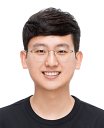
 Jaemin Yoo
· 4 previous affiliations
- Seoul National UniversitySince 2026
- Assistant Professor · Since 2026
- PhD student · 2016–2022
- Undergrad student · 2012–2016
- Nums AISince 2026
- Co-founder and CEO · Since 2026
- Assistant Professor · 2023–2026
- Carnegie Mellon University2022–2023
- Postdoctoral Fellow · 2022–2023
Research Overview
Jaemin Yoo focuses on data mining and machine learning, with particular emphasis on graph neural networks, time series analysis, and anomaly detection. The research trajectory spans from scalable inference on attributed networks to the development of robust, interpretable graph models and self-supervised learning techniques. Current work investigates foundation models for tabular and graph data, emphasizing in-context learning and structural generalization.
Research Trajectory
The early trajectory of this research focused on scalable inference and knowledge extraction. Initial work introduced Supervised Belief Propagation: Scalable Supervised Inference on Attributed Networks (2017), which addressed the challenges of performing supervised inference on large-scale networks. Subsequent research explored model compression and distillation, presenting Knowledge Extraction with No Observable Data (2019) to enable knowledge transfer without relying on original training datasets.
By 2022, the focus expanded to graph representation learning and data augmentation. To handle incomplete graph attributes, Yoo developed Accurate Node Feature Estimation with Structured Variational Graph Autoencoder. In parallel, the problem of graph classification was addressed through Model-Agnostic Augmentation for Accurate Graph Classification, which introduced NodeSam and SubMix as model-agnostic algorithms designed to preserve semantic identity while improving classification performance.
A major theme in 2023 was the pursuit of simplicity, interpretability, and robustness in graph mining, contributing significantly to the research direction of Linearized Graph Convolution. This was highlighted by the introduction of Less is More: SlimG for Accurate, Robust, and Interpretable Graph Mining, a linear architecture that outperformed complex non-linear Graph Neural Networks (GNNs) across diverse graph types. This principle was further formalized in SlenderGNN: Accurate, Robust, and Interpretable GNN, and the Reasons for its Success, which provided a framework to understand the fundamental differences among popular GNN models. During this period, Yoo also collaborated on Towards Deep Attention in Graph Neural Networks: Problems and Remedies, exploring challenges in the broader area of Node-Adaptive Neighborhood Aggregation Depth.
In the domain of anomaly detection, Yoo critically examined self-supervised learning methodologies. The study Data Augmentation is a Hyperparameter: Cherry-picked Self-Supervision for Unsupervised Anomaly Detection is Creating the Illusion of Success (2023) provided a comprehensive meta-analysis demonstrating that the alignment between data augmentation and anomaly-generating mechanisms is crucial for the success of self-supervised anomaly detection.
Recent work has increasingly targeted the architectural foundations of graph and tabular learning. In 2025, Yoo led research on Aggregation Buffer: Revisiting DropEdge with a New Parameter Block and developed a Parameter-Free Hypergraph Neural Network for Few-Shot Node Classification.
The trajectory then shifted toward foundation models and in-context learning across arbitrary structures. To enable fully inductive inference on numerical data with graph structures, Yoo's group introduced View Space: Learning Representation across Arbitrary Graphs (2026), advancing the area of Graph Attention Mechanisms for Adaptive Feature Aggregation. The evaluation of such models was formalized in NodeGround: A Node Classification Benchmark in the Graph Foundation Model Era. Further optimizing graph in-context learning, Message Passing Does More with Less for In-Context Learning on Graphs demonstrated that sparse message passing can achieve strong performance without the computational burden of dense attention.
Parallel efforts in 2026 explored tabular foundation models (TFMs). Distillation of Tabular Foundation Models into Efficient Predictors provided a recipe for transferring predictive ability to lightweight students, reducing inference costs. The application of TFMs to domain-specific challenges was demonstrated in Molecular Property Prediction under Structural Shift with Tabular Foundation Models, which utilized explicit molecular comparisons to strengthen in-context learning. Additionally, TaskBridge: Bridging Unsupervised Tabular Anomaly Detection and In-Context Learning via Virtual Tasks repurposed general-purpose TFMs for anomaly detection without requiring anomaly-specific pretraining.
Finally, Yoo's research encompasses time-series modeling and streaming data. Generalizing Multi-Scale Time-Series Modeling with a Single Operator (2026) unified existing scaling methods into a single architecture using a learnable discrete Gaussian kernel. In applied settings, Streaming Virtual Metrology via Lightweight Adaptation under Temporal Distribution Shifts proposed an online learning framework to maintain predictive accuracy in evolving manufacturing environments.
Current Directions
Recent work investigates the capabilities and efficiency of foundation models for structured data, particularly focusing on graph and tabular domains. The most recent papers address the challenges of in-context learning, seeking to reduce inference costs through knowledge distillation and sparse message passing architectures. Another active direction involves structural generalization, exploring how pretrained models can adapt to unseen datasets and structural shifts without task-specific parameter updates. Furthermore, ongoing research addresses multi-scale temporal dynamics, developing unified operators for time-series forecasting and adaptive frameworks for streaming data environments subject to distribution shifts.
Profile updated
Loading new papers…
Other researchers whose papers cluster into the same research directions — a proxy for overlapping technical interests and shared intellectual neighborhoods.
See something wrong? Report a mistake