

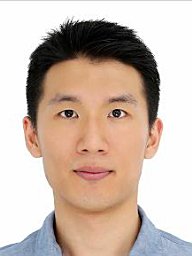
 Jaejin Cho
· 6 previous affiliations
- Samsung Research America (SRA)Since 2022
- Senior Research Scientist · Since 2022
- Amazon (United States)Since 2025
- Researcher · Since 2025
- Research Internship · 2019
- Samsung (South Korea)2022–2025
- Researcher · 2022–2025
- Johns Hopkins University2016–2022
- Doctor of Philosophy - PhD, Electrical and Computer Engineering · 2016–2022
- Graduate Researcher · 2018
- Undergraduate Research Assistant · 2016
- The University of Texas at Dallas2014–2015
- Bachelor's degree, Electrical and Computer Engineering · 2015
- Undergraduate Research Assistant · 2014–2015
Research Overview
Jaejin Cho focuses on speech and language processing, with a specific emphasis on self-supervised representation learning, speaker recognition, and the application of speech technologies to clinical health assessments. Cho’s work spans the development of robust Text Only Adaptation for End to End Speech Recognition systems, the extraction of utterance-level embeddings for emotion and speaker verification, and the utilization of generative models for signal restoration. This research trajectory reflects a transition from multi-modal emotion detection toward foundational problems in self-supervised learning (SSL) and the deployment of these models in low-resource or specialized clinical domains.
Research Trajectory
Cho’s early research, beginning around 2018, concentrated on multi-modal approaches to understanding human speech. This period involved integrating acoustic features with textual transcripts to improve emotion recognition, utilizing architectures such as LSTMs and multi-resolution CNNs to capture both prosodic and contextual information. This foundational interest in multi-modality evolved into a significant focus on Mitigating the Acoustic Mismatch in Atypical Speech Recognition. Between 2019 and 2021, Cho contributed to several studies evaluating how state-of-the-art automatic speech recognition (ASR) and speaker recognition systems perform on speech affected by neurodegenerative conditions, such as Parkinson’s Disease and Alzheimer’s Disease. This work involved Fine Grained Error Profiling for Speech Recognition Systems, moving beyond aggregate metrics like Word Error Rate (WER) to understand specific phonetic and character-level substitutions in clinical populations.
By 2020, Cho’s work shifted toward the challenge of representation learning, particularly in the context of speaker verification and verification-related tasks. A key theme in this period was the move toward self-supervised and non-contrastive learning methods. Cho explored how Text-to-Speech (TTS) reconstruction objectives could be used to learn speaker embeddings that are disentangled from phonetic information. This line of inquiry culminated in the adaptation of non-contrastive SSL methods—originally developed for computer vision—to the speech domain. Specifically, Cho investigated the use of Distillation with NO labels (DINO) to extract utterance-level information without the need for the negative sampling required by traditional contrastive methods.
In more recent years (2023–2025), Cho has expanded into advanced generative modeling and domain adaptation. This includes work on Hybrid Acoustic Modeling for Speech Recognition and the application of denoising diffusion probabilistic models (DDPMs) for signal restoration. These efforts address the limitations of standard Gaussian priors in diffusion models by incorporating jointly learned priors that leverage information from degraded signals. Additionally, Cho has addressed the problem of domain mismatch in speech enhancement, exploring how self-supervised representations can facilitate unsupervised domain adaptation when only noisy data is available in the target environment.
Clinical Applications and Atypical Speech
A significant portion of Cho's research explores the intersection of speech technology and healthcare. This work is characterized by the adaptation of External Language Model Integration for Neural Speech Recognition and speaker recognition back-ends to detect subtle markers of cognitive and motor impairment. In studies of Alzheimer’s Disease, Cho has utilized x-vectors and pre-trained BERT models to assess disease severity and predict Mini-Mental State Examination (MMSE) scores. This research emphasizes the complementarity of acoustic and linguistic features, demonstrating that while acoustic embeddings capture prosodic changes, language models can identify semantic and syntactic shifts associated with cognitive decline.
Cho’s analysis of Parkinson’s Disease focused on the comparative performance of Hybrid CTC Attention Sequence Learning and traditional DNN-HMM systems. By examining error patterns in speakers with PD, this work highlighted the specific challenges that atypical articulation poses to standard ASR pipelines, providing a basis for more inclusive speech technology.
Self-Supervised Representation Learning
The evolution of Cho’s work in speaker recognition is marked by a transition from supervised x-vector approaches to sophisticated self-supervised frameworks. A primary contribution in this area is the refinement of utterance-level embedding extraction. While frame-level SSL models like wav2vec 2.0 are effective, they often require significant computational resources when scaled to utterance-level tasks. Cho’s research has advocated for non-contrastive methods that avoid the complexities of negative pair selection, which can be particularly problematic in speech where "negative" samples might inadvertently share speaker or channel characteristics. By applying the DINO framework to speech, Cho demonstrated that models could learn highly discriminative representations for speaker, language, and emotion recognition that outperform traditional supervised baselines in transfer learning scenarios.
Current Directions
Cho’s current research focuses on the robustness and generative capabilities of speech models. This includes investigating cross-modal transfer using weighted contrastive losses to better align disparate data types, such as audio and visual signals in speaker recognition. Furthermore, the shift toward diffusion-based signal restoration suggests an interest in high-fidelity audio reconstruction. By moving away from naive Gaussian priors in conditional denoising diffusion models, Cho’s recent work seeks to improve the recovery of clean signals from highly degraded observations, a critical task for both consumer-grade ASR and clinical speech analysis.
Representative Work
Deep Neural Networks for Emotion Recognition Combining Audio and Transcripts This 2018 paper establishes Cho’s early interest in multi-modal fusion. It proposes a dual-stream architecture using an LSTM for acoustic features (such as f0, shimmer, and jitter) and a multi-resolution CNN for textual transcripts. The work demonstrates how temporal pooling and a weighted optimization of classification and verification losses can improve the detection of emotional states from conversational data.
Study of the Performance of Automatic Speech Recognition Systems in Speakers with Parkinson's Disease In this 2019 study, Cho examines the failure modes of end-to-end and hybrid ASR systems when processing speech from individuals with Parkinson’s Disease. The research provides a detailed breakdown of error patterns, including character-level and phonetic substitutions, highlighting the gap between standard ASR performance and the needs of speakers with motor-speech disorders.
Learning Speaker Embedding from Text-to-Speech This 2020 work explores self-supervised representation learning by using a TTS reconstruction objective. By jointly training a Tacotron 2 decoder with a speaker embedding network, Cho demonstrates that the model can learn to isolate speaker-specific characteristics from phonetic content, as the decoder relies on the textual input for the latter. This approach provides a method for enhancing speaker verification embeddings without explicit labels.
The JHU submission to VoxSRC-21: Track 3 As the lead author of this technical report, Cho details the application of the DINO (Distillation with NO labels) method to the VoxCeleb Speaker Recognition Challenge. The system utilizes non-contrastive self-supervised learning and iterative clustering to generate pseudo-labels, outperforming previous contrastive learning approaches (such as MoCo) and establishing a more efficient pipeline for self-supervised speaker verification.
Non-Contrastive Self-Supervised Learning for Utterance-Level Information Extraction From Speech This 2022 journal article formalizes Cho’s work on non-contrastive SSL for speech. It addresses the limitations of contrastive methods—specifically the requirement for large batches and the difficulty of negative sampling—by adapting the DINO framework to learn utterance-level representations. The resulting embeddings are shown to be highly effective for downstream tasks including emotion recognition and the detection of Alzheimer’s Disease.
RestoreGrad: Signal Restoration Using Conditional Denoising Diffusion Models with Jointly Learned Prior In this 2025 paper, Cho participates in the development of a novel signal restoration framework. The research addresses a fundamental limitation in Denoising Diffusion Probabilistic Models (DDPMs) by replacing the standard Gaussian prior with a jointly learned prior conditioned on degraded signals. This approach allows the model to better leverage the inherent information in noisy observations to generate high-fidelity clean signals.
Profile updated
Loading new papers…
Other researchers whose papers cluster into the same research directions — a proxy for overlapping technical interests and shared intellectual neighborhoods.
See something wrong? Report a mistake