

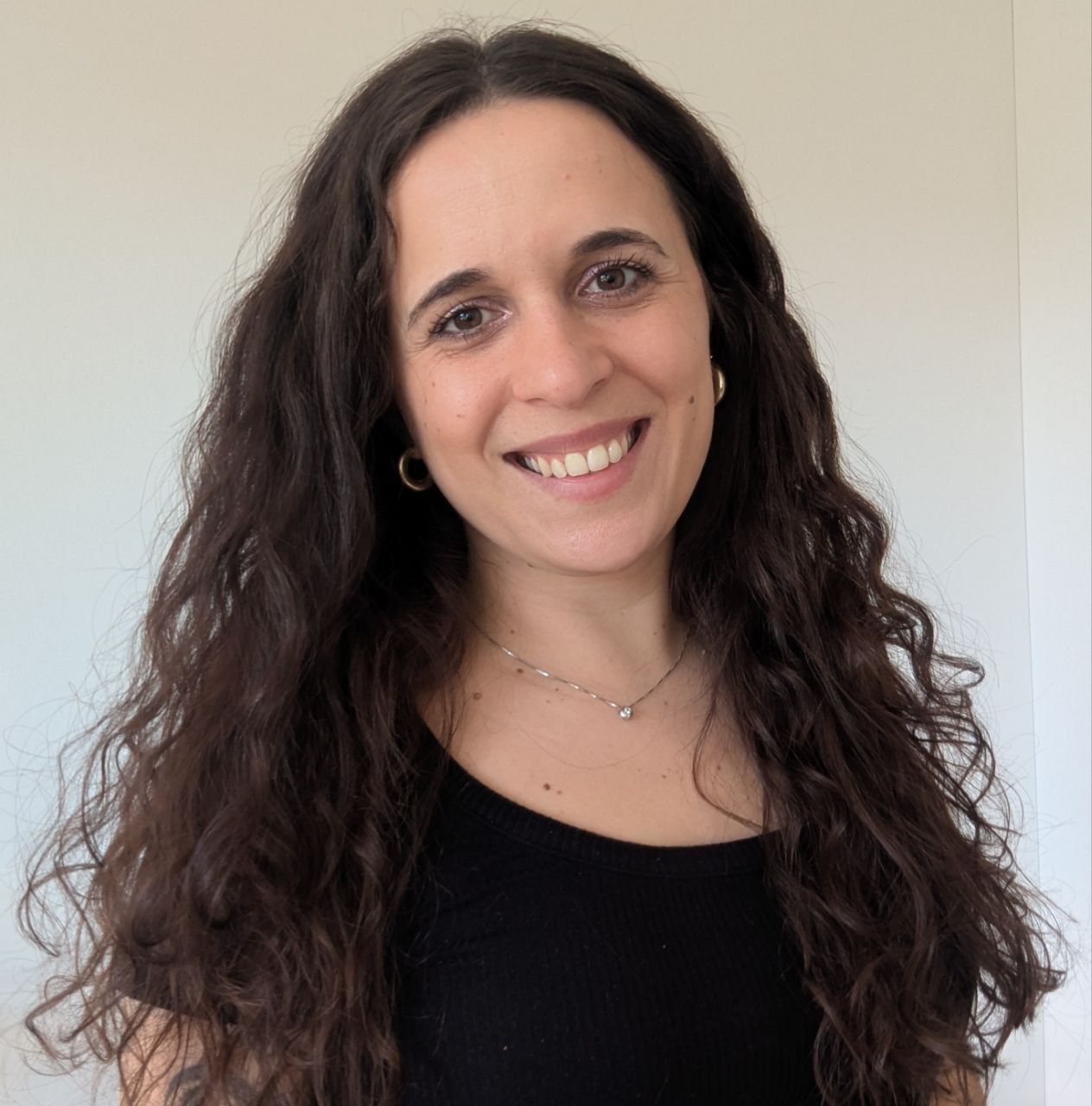
 Irene Cannistraci
· 4 previous affiliations
- ETH ZurichSince 2025
- Postdoctoral Researcher · Since 2025
- Lecturer · 2026
- Sapienza University of Rome2018–2025
- Doctor of Philosophy - PhD, Computer Science · 2020–2025
- Tutor - Computer Science Department · 2021–2024
- Teaching Assistant · 2023
- Master's degree, Computer Science · 2018–2020
- Helmholtz Munich2024
- Visiting Research Student · 2024
- Teaching Assistant · 2023–2024
Research Overview
Irene Cannistraci focuses on representation learning, foundation model efficiency, and multimodal machine learning. Her early work explored latent space communication and relative representations to align disparate neural networks. More recently, she investigates training-free compression techniques to reduce the computational burden of large models and develops self-supervised architectures for complex medical imaging and clinical data.
Research Trajectory
Early collaborative work involved the area of Anomaly Detection via Generative Manifold Projection, specifically applying generative adversarial networks to identify disguised or altered objects in low-altitude aerial video surveillance in A Novel GAN-Based Anomaly Detection and Localization Method for Aerial Video Surveillance at Low Altitude.
She then shifted focus to latent space communication, introducing optimization-based methods to discover semantic correspondences between different domains. In Bootstrapping Parallel Anchors for Relative Representations, she developed techniques to align relative spaces using a limited set of seed anchors, advancing the research direction of Relative Latent Representations via Anchor Points. She expanded on this concept in From Bricks to Bridges: Product of Invariances to Enhance Latent Space Communication, proposing methods to connect disparate neural architectures, such as integrating a vision transformer encoder with a residual network decoder without requiring additional training.
Observing that deep neural networks often learn similar internal representations, she began investigating structural inefficiencies to optimize model architectures. She introduced a metric for block redundancy in Detecting and Approximating Redundant Computational Blocks in Neural Networks, contributing to the area of Harnessing Parameter Redundancy in Deep Neural Networks. This foundational analysis enabled new approaches in the area of Training Free Compression of Deep Neural Networks. Building on these insights, she developed a framework detailed in TOAST: Transformer Optimization using Adaptive and Simple Transformations, which replaces redundant internal transformer blocks with simple linear or identity mappings calculated in closed-form. This significantly reduces parameters while maintaining downstream performance, advancing the broader field of Minimizing the Computational Cost of Post-Pruning Model Recovery. She further extended these approximation techniques to large vision models in Foundation Models on a Budget: Approximating Blocks in Large Vision Models, demonstrating how intra-network similarities can be leveraged to replace transformer blocks using minimal training data.
Concurrently, her research expanded into specialized domains, particularly healthcare and clinical data. She collaborated on self-supervised learning frameworks for radiology, such as the architecture presented in Structure is Supervision: Multiview Masked Autoencoders for Radiology, which aligns masked image reconstruction across multiple views to improve performance in low-data regimes, contributing to the area of Robust Deep Learning Amidst Medical Imaging Heterogeneity. She also participated in developing foundation models for cardiac analysis, including a latent attention mechanism for electrocardiogram time series in Foundation Model for Cardiac Time Series via Masked Latent Attention and multi-view echocardiography in Beyond Independent Frames: Latent Attention Masked Autoencoders for Multi-View Echocardiography.
Returning to her core focus on efficiency, she recently investigated the over-parameterization of tabular foundation models. In Tabular Foundation Models Are Effectively Shallow, she demonstrated that up to 94% of transformer blocks in these models can be replaced by a simple linear map fit on a small sample size. She applied this insight directly to healthcare in Block Redundancy in Tabular Foundation Models for Clinical Applications, showing how these massive models can be compressed to run on standard hospital hardware without sacrificing their zero-shot capabilities.
Current Directions
Recent work investigates the intersection of foundation model efficiency and specialized clinical applications. One primary focus is the extreme compression of tabular and vision foundation models, demonstrating that highly over-parameterized architectures can be drastically simplified using closed-form linear transformations while preserving zero-shot capabilities. Concurrently, she explores self-supervised learning for complex medical diagnostics, developing masked autoencoder frameworks that leverage the inherent multi-view structure of radiology and cardiac time-series data to build robust representations in data-scarce environments.
Profile updated
Loading new papers…
Other researchers whose papers cluster into the same research directions — a proxy for overlapping technical interests and shared intellectual neighborhoods.
See something wrong? Report a mistake