

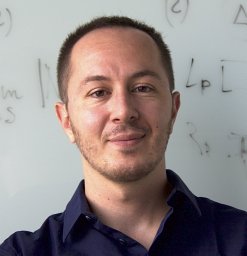
 Ioannis Arapakis
· 8 previous affiliations
- Universitat Pompeu FabraSince 2014
- Adjunct Professor at MSc Data Science · Since 2014
- Telefonica Research and DevelopmentSince 2017
- Principal Research Scientist at Telefónica Scientific Research · Since 2017
- Current
- Principal Researcher · 2017–2019
- Telefónica Innovación Digital (Spain)Since 2019
- Director at Telefonica Scientific Research · Since 2023
- Head of Scientific Research · Since 2019
- Yahoo Labs Barcelona2011–2015
- Research Scientist · 2011–2015
- Yahoo (Spain)2011–2015
- Researcher · 2011–2015
- University of Glasgow2007–2010
- PhD student · 2007–2010
- Research Internship · 2008
- KTH Royal Institute of Technology2005–2007
- Master of Science (MSc), Major in Information Technology with specialization in Interactive Systems · 2005–2007
Research Overview
Ioannis Arapakis focuses on recommender systems, human-computer interaction, and the alignment of artificial intelligence with human cognitive signals. His early work explored user behavior and affective feedback in information retrieval, later evolving into the development of reinforcement learning frameworks for sequential recommendation. Currently, his research investigates how physiological data, such as gaze and brain activity, can improve the alignment and performance of large multimodal models.
Research Trajectory
His early investigations into user behavior began with Affective feedback: an investigation into the role of emotions in the information seeking process, where he examined how relevance assessments can disambiguate user information needs. This work highlighted the importance of integrating emotional responses into the feedback cycle to better determine document relevance during interactive information retrieval. He later expanded this focus on user experience to mobile environments in Impact of Response Latency on User Behaviour in Mobile Web Search. Through a controlled study, he revealed that mobile users exhibit a significantly higher tolerance for latency compared to desktop users, though delays exceeding seven to ten seconds still substantially degrade the subjective search experience.
Around 2020, Arapakis's focus expanded into complex recommendation architectures. He contributed to the research direction of Mitigating Short-Term Engagement Bias in Recommender Systems through his work on Self-Supervised Reinforcement Learning for Recommender Systems. This research proposed a hybrid framework that merges the stability of self-supervised learning with the long-term optimization objectives of reinforcement learning, advancing the broader area of Multi-Task Reinforcement Learning for Sequential Recommendation. Building on this momentum, he guided the development of Graph Convolutional Embeddings for Recommender Systems, which utilized multi-partite graphs to process complex, context-based interaction signals—such as time, location, and historical sequences—to improve recommendation performance.
In a distinct methodological shift toward privacy and decentralized infrastructure, he introduced P4L: Privacy Preserving Peer-to-Peer Learning for Infrastructureless Setups in 2023. This fully decentralized machine learning framework utilizes partial homomorphic encryption to enable collaborative model training on mobile devices without centralized coordination, maintaining robust utility while resisting user churn and poisoning attacks.
By 2025, his research trajectory shifted significantly toward integrating human physiological and cognitive signals with artificial intelligence. A major theme of this recent work involves modeling human visual attention. In A Comparative Study of Scanpath Models in Graph-Based Visualization, his team evaluated how well computational models—such as DeepGaze++ and Gazeformer—predict human eye-movement patterns when interacting with abstract data, finding that specialized models better capture human exploratory logic. He extended attention modeling to search engine results pages in AdSight: Scalable and Accurate Quantification of User Attention in Multi-Slot Sponsored Search, treating cursor trajectories as a sequence-to-sequence translation task to predict fixations with near-second precision, offering a scalable alternative to specialized eye-tracking hardware.
Applying these cognitive insights to foundation models, he oversaw the development of the GazeReward framework in Seeing Eye to AI: Human Alignment via Gaze-Based Response Rewards for Large Language Models. This work demonstrated that incorporating synthetic gaze features—such as reading dwell time—into reward modeling significantly improves the alignment of large language models with human preferences. He further explored the intersection of biological and artificial neural networks in Brain-Language Model Alignment: Insights into the Platonic Hypothesis and Intermediate-Layer Advantage, reviewing fMRI studies to show that the internal representations of increasingly capable language models align closely with human brain activity, particularly in their intermediate layers. Concurrently, he investigated the integration of cognitive data into visual architectures in Improving Vision-LLMs with Human Cognitive Signals. Finally, in the domain of sequential recommendation, he contributed to Efficient and Effective Adaptation of Multimodal Foundation Models in Sequential Recommendation. This paper introduced the IISAN-Versa framework to decouple the fine-tuning process for large vision and language models, addressing model asymmetry and advancing the research direction of The Semantic Primacy of Text in Multimodal Recommendation.
Current Directions
The most recent papers in the evidence indicate a strong focus on aligning large foundation models with human cognitive and physiological signals. Recent work investigates how implicit human feedback—such as eye-tracking data, mouse cursor trajectories, and fMRI brain activity—can be utilized to improve the reward modeling and internal representations of large language and vision models. Additionally, Arapakis continues to advance sequential recommendation systems by exploring efficient adaptation strategies for multimodal foundation models, ensuring that massive architectures can be fine-tuned effectively for personalized user experiences.
Profile updated
Loading new papers…
Other researchers whose papers cluster into the same research directions — a proxy for overlapping technical interests and shared intellectual neighborhoods.
See something wrong? Report a mistake