

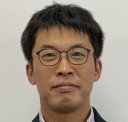
 Ichiro Takeuchi
· 3 previous affiliations
- RIKENSince 2016
- Principal Researcher · Since 2016
- Nagoya UniversitySince 2022
- Full Professor · Since 2022
- Current
- Nagoya Institute of Technology2015–2022
- Full Professor · 2015–2022
Research Overview
Ichiro Takeuchi focuses on statistical machine learning, specifically advancing valid post-selection inference, Bayesian optimization, and computational pathology. His trajectory spans foundational work in robust regression and pattern mining to rigorous uncertainty quantification for complex data pipelines. Currently, he develops selective inference frameworks and optimization methods for high-dimensional scientific and medical applications.
Research Trajectory
Early work addressed fundamental challenges in robust machine learning and optimization. In 2002, he explored regression techniques capable of handling asymmetric heavy-tail noise distributions, proposing conditional quantile estimators for data-mining applications in Robust Regression with Asymmetric Heavy-Tail Noise Distributions. This interest in quantile methods expanded into Nonparametric Quantile Estimation, where he introduced a quadratic programming approach that accommodated non-crossing and monotonicity constraints. Continuing to refine core machine learning algorithms, he contributed to Multiple Incremental Decremental Learning of Support Vector Machines, developing a multi-parametric programming technique to efficiently update models when multiple data points are simultaneously added or removed from a training set.
By the mid-2010s, his focus expanded to predictive pattern mining and the rigorous statistical validation of complex models. He introduced a safe pattern pruning method in Safe Pattern Pruning: An Efficient Approach for Predictive Pattern Mining, enabling the single-search identification of predictive patterns needed for optimal modeling. This work foreshadowed a major, sustained commitment to post-selection inference. In Selective Inference for Sparse High-Order Interaction Models, he addressed the computational and statistical hurdles of finding significant high-order interactions in predictive modeling. This paper marked a deep engagement with the research direction of Valid Statistical Inference After Data Dependent Selection and the related area of Valid Statistical Inference After Data Driven Selection. He further applied rigorous statistical controls to spatial data in Statistically Discriminative Sub-trajectory Mining with Multiple Testing Correction, ensuring that extracted moving patterns were evaluated against strict significance thresholds to prevent false discoveries.
In 2020, his methodological work branched into time series analysis and computational pathology. He advanced the statistical reliability of sequence segmentation in Computing Valid p-value for Optimal Changepoint by Selective Inference using Dynamic Programming, computing exact non-asymptotic p-values for detected change-points. Simultaneously, he addressed the high annotation costs of medical imaging in Multi-scale Domain-adversarial Multiple-instance CNN for Cancer Subtype Classification with Unannotated Histopathological Images. This work contributed to the broader area of Multi-Scale Feature Integration in Computational Pathology and the research direction of Attention Based Multiple Instance Learning, demonstrating how global and local features could be stably extracted across different magnifications to identify tumor-specific patterns.
Recent work demonstrates a prolific expansion of selective inference frameworks across diverse data science pipelines. He has developed methods to quantify uncertainty in deep learning, as seen in Quantifying Statistical Significance of Deep Nearest Neighbor Anomaly Detection via Selective Inference, which controls false positive rates for high-stakes applications. He also extended these rigorous testing frameworks to automated workflows in Statistical Test for Feature Selection Pipelines by Selective Inference and Statistical Test for Auto Feature Engineering by Selective Inference, addressing the risk of overfitting when features are generated in a data-driven manner. Furthermore, he adapted these techniques to complex structural shifts in Change Point Detection in the Frequency Domain with Statistical Reliability.
Parallel to his work in statistical inference, he has made significant contributions to Bayesian optimization. He provided theoretical grounding for randomized expected improvement in Regret Analysis of Posterior Sampling-Based Expected Improvement for Bayesian Optimization, proving sublinear cumulative regret bounds. He also applied Bayesian optimization to complex, uncertain environments in Bayesian optimization for distributionally robust chance-constrained problem and to accelerated drug discovery in Conditional Latent Space Molecular Scaffold Optimization for Accelerated Molecular Design, which integrates conditional variational autoencoders with latent space optimization. Returning to medical imaging, he recently explored non-Euclidean geometries in Multi-Scale Representation of Follicular Lymphoma Pathology Images in a Single Hyperbolic Space, leveraging the Poincaré ball to capture hierarchical disease patterns across varying tissue scales.
Current Directions
The most recent papers in the evidence highlight a dual focus on rigorous uncertainty quantification and advanced optimization for complex systems. A primary current direction involves embedding selective inference into automated machine learning pipelines, ensuring that data-driven feature engineering, feature selection, and deep anomaly detection yield statistically valid results. Concurrently, recent work investigates Bayesian optimization techniques for challenging environments, including distributionally robust chance-constrained problems and latent space molecular design. In the medical domain, ongoing research addresses computational pathology by leveraging hyperbolic embeddings to model the hierarchical structures of tissue and cellular features, improving diagnostic classification without relying on exhaustive manual annotations.
Profile updated
Loading new papers…
Other researchers whose papers cluster into the same research directions — a proxy for overlapping technical interests and shared intellectual neighborhoods.
See something wrong? Report a mistake