

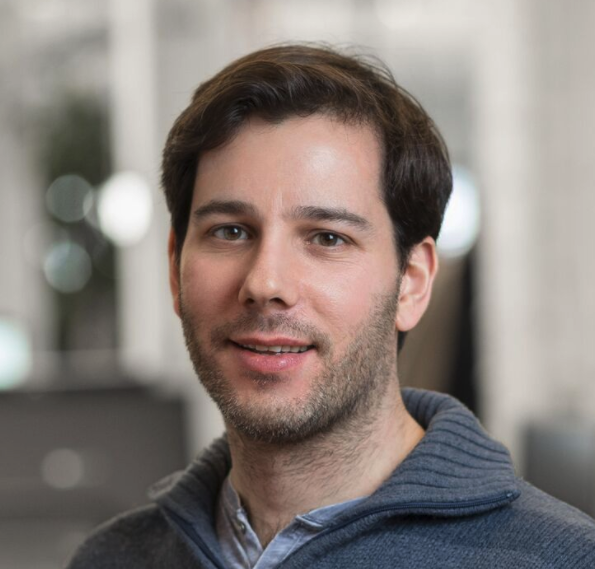
 Iasonas Kokkinos
· 6 previous affiliations
- University College LondonSince 2016
- Faculty · Since 2016
- Snap Inc.2020–2024
- Principal Researcher · 2020–2024
- ArielAI2018–2020
- CEO · 2018–2020
- Meta (United States)2016–2018
- Research Scientist · 2016–2018
- École Centrale Paris2008–2016
- Faculty · 2008–2016
- Affiliate · 2008–2016
Research Overview
Iasonas Kokkinos focuses on computer vision, bridging 2D image segmentation with 3D shape reconstruction and generative modeling. His trajectory spans early probabilistic models for object categorization to deep learning architectures that preserve spatial precision in dense prediction tasks. Most recently, his work investigates unsupervised 3D-aware image synthesis and the disentanglement of shape and appearance using morphable models.
Research Trajectory
The early work of Iasonas Kokkinos focused on establishing rigorous probabilistic frameworks for fundamental computer vision tasks. In An Expectation Maximization Approach to the Synergy between Image Segmentation and Object Categorization (2005), he introduced a novel framework to model the interaction between bottom-up segmentation and top-down object detection. By formulating this synergy through the Expectation Maximization (EM) algorithm, the approach treated segmentation as the E-step—assigning observations to models—and object analysis as the M-step, fitting generative models to those observations.
As deep learning became the dominant paradigm in computer vision, his focus shifted toward adapting convolutional neural networks (CNNs) for dense prediction tasks where spatial precision is critical. CNNs inherently tend to smooth information across region boundaries, which degrades performance on pixel-level tasks. To counteract this, he developed Segmentation-Aware Convolutional Networks Using Local Attention Masks. This work introduced an embedding space where region co-membership could be estimated via Euclidean distance, allowing the network to compute local attention masks. By replacing standard convolutions with a segmentation-aware variant, neurons could selectively attend to inputs from their own regions, contributing directly to the area of Constraining Feature Propagation Within Semantic Boundaries. During this same period, he participated in the development of the highly influential DeepLab architecture, detailed in DeepLab: Semantic Image Segmentation with Deep Convolutional Nets, Atrous Convolution, and Fully Connected CRFs.. This system utilized atrous (dilated) convolutions to control feature resolution and Atrous Spatial Pyramid Pooling (ASPP) for multi-scale object recognition, combined with fully connected Conditional Random Fields (CRFs) for precise boundary localization. Together, these architectural innovations advanced the broader direction of Preserving Tiny Features Against Spatial Resolution Degradation.
In 2018, his research expanded significantly into dense surface mappings, human pose estimation, and temporal modeling. He led the development of DensePose: Dense Human Pose Estimation in the Wild, a system designed to establish dense correspondences between 2D RGB images and a 3D surface-based representation of the human body. To train this CNN-based system to operate in the presence of occlusions and scale variations, the project introduced an efficient annotation pipeline to gather dense correspondences for 50,000 individuals in the COCO dataset. This surface-based coordinate system was subsequently leveraged for neural synthesis in Dense Pose Transfer. By mapping pixels from a source image and a pose donor image to a common surface, the method allowed for accurate pose transfer by inpainting and refining source intensities in the surface coordinate system before warping them onto the target pose. Concurrently, he extended structured prediction to the temporal domain with Deep Spatio-Temporal Random Fields for Efficient Video Segmentation. This work introduced VideoGCRF, a time- and memory-efficient method that coupled neuron decisions across space and time, enabling exact inference on densely connected spatio-temporal graphs for both semantic and instance video segmentation.
Following these advances in dense mapping, his trajectory moved toward the unsupervised learning of 3D shapes and the disentanglement of generative factors. Deforming Autoencoders: Unsupervised Disentangling of Shape and Appearance introduced a generative model that separated shape from appearance without supervision. By representing shape as a deformation between a canonical coordinate system (a 'template') and an observed image, the model captured appearance in deformation-invariant coordinates, enabling applications like unsupervised group-wise image alignment and expression morphing. This concept was elevated to three dimensions in Lifting AutoEncoders: Unsupervised Learning of a Fully-Disentangled 3D Morphable Model Using Deep Non-Rigid Structure From Motion. By combining principles from non-rigid structure from motion and morphable models, this work learned a controllable geometric model of 3D categories from unstructured 2D image sets, successfully disentangling appearance into illumination, shading, and albedo.
Alongside his work in generative modeling, he also explored network efficiency and task interference in multi-task learning environments. In Attentive Single-Tasking of Multiple Tasks., he proposed a method where a single network performs one task at a time, adapting its behavior through task-specific feature modulation and adversarial gradient alignment. This approach mitigated task interference while significantly reducing the parameter count compared to deploying multiple single-task models.
Most recently, his research has focused on refining the architectural components of generative models and achieving high-fidelity 3D-aware image synthesis. He participated in the design of the Deformably-Scaled Transposed Convolution, a novel upsampling layer that learns offsets for feature placement alongside a learnable interpolation kernel, offering more flexible control over image synthesis than standard transposed convolutions. Building upon his extensive background in morphable models, he developed StyleMorph: Disentangled 3D-Aware Image Synthesis with a 3D Morphable StyleGAN. StyleMorph disentangles 3D shape, camera pose, object appearance, and background by morphing a canonical 3D object template. By performing implicit surface rendering of "Template Object Coordinates" (TOCS)—an unsupervised counterpart to UV maps—the model provides detailed 2D signals that reflect the compounded geometric effects of non-rigid shape variation. This recent work represents a major contribution to research directions such as Deformable Templates for Category Level 3D Reconstruction and the area of Overcoming the Fixed Topology Constraint in 3D Modeling.
Current Directions
The most recent papers in the evidence address the intersection of 3D morphable models and high-fidelity generative image synthesis. Recent work investigates how to achieve fully unsupervised disentanglement of 3D shape, camera pose, and object appearance using advanced generative adversarial networks. By integrating deferred neural rendering with implicit surface representations, this research focuses on generating detailed, 3D-aware images while maintaining strict geometric consistency across varying poses and non-rigid deformations. Additionally, there is an ongoing interest in refining the foundational architectural components of deep learning models, such as developing more flexible, deformably-scaled upsampling layers to improve the spatial precision and structural integrity of synthesized images across both 2D and 3D domains.
Profile updated
| Paper | Venue | Year |
|---|---|---|
| Understanding Objects in Detail with Fine-Grained AttributesGitHubtsogkas/ | CVPR | 2014 |
Loading new papers…
Other researchers whose papers cluster into the same research directions — a proxy for overlapping technical interests and shared intellectual neighborhoods.
See something wrong? Report a mistake