

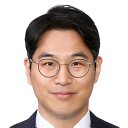
 Hyunwoo J. Kim
· 4 previous affiliations
- Associate Professor · Since 2025
- Korea University2019–2024
- Associate Professor · 2023–2024
- Assistant Professor · 2019–2023
- Amazon (United States)2017–2019
- Applied Scientist · 2017–2019
- University of Wisconsin–Madison2011–2017
- PhD student · 2011–2017
Research Overview
Hyunwoo J. Kim focuses on geometric deep learning, computer vision, and generative artificial intelligence. His early research established foundational methods for statistical analysis and machine learning on non-Euclidean manifolds. More recently, his work addresses the optimization of large language models, video understanding, and the efficiency of advanced generative models.
Research Trajectory
Early in his career, Kim's research centered on statistical modeling and machine learning for non-Euclidean data, contributing significantly to the research direction of Machine Learning on Curved Riemannian Manifolds. Because many scientific domains involve data that reside in curved spaces—such as symmetric positive definite matrices or probability distributions—traditional vector-space operations are often inadequate. To address this, he introduced Multivariate General Linear Models (MGLM) on Riemannian Manifolds with Applications to Statistical Analysis of Diffusion Weighted Images (2014), which extended classical linear regression to handle manifold-valued responses. That same year, he adapted another fundamental statistical technique for curved spaces in Canonical Correlation Analysis on Riemannian Manifolds and Its Applications. Continuing this trajectory, he advanced non-parametric statistical modeling with Manifold-valued Dirichlet Processes (2015), capturing the intrinsic geometry of curved spaces for stochastic sampling. This arc of research culminated in Riemannian Nonlinear Mixed Effects Models: Analyzing Longitudinal Deformations in Neuroimaging (2017), which provided efficient parametric formulations for the longitudinal analysis of manifold-valued data over time.
By 2019, Kim's focus expanded to encompass graph neural networks and the robustness of deep learning architectures. His group presented Graph Transformer Networks, a method capable of generating new graph structures by identifying useful connections between unconnected nodes, thereby enabling effective representation learning on heterogeneous graphs. Exploring the intersection of numerical methods and network architecture, he also investigated adversarial robustness in Robust Neural Networks Inspired by Strong Stability Preserving Runge-Kutta Methods (2020). By framing neural networks as numerical discretizations, this work utilized Strong Stability Preserving techniques to produce more accurate and stable solutions.
Concurrently, Kim made significant contributions to computer vision, particularly in the domain of Human-Object Interaction (HOI) detection. Moving away from indirect methods that process human and object instances separately, his lab developed HOTR: End-to-End Human-Object Interaction Detection With Transformers (2021). This framework utilized a transformer encoder-decoder architecture to directly predict interaction triplets from images. He continued to refine visual relationship detection in Groupwise Query Specialization and Quality-Aware Multi-Assignment for Transformer-based Visual Relationship Detection (2024), which addressed the limitations of conventional label assignment by allowing queries to specialize in specific relations. This line of inquiry recently evolved into zero-shot capabilities with Visual Diversity and Region-aware Prompt Learning for Zero-shot HOI Detection (2025). By injecting visual variance into text prompts and leveraging large language models for fine-grained regional cues, this framework achieved highly parameter-efficient performance.
In recent years, Kim's research has broadly encompassed generative AI, optimization, and large multimodal models. In the realm of continuous latent space optimization, he proposed Latent Bayesian Optimization via Autoregressive Normalizing Flows (2025). By replacing traditional variational autoencoders with bijective normalizing flows, this approach ensured a perfect mapping between discrete inputs and continuous representations, advancing applications like molecular design. He also addressed the computational bottlenecks of generative models in Blockwise Flow Matching: Improving Flow Matching Models For Efficient High-Quality Generation (2025), which partitioned generative trajectories into temporal segments to significantly accelerate inference while improving image quality.
A major theme in his latest work is the optimization and fine-tuning of large language and video models. To tackle the challenge of prompting inaccessible models, his team developed PRESTO: Preimage-Informed Instruction Optimization for Prompting Black-Box LLMs (2025). For video understanding, he introduced DeepVideo-R1: Video Reinforcement Fine-Tuning via Difficulty-aware Regressive GRPO (2025), which stabilized reinforcement learning for Video Large Language Models (VideoLLMs) through direct regression objectives and adaptive data augmentation. Similarly, VidChain: Chain-of-Tasks with Metric-based Direct Preference Optimization for Dense Video Captioning (2025) improved fine-grained temporal understanding by breaking dense captioning into a chain of tasks aligned with evaluation metrics.
Continuing into 2026, Kim's research further refines generative sampling and knowledge-grounded reasoning. Error as Signal: Stiffness-Aware Diffusion Sampling via Embedded Runge-Kutta Guidance demonstrated that numerical errors in diffusion solvers can be leveraged as structured signals to steer the sampling process through difficult regions of a data distribution. Finally, Generative Subgraph Retrieval for Knowledge Graph-Grounded Dialog Generation introduced a novel approach that directly generates relevant knowledge subgraphs as token sequences, overcoming information bottlenecks in dialog systems.
Current Directions
The most recent papers in the evidence indicate a strong focus on the reasoning capabilities, temporal understanding, and efficiency of large multimodal and generative models. Recent work investigates reinforcement learning and direct preference optimization for Video Large Language Models, aiming to improve complex tasks like dense video captioning. Concurrently, Kim is exploring methods to accelerate and stabilize generative processes, including blockwise flow matching and stiffness-aware diffusion sampling that leverages numerical solver errors as guidance signals. Additionally, his research addresses knowledge graph-grounded reasoning, utilizing generative subgraph retrieval to enhance the factual accuracy and contextual depth of dialog systems.
Profile updated
Loading new papers…
Other researchers whose papers cluster into the same research directions — a proxy for overlapping technical interests and shared intellectual neighborhoods.
See something wrong? Report a mistake