

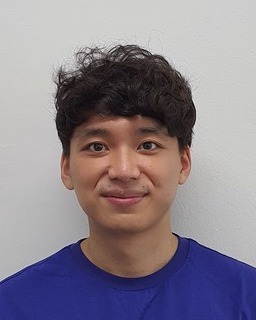
 Hyungi Lee
· 3 previous affiliations
- Kookmin UniversitySince 2025
- Assistant Professor · Since 2025
- 국민대학교Since 2025
- 조교수 · Since 2025
- PhD student · 2022–2025
- Master's degree, Artificial Intelligence · 2020–2022
- Undergrad student · 2013–2020
Research Overview
Hyungi Lee focuses on Bayesian neural networks, stochastic processes in machine learning, and the uncertainty calibration of large language models. His early work explored neural network Gaussian processes and efficient ensemble methods for robust probabilistic modeling. More recently, his research investigates test-time scaling for neural processes and task-dependent confidence elicitation to improve the reliability of language model reasoning.
Research Trajectory
Lee’s early research focused on expanding the theoretical and practical boundaries of probabilistic modeling and ensemble methods. He introduced Scale Mixtures of Neural Network Gaussian Processes, which broadened the class of stochastic processes that infinitely wide neural networks converge to by applying a scale prior to last-layer parameters. Concurrently, he contributed to the area of Linear Mode Connectivity for Neural Network Merging by participating in the development of LatentBE, detailed in Improving Ensemble Distillation With Weight Averaging and Diversifying Perturbation. This work demonstrated how to compress the robustness and uncertainty calibration of a deep ensemble into a single, efficient model. He further explored ensemble efficiency in Traversing Between Modes in Function Space for Fast Ensembling, which proposed lightweight "Bridge Networks" to predict intermediate model outputs along low-loss paths between ensemble members.
Expanding his focus on uncertainty quantification, Lee developed Martingale Posterior Neural Processes, offering a data-driven alternative to pre-specified priors in neural processes. He also contributed to the broader area of Linearized Bayesian Neural Networks through his collaborative work on Function Space Bayesian Pseudocoreset for Bayesian Neural Networks. This research addressed the massive computational burden of Bayesian Neural Networks (BNNs) by compressing large datasets into tiny, synthetic proxies that preserve the posterior distribution.
In 2024, Lee addressed distribution shifts in pre-training and fine-tuning by introducing Enhancing Transfer Learning with Flexible Nonparametric Posterior Sampling. This method moved away from rigid Gaussian priors, utilizing a nonparametric approach to improve uncertainty quantification across vision and language models. He also collaborated on optimization strategies for large models, contributing to the research direction of Pareto Optimal Model Merging for Multi Task Alignment with Model Fusion through Bayesian Optimization in Language Model Fine-Tuning. This framework utilized lightweight proxy models to find optimal hyperparameters for fusing language model checkpoints, balancing training loss with task-specific metrics. Additionally, his work in the area of Linear Mode Connectivity in Sparse Neural Networks included Sparse Weight Averaging with Multiple Particles for Iterative Magnitude Pruning, an algorithm that averages multiple models trained from the same matching ticket to find flatter minima, achieving ensemble-level performance in a single sparse network.
Lee’s research on neural processes and Bayesian inference matured significantly in 2025. He developed Test Time Scaling for Neural Processes, utilizing a Sequential Monte Carlo framework to refine latent samples at inference time, thereby correcting miscalibrated predictions without modifying the pre-trained model. He also introduced Dimension Agnostic Neural Processes, overcoming the architectural rigidity of traditional neural processes to allow seamless adaptation across heterogeneous data dimensions. Returning to Bayesian inference efficiency, he proposed Variational Bayesian Pseudo-Coreset, replacing slow sampling methods with a variational approach and matrix identities to drastically reduce the memory and computation costs of BNNs. Beyond neural processes, he collaborated on Amortized Control of Continuous State Space Feynman-Kac Model for Irregular Time Series, bridging variational inference with stochastic optimal control for faster, more accurate modeling of irregular temporal data.
Most recently, Lee has focused on the reliability and calibration of large language models (LLMs). He participated in research on confidence elicitation, co-authoring Verbalized Confidence Triggers Self-Verification : Emergent Behavior Without Explicit Reasoning Supervision, which demonstrated that confidence-supervised fine-tuning encourages LLMs to self-verify their reasoning by generating more cautious responses when uncertain. He also contributed to Reliable Decision‑Making via Calibration‑Oriented Retrieval‑Augmented Generation, a framework that reranks retrieved documents based on their likelihood of yielding correct decisions rather than mere semantic relevance. Building on these themes, he led the development of Confidence is Not Universal: Task-Dependent Calibration and Emergent Behavior in LLMs. This work, which advances the research direction of Estimating Model Confidence Through Stochastic Response Consistency, disentangles confidence into separate reasoning and evidence localization components, proving that task-dependent calibration is necessary for robust model behavior and emergent self-verification.
Current Directions
The most recent papers in the evidence indicate a strong focus on the reliability, reasoning, and uncertainty calibration of large language models. Recent work investigates how to elicit accurate verbalized confidence from LLMs, demonstrating that disentangling confidence into task-specific components—such as reasoning versus evidence localization—can trigger emergent self-verification behaviors without requiring explicit reasoning supervision. Alongside this focus on language models, ongoing research continues to advance the flexibility and scalability of probabilistic models, addressing challenges like dimension-agnostic architectures for heterogeneous data and test-time scaling mechanisms to improve the calibration of neural processes without the need for retraining.
Profile updated
Loading new papers…
Other researchers whose papers cluster into the same research directions — a proxy for overlapping technical interests and shared intellectual neighborhoods.
See something wrong? Report a mistake