

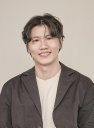
 Hyuhng Joon Kim
· 7 previous affiliations
- Samsung (South Korea)Since 2026
- Researcher · Since 2026
- Samsung Electronics (South Korea)Since 2026
- Staff Engineer · Since 2026
- Seoul National University2020–2026
- Ph.D. Candidate, Graduate School of AI · 2020–2026
- PhD student · 2022–2026
- MS student · 2020–2022
- Soongsil University2014–2020
- Undergrad student · 2014–2020
- Intern · 2018–2020
- Tomato System Co.,Ltd2020
- Intern · 2020
- Intern · 2019
- Republic of Korea Army2015–2017
- 군복무 · 2015–2017
Research Overview
Hyuhng Joon Kim focuses on the internal mechanisms of in-context learning, the robustness of natural language processing systems under distributional shifts, and the development of adaptive safety frameworks for large language models. His work investigates how pre-trained models can be optimized for downstream tasks through self-generated demonstrations and hybrid probing techniques, while simultaneously addressing the challenges of out-of-distribution detection and the Robust Detection of Adversarially Modified Machine Text. By analyzing the sensitivity of models to prompt structure and label veracity, Kim’s research contributes to a more rigorous understanding of how large-scale models generalize to new domains and resist adversarial exploitation.
Research Trajectory
Kim’s research trajectory began with a concentrated focus on the mechanics of in-context learning (ICL) in large-scale pre-trained language models (PLMs). In 2022, his work addressed the fundamental limitations of ICL, particularly its heavy reliance on externally sourced demonstrations and the lack of clarity regarding how input-label correspondences affect model performance. During this period, Kim developed methods to reduce the dependency on external datasets by leveraging the generative capabilities of the models themselves and introduced quantitative metrics to measure model sensitivity to ground-truth labels.
By 2023, Kim’s focus expanded to encompass the broader problem of model robustness and reliability. This transition involved moving from the study of prompt-based learning to the study of how models behave when deployed in "the wild," where they encounter data that differs significantly from their training distributions. He spearheaded efforts to adapt the concept of Universal Domain Adaptation (UniDA)—previously a mainstay in computer vision—to the domain of natural language processing. This work emphasized the dual necessity of adapting to unfamiliar domains while maintaining the ability to trigger alarms for anomalous or out-of-distribution (OOD) inputs.
In 2024, Kim’s research has increasingly intersected with AI safety and the evaluation of generative models. This includes investigating Automated Red Teaming via Iterative Prompt Refinement, where the goal is to move beyond static safety testing toward adaptive, closed-loop optimization of red teaming agents. His recent interests also involve The Generalization Gap in AI Text Detection, addressing the technical "arms race" between increasingly sophisticated generative models and the systems designed to identify machine-generated content.
Current Directions
Kim’s current work is characterized by an integrated approach to model efficiency and safety. He continues to explore the boundaries of parameter-efficient transfer learning (PETL) and its implications for OOD robustness, specifically examining how model scaling affects a system's ability to detect distributional shifts. A significant portion of his current focus is dedicated to the robustness of machine text detectors, particularly in the face of "humanizing" tools and secondary paraphrasers that attempt to mask the statistical signatures of AI-generated content.
Furthermore, Kim is active in the development of automated red teaming strategies. This research treats the identification of model vulnerabilities as a dynamic optimization problem, utilizing feedback loops to generate increasingly effective adversarial prompts. This direction reflects a shift toward proactive safety measures that can keep pace with the rapid evolution of large language models.
Representative Work
Kim’s primary contributions are found in his first-author and lead-author publications concerning in-context learning and domain adaptation. In Self-Generated In-Context Learning: Leveraging Auto-regressive Language Models as a Demonstration Generator, Kim proposed the SG-ICL framework. This method addresses the high reliance of ICL on external demonstrations by prompting the PLM to generate its own task-relevant examples. The research demonstrated that self-generated demonstrations could significantly improve performance across various text classification tasks, suggesting that the knowledge required for task execution is often already latent within the model and merely requires effective retrieval.
In Ground-Truth Labels Matter: A Deeper Look into Input-Label Demonstrations, Kim re-examined the counter-intuitive claim in the field that the correctness of labels in ICL demonstrations has a negligible impact on performance. To provide a more nuanced analysis, he introduced two novel metrics: Label-Correctness Sensitivity and the Ground-truth Label Effect Ratio (GLER). Through these metrics, Kim provided a quantifiable analysis that challenged previous assumptions, showing that ground-truth labels do indeed play a critical role in model performance, particularly as task complexity increases.
Kim’s work on scaling ICL is represented by Prompt-Augmented Linear Probing: Scaling Beyond The Limit of Few-shot In-Context Learners, where he served as the second author. This research addressed the inherent input length constraints of language models that prevent ICL from scaling with larger sets of training samples. The proposed hybrid method, PALP, combines the few-shot capabilities of ICL with the scalability of linear probing. By using the model as a feature extractor and training lightweight discriminators on top of pre-extracted representations, the work enabled models to utilize a much larger number of demonstrations than traditional context windows allow.
In the area of model reliability, Kim led the development of Universal Domain Adaptation for Robust Handling of Distributional Shifts in NLP. This work established a comprehensive benchmark for UniDA in the context of natural language. The research focused on the challenge of deploying models in environments where they must simultaneously leverage prior knowledge for a new domain and identify samples that do not belong to any known category. This dual focus on adaptation and OOD detection is critical for the safe deployment of machine learning systems in real-world applications.
Kim also participated in a systematic exploration of model scaling in Probing Out-of-Distribution Robustness of Language Models with Parameter-Efficient Transfer Learning. As a middle author, he contributed to the evaluation of various PETL methods—such as adapters and prefix tuning—across different model sizes. The study investigated how the ability to detect OOD samples changes as models grow and as different transfer learning strategies are applied, providing empirical data on the trade-offs between efficiency and robustness in large-scale language modeling.
Profile updated
Loading new papers…
Loading research neighbors…
See something wrong? Report a mistake