

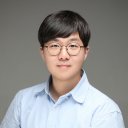
 Hwijoon Lim
· 2 previous affiliations
- Meta (United States)Since 2024
- Researcher · Since 2024
- Doctor of Philosophy - PhD, Electrical Engineering · 2018–2024
- Bachelor of Engineering - BE, Electrical Engineering, Computer Science · 2014–2019
Research Overview
Hwijoon Lim focuses on the co-design of artificial intelligence and systems, with a particular emphasis on performance modeling, distributed learning systems, and scaling strategies for generative AI. Currently a Research Scientist at Meta, Lim works within the AI & Systems Co-Design Team to identify performance bottlenecks and evaluate scaling strategies for GenAI training across hyperscale fleets, utilizing both GPUs and Meta Training and Inference Accelerators (MTIA). His work consistently addresses the intersection of high-performance networking and efficient machine learning infrastructure to support large-scale model training and inference.
Research Trajectory
Lim’s research trajectory began with a focus on high-performance networking and transport protocols for commodity datacenter environments. During the early stages of his doctoral work at KAIST, he investigated methods to reduce latency and improve reliability in datacenter networks. This period was marked by efforts to eliminate timeouts in transport protocols and develop flexible, credit-based transport mechanisms to handle the bursty and high-throughput demands of modern cloud infrastructure.
As his work progressed, Lim transitioned toward the optimization of machine learning systems, specifically addressing the inefficiencies inherent in distributed training pipelines. This shift was driven by the increasing computational and memory demands of large-scale models. He began exploring how system-level optimizations—such as pipeline parallelism and efficient data loading—could mitigate hardware bottlenecks. This included significant work on neural video enhancement and storage abstractions, where he addressed the prohibitive overhead of video decoding in deep learning preparation, ensuring that GPUs remain highly utilized during training.
In the latter stages of his academic career and into his current role at Meta, Lim’s focus has sharpened on the scalability of massive-scale models, such as Large Mixture-of-Experts (MoE) and teacher-student frameworks. His recent contributions involve breaking the "memory wall" of hardware by offloading parameters to heterogeneous memory tiers and designing asymmetric update schemes to eliminate pipeline bubbles. This evolution reflects a broader move from general networking systems toward specialized infrastructure designed specifically for the next generation of generative AI.
Current Directions
Lim’s current research is centered on the performance projection and optimization of GenAI training at the scale of global data centers. This involves developing sophisticated performance models that can predict how different scaling strategies—across varying hardware configurations and networking topologies—impact training efficiency. A key component of this work is the evaluation of MTIA alongside traditional GPU clusters to optimize the total cost of ownership and throughput for large-scale AI workloads.
Furthermore, he continues to investigate distributed learning systems that can scale beyond the physical memory limits of individual accelerators. This includes the development of frameworks that combine pipelined data transfers with dynamic placement strategies to support models with trillions of parameters. His work remains grounded in real-world system implementation, aiming to bridge the gap between theoretical algorithmic improvements and practical, deployable system optimizations.
Representative Work
Lim has contributed to several key advancements in networking and machine learning systems, primarily focusing on throughput optimization and memory management.
In the domain of datacenter networking, Lim led the development of transport protocols designed to operate without the traditional reliance on high-latency timeouts. Towards timeout-less transport in commodity datacenter networks addresses the challenges of achieving low latency in high-speed environments. He furthered this line of inquiry with FlexPass: A Case for Flexible Credit-based Transport for Datacenter Networks, which proposes a more adaptable credit-based system to manage traffic flow and minimize congestion in complex network topologies.
In the field of distributed training, Lim introduced TSPipe to optimize teacher-student learning frameworks, such as knowledge distillation. TSPipe: Learn from Teacher Faster with Pipelines utilizes an asymmetric pipeline parallelism scheme that interleaves the teacher's forward pass into the student's idle pipeline "bubbles." This approach achieves near-total GPU utilization and significantly higher throughput without compromising model accuracy.
Lim’s work on video-based deep learning addressed the "data stall" problem where CPU-bound video decoding slows down GPU-bound training. As a primary contributor to SAND: A Storage Abstraction for Video-based Deep Learning, he helped design a system that enables deep learning frameworks to handle massive video datasets more efficiently by optimizing the storage and preparation pipeline. Relatedly, he participated in the development of NeuroScaler: neural video enhancement at scale, which focuses on the systems challenges of deploying neural video processing at scale.
Most recently, Lim has addressed the memory constraints of Large Mixture-of-Experts (MoE) models. In Scaling Beyond the GPU Memory Limit for Large Mixture-of-Experts Model Training, he co-developed ES-MoE, a framework that offloads expert parameters to CPU memory and SSDs. By employing a dynamic expert placement strategy and pipelined transfers, the system achieves substantial improvements in scalability and throughput compared to traditional offloading methods, effectively bypassing the physical memory limits of the GPU.
Beyond these core areas, Lim has also participated in research regarding cellular networks, specifically in OutRAN: co-optimizing for flow completion time in radio access network, and in applying machine learning to genomics through semi-supervised training frameworks for variant callers.
Profile updated
| Paper | Venue | Year |
|---|---|---|
| TSPipe: Learn from Teacher Faster with PipelinesGitHubkaist-ina/ | ICML | 2022 |
Loading new papers…
Other researchers whose papers cluster into the same research directions — a proxy for overlapping technical interests and shared intellectual neighborhoods.
See something wrong? Report a mistake