

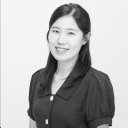
 Hwaran Lee
· 5 previous affiliations
- Sogang UniversitySince 2025
- Assistant Professor · Since 2025
- NAVER Cloud (South Korea)2021–2025
- Leader · 2024–2025
- Leader · 2023
- Tech Leader · 2022
- Research Scientist · 2021–2022
- Naver (South Korea)2021–2024
- Lead · 2023–2024
- Research Scientist · 2021–2022
- SK Telecom (South Korea)2018–2021
- Reserach Scientist · 2018–2021
- Doctor of Philosophy (Ph.D.), Electrical Engineering · 2013–2018
- Bachelor of Science (BS), Mathematics · 2008–2012
Research Overview
Hwaran Lee focuses on the safety, alignment, and evaluation of large language models, with an emphasis on socio-cultural awareness and multilingual robustness. Her trajectory spans early work in speech processing and dialogue state tracking to extensive contributions in red-teaming and bias mitigation. Currently, she investigates uncertainty quantification and cross-lingual vulnerabilities to build more trustworthy generative AI systems.
Research Trajectory
Lee's early research explored foundational challenges in speech and dialogue processing. She contributed to the area of Audio Transformation without Parallel Training Data by participating in the development of acoustic and adversarial supervision methods for speech enhancement in Unpaired Speech Enhancement by Acoustic and Adversarial Supervision for Speech Recognition. She also advanced dialogue systems, introducing a universal architecture for dialogue state tracking in SUMBT: Slot-Utterance Matching for Universal and Scalable Belief Tracking. This work allowed a single model to handle multiple domains and slots without retraining.
As large language models became prominent, her focus shifted toward evaluating and aligning these systems, particularly concerning socio-cultural awareness. She led the creation of culturally specific evaluation frameworks, such as KoBBQ: Korean Bias Benchmark for Question Answering, which demonstrated that advanced LLMs harbor significant local biases related to regionalism and educational background. Expanding on this, she developed KoSBI: A Dataset for Mitigating Social Bias Risks Towards Safer Large Language Model Applications to filter and moderate biased outputs across numerous demographic groups. She further expanded safety datasets by constructing SQuARe: A Large-Scale Dataset of Sensitive Questions and Acceptable Responses Created through Human-Machine Collaboration.
In parallel, she explored methods for probing model vulnerabilities and improving evaluation. She collaborated on frameworks for the research direction of Automated Discovery of Adversarial Triggers in Generative Models, including Query-Efficient Black-Box Red Teaming via Bayesian Optimization, which efficiently identifies diverse failure modes without requiring access to internal model weights. She also contributed to the broader area of Open Source Evaluator Models for Reliable Benchmarking through her involvement in Prometheus: Inducing Evaluation Capability in Language Models, an open-source model designed to match proprietary systems in evaluating long-form responses.
Her recent trajectory emphasizes multilingual safety, code generation, and uncertainty. In the domain of code generation, she participated in developing selective watermarking techniques. This work, detailed in Who Wrote this Code? Watermarking for Code Generation, addresses challenges in the areas of Semantic Preserving Transformations for Code Watermarking and Watermarking and Detection for Low-Entropy Source Code by applying watermarks only to high-entropy tokens, ensuring functional integrity.
A major recent theme is the intersection of multilinguality and safety. She identified that code-switching—mixing languages in a single prompt—can effectively bypass LLM safety filters. She formalized this in Code-Switching Red-Teaming: LLM Evaluation for Safety and Multilingual Understanding (NeurIPS 2024), introducing the CSRT framework to synthesize mixed-language queries. She continued this investigation in a subsequent 2025 paper of the same name, Code-Switching Red-Teaming: LLM Evaluation for Safety and Multilingual Understanding (ACL 2025), which further demonstrated that current safety alignments fail to generalize across linguistic boundaries. Building on these multilingual insights, she also guided research on Code-Switching Curriculum Learning for Multilingual Transfer in LLMs, exploring how mixed-language data can improve cross-lingual representation alignment.
Finally, she has investigated how models handle ambiguity. In MAQA: Evaluating Uncertainty Quantification in LLMs Regarding Data Uncertainty, she collaborated on a benchmark to distinguish between a model's lack of knowledge and inherent data ambiguity, evaluating entropy and consistency-based methods for predicting model correctness.
Current Directions
The most recent papers in the evidence address the robustness and reliability of large language models in complex, real-world scenarios. A primary focus is cross-lingual safety and multilingual transfer, specifically investigating how models process code-switched language and how linguistic boundaries can expose vulnerabilities in safety alignment. Additionally, recent work investigates uncertainty quantification, developing benchmarks to help models reliably distinguish between their own knowledge gaps and inherently ambiguous questions.
Profile updated
Loading new papers…
Other researchers whose papers cluster into the same research directions — a proxy for overlapping technical interests and shared intellectual neighborhoods.
See something wrong? Report a mistake