

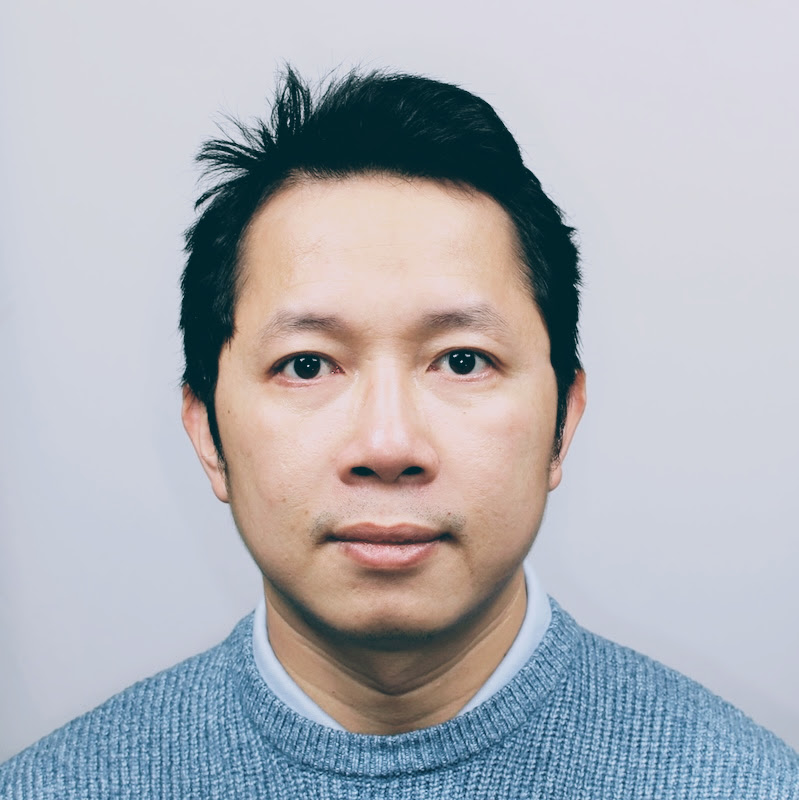
 Huy Phan
· 9 previous affiliations
- Meta (United States)Since 2024
- Researcher · Since 2024
- German Research Center for AISince 2025
- Researcher · Since 2025
- Amazon (United States)2023–2024
- Researcher · 2023–2024
- The Alan Turing Institute2021–2023
- Turing Fellow · 2021–2023
- Queen Mary University of London2020–2022
- Lecturer (Assistant Professor) in AI · 2020–2022
- University of Kent2019–2020
- Lecturer · 2019–2020
- University of Oxford2017–2018
- Postdoc · 2017–2018
- University of Lübeck2013–2017
- PhD (Dr.-Ing.), Computer Science · 2013–2017
- Nanyang Technological University2009–2012
- M.Eng, Computer Engineering · 2009–2012
1 other author named Huy Phan: Huy Phan (Uber AI (United States) · Rutgers, The State University of New Jersey · 12 papers)
Research Overview
Huy Phan focuses on automatic sleep staging from physiological signals and robust audio event detection in complex acoustic environments. His trajectory spans early metric learning and regression forests to advanced sequence modeling and transformer architectures for time-series data. Recently, his work has expanded into foundation models for electroencephalography and efficient diffusion models for generative audio synthesis.
Research Trajectory
In his early work, Phan focused on foundational machine learning techniques for physiological signals and audio processing. In 2013, he explored Metric learning for automatic sleep stage classification, demonstrating that learning a global metric for single-channel EEG data outperformed standard Euclidean approaches in k-nearest neighbor classification. Concurrently, he advanced acoustic analysis by treating event detection as a regression problem rather than a standard classification task in Random Regression Forests for Acoustic Event Detection and Classification, allowing for efficient joint handling of event localization in time. He further refined audio representations by collectively optimizing tree-structured clustering of class labels into metaclasses in Improved Audio Scene Classification Based on Label-Tree Embeddings and Convolutional Neural Networks.
The trajectory then shifted toward end-to-end deep learning architectures. A major focus became the research direction of Contextual Sequence Modeling for Physiological Signals. He introduced SeqSleepNet: End-to-End Hierarchical Recurrent Neural Network for Sequence-to-Sequence Automatic Sleep Staging, which processed multiple sleep epochs simultaneously to capture both short-term signal dynamics and long-term stage transitions. This work contributed significantly to the broader area of Robust Physiological Monitoring for Clinical and Pathological Populations. Building on this sequential approach, he developed attention-based bidirectional RNNs to extract features from decomposed EEG frames in Automatic Sleep Stage Classification Using Single-Channel EEG: Learning Sequential Features with Attention-Based Recurrent Neural Networks. He also explored multitask convolutional approaches, simultaneously predicting current and neighboring sleep stages to leverage the inherent sequential nature of sleep in Joint Classification and Prediction CNN Framework for Automatic Sleep Stage Classification.
Parallel to his physiological research, he addressed complex acoustic environments. He proposed a unified framework for detecting both isolated and overlapping sounds in Unifying Isolated and Overlapping Audio Event Detection with Multi-label Multi-task Convolutional Recurrent Neural Networks, advancing the field of Precise Temporal Grounding for Sound Event Detection by jointly predicting event activity and precise temporal boundaries.
In 2022, his work expanded to incorporate multi-view learning and transformer architectures. He developed XSleepNet: Multi-View Sequential Model for Automatic Sleep Staging, which adaptively combined raw polysomnography data with time-frequency images based on their generalization behavior. To address the opacity of clinical AI, he introduced SleepTransformer: Automatic Sleep Staging With Interpretability and Uncertainty Quantification, leveraging self-attention mechanisms to provide interpretable insights and quantify model uncertainty. He also benchmarked these advanced models on pediatric populations, finding that adult-trained models generalized well to younger demographics, though he noted that ensemble improvements might lack clinical significance due to high inter-model agreement in Pediatric Automatic Sleep Staging: A Comparative Study of State-of-the-Art Deep Learning Methods.
Returning to audio analysis, he investigated the structural formulation of overlapping sound detection in Polyphonic Audio Event Detection: Multi-Label or Multi-Class Multi-Task Classification Problem?, proposing a multi-class multi-task decomposition to better handle complex acoustic scenes. He also guided research on prototypical networks for low-resource environments, enhancing classifiers in Few-Shot Bioacoustic Event Detection: Enhanced Classifiers for Prototypical Networks.
In 2023, he pushed the boundaries of sequence length in physiological modeling with L-SeqSleepNet: Whole-cycle Long Sequence Modeling for Automatic Sleep Staging, an architecture capable of modeling entire 90-minute sleep cycles to improve robustness. To improve training in small-data regimes, he introduced a method to constrain cross-entropy losses between adjacent epochs, reflecting the slow transition nature of sleep, in Improving Automatic Sleep Staging Via Temporal Smoothness Regularization.
Moving into recent years, his focus has broadened to include regularization strategies, generative AI, and foundation models. He addressed the critical but under-explored problem of false positives in low-resource audio applications with Cross-Triggering Issue in Audio Event Detection and Mitigation, proposing a mutual exclusivity regularizer. Collaborating on generative audio, he contributed to IMPACT: Iterative Mask-based Parallel Decoding for Text-to-Audio Generation with Diffusion Modeling, which bridges the gap between high-fidelity diffusion models and fast mask-based generation. Most recently, he has investigated foundation models for neurological diagnosis in Balanced Latent Semantics and Signal Fidelity for EEG representation learning, proposing a dual-space objective that combines masked latent prediction with raw signal reconstruction to overcome low signal-to-noise ratios and subject variability.
Current Directions
The most recent papers in the evidence indicate a shift toward foundation models and generative architectures for both physiological and acoustic modalities. Recent work investigates dual-space objectives for EEG representation learning, aiming to balance semantic stability with raw signal fidelity to overcome the inherent noise and subject variability in neurological data. Additionally, research in generative AI addresses text-to-audio synthesis, specifically focusing on iterative mask-based parallel decoding to combine the high fidelity of diffusion models with the speed of mask-based generative approaches.
Profile updated
Loading new papers…
Other researchers whose papers cluster into the same research directions — a proxy for overlapping technical interests and shared intellectual neighborhoods.
See something wrong? Report a mistake