

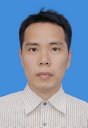
 Huisi Wu
· 3 previous affiliations
- Shenzhen UniversitySince 2011
- Professor · Since 2021
- Associate Professor · 2015–2021
- Assistant Professor · 2011–2015
- Chinese University of Hong Kong2007–2011
- PhD student · 2007–2011
- Xi'an Jiaotong University2000–2007
- MS student · 2004–2007
- Undergrad student · 2000–2004
Research Overview
Huisi Wu focuses on medical image analysis, semi-supervised learning, and video segmentation. His trajectory spans from early interactive surgical simulations to advanced deep learning architectures designed to extract precise anatomical boundaries from limited and noisy clinical data. Recent efforts adapt large foundation models and incremental learning techniques to complex diagnostic environments.
Research Trajectory
The trajectory begins with early explorations into clinical training environments, such as Towards an Interactive Simulation System for Percutaneous Coronary Intervention Training in 2012. Over the following decade, the focus shifted toward automated feature extraction and deep learning for complex anatomical structures. In 2021, he introduced SCS-Net: A Scale and Context Sensitive Network for Retinal Vessel Segmentation to delineate fine vascular networks. Recognizing the high cost of expert annotations in clinical settings, he began developing semi-supervised frameworks. This included Collaborative and Adversarial Learning of Focused and Dispersive Representations for Semi-supervised Polyp Segmentation, which utilized adversarial learning to handle the diverse shapes and locations of polyps in colonoscopy images.
In 2022, this methodology expanded across multiple domains. He addressed industrial defect detection in Automated Shell Abrasion Detection for Cell Phone Based on GraphFPN With Learnable Sparse Priors, adapting graph-based feature pyramids to identify irregular abrasions. Returning to medical imaging, he tackled the temporal complexities of ultrasound in Semi-supervised segmentation of echocardiography videos via noise-resilient spatiotemporal semantic calibration and fusion. Concurrently, he advanced histopathological analysis with Cross-patch Dense Contrastive Learning for Semi-supervised Segmentation of Cellular Nuclei in Histopathologic Images, aligning cross-image features to extract knowledge from unlabeled data. This period also saw contributions to the broader area of Medical Image Segmentation with Limited Labels through Dual Contrastive Learning with Anatomical Auxiliary Supervision for Few-Shot Medical Image Segmentation.
The need for real-time clinical deployment drove further architectural refinements in 2023. He contributed to Super-efficient Echocardiography Video Segmentation via Proxy- and Kernel-Based Semi-supervised Learning, a high-speed framework achieving inference rates suitable for live clinical use by replacing heavy decoders with region proxies. This work advanced the research direction of Streaming Memory for Temporal Consistency in Video Segmentation. In parallel, he addressed the area of Delineating Ambiguous Boundaries in Low-Contrast Images with ACL-Net: Semi-supervised Polyp Segmentation via Affinity Contrastive Learning, further refining semi-supervised techniques for colonoscopy analysis.
By 2024, the scope of his research broadened to include incremental learning, federated systems, and the adaptation of foundation models. To allow models to learn new cell types sequentially without forgetting previous ones, he developed Incremental Nuclei Segmentation from Histopathological Images via Future-class Awareness and Compatibility-inspired Distillation. He also continued work in the area of Label Efficient Semi-Supervised Medical Image Segmentation by introducing PH-Net: Semi-Supervised Breast Lesion Segmentation via Patch-Wise Hardness, which shields difficult image regions from aggressive data augmentation.
Adapting general-purpose foundation models to specialized medical tasks became a prominent theme during this period. He introduced MemSAM: Taming Segment Anything Model for Echocardiography Video Segmentation, incorporating a space-time memory mechanism for temporal-aware prompting, and Domesticating SAM for Breast Ultrasound Image Segmentation via Spatial-Frequency Fusion and Uncertainty Correction, which utilizes spatial-frequency fusion to correct segmentation errors. To address privacy constraints in decentralized data, he proposed FedCD: Federated Semi-Supervised Learning with Class Awareness Balance via Dual Teachers. Additionally, he participated in research on Open-World Graph Learning for Emerging Categories through EGonc : Energy-based Open-Set Node Classification with substitute Unknowns.
Most recently, his work continues to push the boundaries of continuous learning and video analysis. In 2026, he contributed to CiNuSeg: Class Incremental Nuclei Segmentation via Anchor-driven Consistency Learning with Dual Region Regularization, advancing performance on complex pathology datasets under privacy constraints. He also co-developed VPSentry: Semi-supervised Video Polyp Segmentation via Sentry-guided Long-term Prototype Fusion with Correlation Dynamic Propagation, which manages long-term memory to handle chaotic colonoscopy footage, contributing to the area of Mitigating Specular Reflection Interference in Computer Vision.
Current Directions
Recent work investigates the challenges of continuous learning and temporal consistency in complex medical environments. The most recent papers in the evidence address class-incremental learning for histopathology, enabling models to sequentially identify new cell types without catastrophic forgetting or relying on restricted historical data. Concurrently, efforts in video segmentation focus on managing long-term memory and dynamic propagation to maintain accuracy in chaotic clinical footage, such as colonoscopies. Another active area involves adapting large-scale foundation models to the specific noise profiles and low-contrast boundaries of ultrasound imaging, utilizing spatial-frequency fusion and uncertainty estimation to bridge the gap between general-purpose vision models and specialized diagnostic needs.
Profile updated
Loading new papers…
Other researchers whose papers cluster into the same research directions — a proxy for overlapping technical interests and shared intellectual neighborhoods.
See something wrong? Report a mistake