

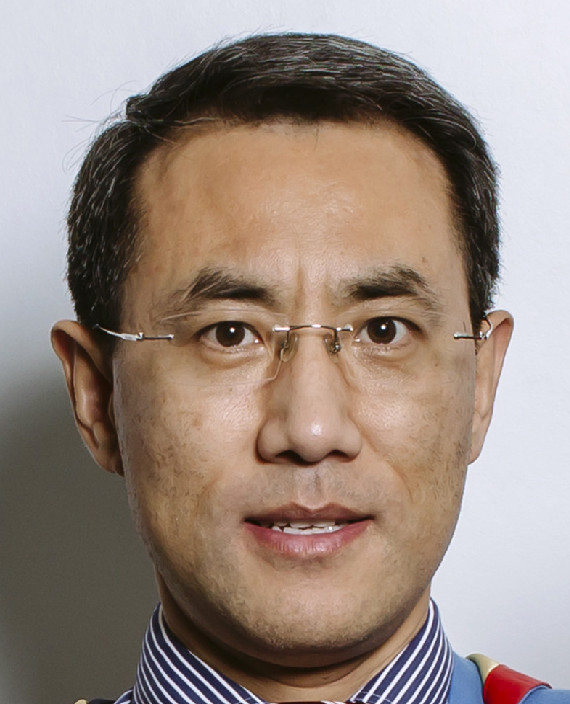
 Hui Yu
· 2 previous affiliations
- University of GlasgowSince 2024
- Full Professor · Since 2024
- University of Portsmouth2012–2023
- Full Professor · 2012–2023
3 other authors named Hui Yu: Hui Yu (Northwestern Polytechnical University · 174 papers), Hui Yu (Shandong Normal University · 44 papers), Hui Yu (12 papers)
Research Overview
Hui Yu focuses on computer vision, visual saliency detection, and model compression. Early work addressed multi-target video tracking and feature-based saliency models, eventually evolving toward efficient neural network architectures and data-free knowledge distillation. Recent collaborative efforts investigate unsupervised domain adaptation and face forgery detection in complex visual environments.
Research Trajectory
Hui Yu’s early research focused on classical computer vision problems, particularly in dynamic environments. In 2015, Yu co-authored Tracking Multiple Video Targets with an Improved GM-PHD Tracker, which proposed enhancements to the Gaussian mixture probability hypothesis density tracker. This work introduced an entropy-based birth intensity estimation method to filter out false positives caused by noisy video data, alongside a weight-penalized multi-feature fusion approach to maintain accuracy when targets move in close proximity.
By 2017, Yu’s focus had expanded into visual saliency detection, taking a senior role in developing feature-extraction methods that mimic human visual attention. In Saliency Detection Using Texture and Local Cues, the research demonstrated how selective contrast could isolate the most distinguishable texture components in an image. Combined with a locality-constrained linear coding algorithm, this approach provided a more robust alternative to models that relied exclusively on orientation, color, or shape. Over the following years, Yu continued to contribute to the saliency detection field, participating in comprehensive surveys of heuristic and deep learning-based techniques, as well as research into fully convolutional neural networks for multi-level feature aggregation.
In the early 2020s, as deep learning models grew in complexity, Yu’s work as a principal investigator pivoted toward model efficiency and deployment constraints on edge devices. A key contribution during this period was Dual discriminator adversarial distillation for data-free model compression (2022). This research addressed a major bottleneck in knowledge distillation: the frequent unavailability of original, massive training datasets due to privacy or storage limitations. The proposed framework utilized a generator to synthesize training samples via a dual-discriminator adversarial process, allowing for effective model compression without requiring access to the source data.
Continuing the theme of efficient, real-time computer vision, Yu led research into multi-task learning architectures for automotive safety. Cascade Learning for Driver Facial Monitoring (2023) introduced a unified framework designed to replace the redundant, task-specific models typically used in intelligent vehicles. By leveraging the correlation between different facial monitoring tasks, the cascade learning approach enabled simultaneous facial landmark detection, head pose estimation, and gaze tracking within a single, streamlined architecture.
More recently, Yu has participated in collaborative research addressing the vulnerabilities of generative models and the challenge of domain shift. As a contributing author to DomainForensics: Exposing Face Forgery Across Domains via Bi-Directional Adaptation (2024), Yu helped explore unsupervised domain adaptation techniques to improve DeepFake detection. Rather than searching for empirical traces at the data level, this work focused on transferring forgery knowledge from fully labeled source domains to label-free target domains, mitigating the performance degradation that typically occurs when models encounter novel generative techniques.
Current Directions
The most recent papers in the evidence indicate a growing focus on unsupervised domain adaptation and the robustness of computer vision models in novel, unlabelled environments. A primary area of investigation is source-free unsupervised domain adaptation (SFDA), which seeks to classify target samples using only a pre-trained source model and unlabelled target data.
Recent collaborative work highlights the limitations of traditional SFDA methods, which often rely on pair-wise relations to cluster semantic features and consequently miss broader structural information. To address this, current research explores hypergraph learning to capture high-order neighborhood relationships within the target domain. Additionally, this expertise in domain adaptation continues to be applied to digital forensics, specifically addressing the continuous evolution of face forgery techniques by developing bi-directional adaptation strategies that do not require labels for emerging DeepFake variants.
Profile updated
Loading new papers…
Other researchers whose papers cluster into the same research directions — a proxy for overlapping technical interests and shared intellectual neighborhoods.
See something wrong? Report a mistake