

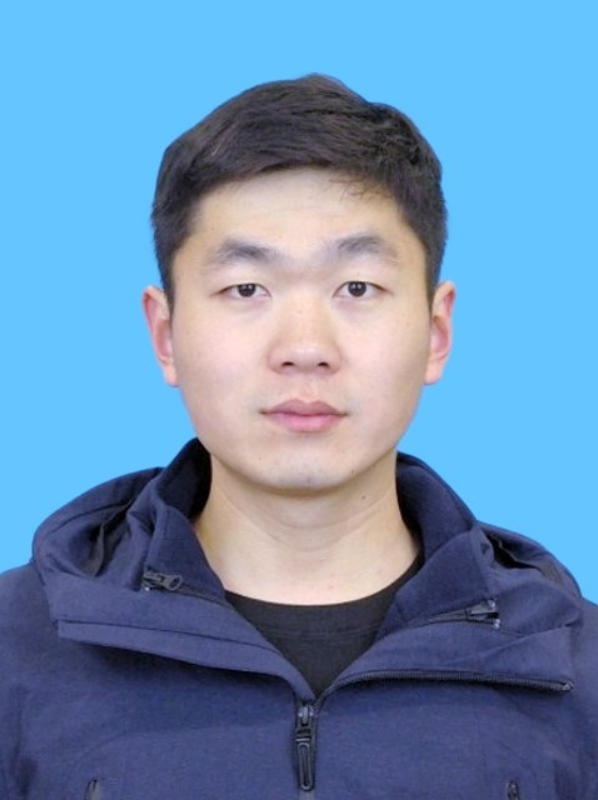
 Hui Wei
· 3 previous affiliations
- University of OuluSince 2025
- Postdoc · Since 2025
- Current
- Wuhan University2021–2025
- PhD student · 2021–2025
- Zhengzhou University2018–2021
- MS student · 2018–2021
1 other author named Hui Wei: Hui Wei (University of California, Merced · 7 papers)
Research Overview
Hui Wei focuses on artificial intelligence safety, trustworthy computer vision, and physical-world adversarial robustness. His research investigates the vulnerabilities of visual detection systems to physical adversarial attacks and backdoor triggers, while also exploring privacy-preserving techniques for image anonymization. Currently, he is advancing methods to secure deployed AI systems against camera-agnostic threats and data reconstruction attacks.
Research Trajectory
Hui Wei’s research trajectory is defined by a sustained investigation into the vulnerabilities of computer vision systems when deployed in the physical world. His early doctoral work systematically categorized the landscape of physical adversarial threats. As the first author of Physical Adversarial Attack meets Computer Vision: A Decade Survey, he provided a comprehensive taxonomy of real-world objects designed to deceive artificial intelligence. This work introduced the concept of the "adversarial medium" to classify threat vectors and proposed hiPAA, a novel hexagonal evaluation metric designed to balance raw attack success with practical deployment factors such as stealth, cost, and robustness.
Building on this theoretical foundation, Wei transitioned to designing novel, physically realizable attacks against specialized vision systems. A significant contribution in this area is HOTCOLD Block: Fooling Thermal Infrared Detectors with a Novel Wearable Design, presented at AAAI 2023. In this first-author work, he demonstrated that thermal infrared detectors—often assumed to be more robust than standard RGB cameras—could be systematically evaded. By strategically applying commercially available warming and cooling pastes to a human subject, the proposed method successfully hid individuals from thermal detection models like YOLOv5 while remaining visually inconspicuous to the naked eye.
In parallel with adversarial evasion, Wei explored the mechanics of backdoor attacks in physical environments. In Moiré Backdoor Attack (MBA): A Novel Trigger for Pedestrian Detectors in the Physical World (ACM MM 2023), he identified the Moiré effect—a common optical interference pattern—as a viable, stealthy trigger for poisoning pedestrian detection models. By analyzing the physical causes of the Moiré effect, simulating its visual artifacts, and injecting these patterns during the training phase, the research highlighted how natural physical phenomena could be exploited to manipulate model behavior during inference.
As his research progressed into 2024, Wei addressed a critical limitation in physical adversarial attacks: their fragility across different camera hardware. In Revisiting Adversarial Patches for Designing Camera-Agnostic Attacks against Person Detection (NeurIPS 2024), he introduced a framework for generating adversarial patches that remain effective regardless of the capturing device. By modeling the camera’s Image Signal Processing (ISP) pipeline as a differentiable proxy network, this first-author work formulated the attack as an optimization game, yielding perturbations robust enough to deceive both high-end DSLRs and various smartphone sensors.
Alongside his leadership in adversarial robustness, Wei has actively participated in collaborative research on privacy preservation and federated learning security. As a middle author, he contributed to investigations into privacy leakage attacks using denoising diffusion probabilistic models, as well as methods for stochastic anonymization in face recognition. His work in this domain culminated in the development of novel obfuscation techniques, such as the second-author paper Balancing Privacy and Performance: A Many-in-One Approach for Image Anonymization (AAAI 2025). This research introduced Feature Recombining for Obfuscation (FRO), a method that blends feature fragments from multiple identities to protect visual privacy without degrading the utility of the data for downstream machine learning tasks.
Current Directions
The most recent papers in the evidence indicate a dual focus on robust privacy preservation and AI content authentication. Recent work investigates how to balance the competing demands of data utility and identity protection in visual datasets. By moving away from traditional noise-injection methods and toward feature-recombination techniques, this research aims to maintain high performance on identity-related tasks while neutralizing state-of-the-art reconstruction attacks.
Additionally, emerging work addresses the security of generative models, specifically exploring latent watermarking techniques for diffusion models. By leveraging the initial latent variables in flow-matching frameworks as secure cryptographic hashes, this direction seeks to embed robust, decodable authentication messages to combat the proliferation of deepfakes and ensure the integrity of AI-generated content.
Profile updated
Loading new papers…
Other researchers whose papers cluster into the same research directions — a proxy for overlapping technical interests and shared intellectual neighborhoods.
See something wrong? Report a mistake