

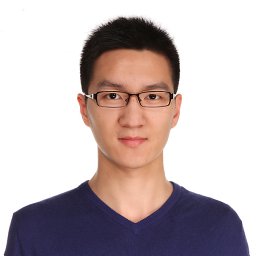
 Hui Qu
· 5 previous affiliations
- Adobe Systems (United States)Since 2021
- Applied Scientist 5.5 · Since 2026
- Machine Learning Engineer 5 · 2024–2026
- Senior Applied Scientist · 2022–2024
- Applied Scientist · 2021–2022
- Graduate Research Assistant · 2018–2021
- Doctor of Philosophy (Ph.D.), Computer Science · 2015–2021
- Teaching Assistant · 2015–2018
- Research Intern · 2020
- Research Intern · 2019
- Shanghai Jiao Tong University2008–2015
- Master’s Degree, Image processing and computer vision · 2012–2015
- Undergrad student · 2008–2012
Research Overview
Hui Qu focuses on medical image analysis, distributed generative modeling, and computer vision for biological tracking. Their trajectory spans from multi-object tracking in cellular imaging to the development of federated learning frameworks for generative adversarial networks. More recently, their focus has centered on non-invasive diagnostic prediction using self-supervised learning and texture encoding in clinical CT data.
Research Trajectory
The available evidence indicates a concentrated period of collaborative research between 2019 and 2021, during which Qu contributed to several distinct problems in computer vision, medical image analysis, and distributed machine learning. Operating primarily as a second or middle author, Qu's work reflects participation in cross-disciplinary teams addressing both foundational machine learning challenges and applied clinical tasks.
In 2019, Qu participated in computer vision research applied to biological imaging. This is evidenced by Online Neural Cell Tracking Using Blob-Seed Segmentation and Optical Flow, where the authors proposed an online multi-object tracking method. By combining a supervised network for cell appearance with an unsupervised optical flow network for motion capture, the team addressed the limitations of relying solely on morphological features for data association in cellular mitosis.
By 2020, Qu's collaborative efforts expanded into distributed machine learning and generative models. As a second author on Training Federated GANs with Theoretical Guarantees: A Universal Aggregation Approach, Qu contributed to frameworks designed to train centralized generators across privately hosted, heterogeneous data distributions. This work intersects with the research direction of Distributed Generative Modeling with Local Discriminators and the broader area of Personalized Federated Learning for Heterogeneous Data, providing theoretical grounding for federated generative adversarial networks.
Concurrently, Qu became heavily involved in medical image analysis, particularly in the non-invasive assessment of liver disease and cardiac function. In Deep Learning based NAS Score and Fibrosis Stage Prediction from CT and Pathology Data, Qu served as a second author on a project predicting Non-Alcoholic Fatty Liver Disease (NAFLD) activity scores and fibrosis stages. The method combined non-invasive CT data with H&E stained pathology data to automate assessments traditionally requiring invasive biopsies. Qu also contributed to cardiac imaging research as a middle author on Cardiac MR Image Sequence Segmentation with Temporal Motion Encoding, which introduced modules to incorporate temporal and motion features into spatial segmentation networks for magnetic resonance image sequences.
In 2021, Qu continued to advance non-invasive liver disease diagnostics. As a second author on Liver Fibrosis and NAS scoring from CT images using self-supervised learning and texture encoding, Qu helped address the challenge of limited annotated medical datasets. The research utilized self-supervised learning and texture encoding to predict fibrosis and NAS scores directly from CT images, mitigating the domain shifts often encountered when relying on transfer learning from pre-trained networks.
Current Directions
The most recent papers in the evidence are from 2021, indicating a focus on reducing the data requirements for clinical image analysis. Recent work investigates the use of self-supervised learning to extract diagnostic signals—such as texture encoding for liver fibrosis—from unannotated or sparsely annotated medical scans. This direction emphasizes building robust, non-invasive diagnostic tools that can operate effectively without the massive labeled datasets traditionally required for deep learning in healthcare applications.
Profile updated
Loading new papers…
Other researchers whose papers cluster into the same research directions — a proxy for overlapping technical interests and shared intellectual neighborhoods.
See something wrong? Report a mistake