

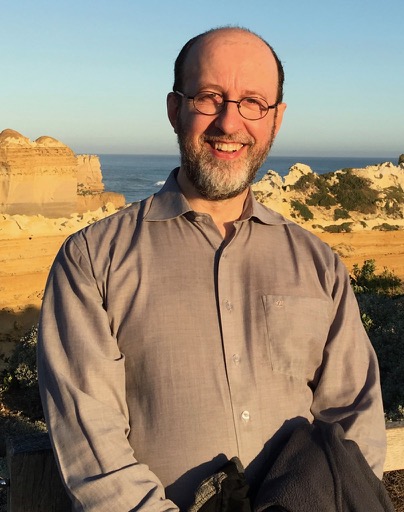
 Hugues Talbot
· 11 previous affiliations
- CentraleSupélecSince 2018
- Professor · Since 2018
- Current
- WeDiagnostiXSince 2020
- Co-founder / CTO · Since 2020
- SMARTPHONE IDSince 2020
- Investor / Head of Research · Since 2020
- Université Paris-SaclayCurrent
- Current
- Université Gustave Eiffel2004–2020
- Professor · 2004–2020
- Professor · 2004–2018
- ESIEE2004–2020
- Professor · 2004–2020
- Dean for Research / Directeur de la recherche · 2015–2018
- ISBS2004–2019
- Professor · 2004–2019
- Paris-Est Sup2013
- Habilitation · 2013
- Principal Researcher · 1994–2004
- Ph.D, Mathematics, computer science · 1990–1993
- Université Paris Sciences et Lettres1990–1993
- Ph.D, Mathematics, computer science · 1990–1993
1 other author named Hugues Talbot: Hugues Talbot (4 papers)
Research Overview
Hugues Talbot focuses on computer vision, mathematical morphology, and applied mathematical optimization for image analysis. His trajectory spans foundational algorithms for morphological filtering and graph-based segmentation to advanced non-convex optimization techniques for inverse problems. Recently, his work emphasizes robust evaluation metrics for generative models and spatially aware deep learning architectures for digital pathology and medical imaging.
Research Trajectory
Talbot’s early research focused heavily on mathematical morphology and its computational implementation. He contributed to algorithms for the Fast computation of morphological operations with arbitrary structuring elements (1996), which improved the computational efficiency of basic operations like erosions and openings. This was followed by collaborative research on Directional Morphological Filtering (2001), introducing translation-invariant implementations of min/max filters along line segments to achieve constant computation times independent of segment length. Moving into continuous optimization for computer vision, he participated in developing systems for computing Globally Minimal Surfaces by Continuous Maximal Flows (2006), addressing image segmentation and stereo reconstruction through partial differential equations that simulate the flow of an ideal fluid.
In the 2010s, his research expanded to encompass unifying frameworks for image segmentation and advanced regularization techniques. He oversaw the development of the Power Watershed: A Unifying Graph-Based Optimization Framework (2011), which connected graph cuts, random walkers, and shortest path algorithms through a common energy function. In the domain of inverse problems, he led work in the area of Majorization Minimization for Non-Convex Optimization, introducing A Majorize-Minimize Subspace Approach for ℓ2-ℓ0 Image Regularization (2013) to promote sparsity and preserve edges in image reconstruction. Continuing this focus on image restoration, his group proposed A Convex Approach for Image Restoration with Exact Poisson-Gaussian Likelihood (2015), which utilized exact mixed continuous-discrete models to handle noise statistics accurately rather than relying on approximations. He also contributed to the analysis of complex 3D structures through Curvilinear Structure Analysis by Ranking the Orientation Responses of Path Operators (2018), utilizing non-linear, discrete path operators from mathematical morphology to estimate intensity and orientation features.
Entering the 2020s, Talbot’s expertise in image analysis increasingly intersected with medical and biological applications. He was part of a large-scale clinical study on Trastuzumab deruxtecan in metastatic breast cancer with variable HER2 expression: the phase 2 DAISY trial (2023), contributing to the broader research direction of Hyperactive DNA Repair Pathways Drive Therapeutic Evasion by integrating machine learning-based pathology with genomic sequencing. In the context of weakly supervised learning, he directed research On the detection of Out-Of-Distribution samples in Multiple Instance Learning (2023), adapting post-hoc detection methods for real-world deployment and introducing a novel benchmark for these scenarios.
In 2024, his group advanced the field of Delineating Ambiguous Boundaries in Low-Contrast Images through two key segmentation papers. They developed a semi-automated method for 3D lung nodule segmentation from 2D annotations using morphological operations, leveraging watershed algorithms and Markov Random Fields to efficiently generate volumetric masks. Concurrently, they introduced "Superlung" in Supervoxel based 3D diseased lung segmentation, a geometric propagation approach designed to prevent the accidental exclusion of cancerous tumors from lung masks by grouping voxels into meaningful clusters. Bridging deep learning and biophysics, he also supervised the creation of a Finite Volume Informed Graph Neural Network for Myocardial Perfusion Simulation (2024), accelerating numerical solvers for clinical diagnostics while maintaining generalization across patient morphologies.
Most recently, his work addresses theoretical guarantees in neural networks and robust evaluation metrics for modern machine learning models. He led the development of Learning Truly Monotone Operators with Applications to Nonlinear Inverse Problems (2025), providing an architecture-agnostic penalization method with rigorous convergence guarantees for tasks like image deblurring. In generative modeling, he collaborated on Enhanced Generative Model Evaluation with Clipped Density and Coverage (2026) and GICDM: Mitigating Hubness for Reliable Distance-Based Generative Model Evaluation (2026), both of which introduce statistical calibrations to correct distance distortions in high-dimensional spaces. Finally, returning to digital pathology, his team introduced SparseXMIL: Leveraging sparse convolutions for context-aware and memory-efficient classification of whole slide images in digital pathology (2026), utilizing sparse convolutions to maintain spatial context in gigapixel images without exceeding memory constraints.
Current Directions
The most recent papers in the evidence indicate a dual focus on rigorous theoretical foundations for deep learning and scalable architectures for medical image analysis. Recent work investigates the integration of physical and mathematical constraints into neural networks, such as training architecture-agnostic models guaranteed to act as monotone operators for solving nonlinear inverse problems. Concurrently, research addresses the evaluation of generative models, proposing novel metrics that mitigate high-dimensional distance distortions and hubness to provide reliable, human-aligned assessments of synthetic data quality. In the medical domain, current efforts emphasize memory-efficient frameworks, utilizing sparse convolutions to preserve spatial context when classifying massive whole slide images in digital pathology.
Profile updated
Loading new papers…
Other researchers whose papers cluster into the same research directions — a proxy for overlapping technical interests and shared intellectual neighborhoods.
See something wrong? Report a mistake