

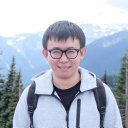
 Huaxiu Yao
· 6 previous affiliations
- Assistant Professor · Since 2023
- Stanford University2021–2023
- Postdoctoral Scholar · 2021–2023
- Pennsylvania State University2017–2021
- Doctor of Philosophy (PhD), Information Science and Technology · 2017–2021
- Visiting PHD Student · 2020
- Applied Scientist Intern · 2020
- Undergrad student · 2012–2016
Research Overview
Huaxiu Yao focuses on meta-learning, the reliability of foundation models, and the development of self-evolving autonomous agents. His early research addressed task heterogeneity and temporal distribution shifts to improve rapid task adaptation. Currently, he directs work on multi-agent collaboration, preference alignment, and tool-integrated reasoning for large language and vision-language models.
Research Trajectory
Yao’s early research concentrated on enabling machine learning models to adapt quickly to new tasks using limited data. He introduced hierarchical structures to manage task uncertainty in the area of Meta-Learning for Heterogeneous Task Distributions with Hierarchically Structured Meta-learning. Recognizing that standard meta-learning algorithms often sample tasks uniformly—which can be detrimental if tasks are noisy or imbalanced—he subsequently developed a neural scheduler in Meta-learning with an Adaptive Task Scheduler to optimize the meta-training process. To further improve generalization and prevent models from merely memorizing training tasks, he proposed task augmentation techniques, such as MetaMix and Channel Shuffle, in Improving Generalization in Meta-learning via Task Augmentation. Expanding his focus to model robustness in non-stationary environments, he curated Wild-Time: A Benchmark of in-the-Wild Distribution Shift over Time. This benchmark provided a standardized way to evaluate how well models can leverage historical trends to extrapolate into the future when faced with temporal distribution shifts.
As his research agenda broadened to encompass large foundation models, Yao directed investigations into their reliability and reasoning capabilities. Addressing the tendency of multimodal models to generate descriptions of non-existent items, he contributed to the research direction of The Dominance of Linguistic Priors in Vision Language Models with Analyzing and Mitigating Object Hallucination in Large Vision-Language Models. Concurrently, he tackled the bottleneck of manual labeling in multi-step reasoning tasks. In AutoPRM: Automating Procedural Supervision for Multi-Step Reasoning via Controllable Question Decomposition, he oversaw the development of a self-supervised framework that decomposes complex problems and applies reinforcement learning to iteratively improve subquestion solvers.
In 2025, Yao synthesized the broader challenges of deploying these systems in Reliable and Responsible Foundation Models, a comprehensive survey covering bias, security, and explainability. A major theme of his subsequent work became preference alignment. Advancing work in the area of Iterative Self-Preference Optimization for Language Models, he guided the development of Anyprefer: An Agentic Framework for Preference Data Synthesis. He also extended preference alignment techniques to robotics; in GRAPE: Generalizing Robot Policy via Preference Alignment, his team aligned vision-language-action models at the trajectory level, learning from both successful and failed attempts to improve performance on unseen tasks.
The most recent phase of Yao’s trajectory centers on the design of autonomous, self-evolving agents and multi-agent systems. To support long-term interactions in complex environments, he introduced SimpleMem: Efficient Lifelong Memory for LLM Agents, a framework utilizing semantic lossless compression to maximize information density. He further advanced agent autonomy by exploring tool-integrated reasoning. This led to Agent0-VL: Exploring Self-Evolving Agent for Tool-Integrated Vision-Language Reasoning and Agent0: Unleashing Self-Evolving Agents from Zero Data via Tool-Integrated Reasoning, frameworks designed to allow agents to evolve and build complex curricula without relying on human-curated data.
Alongside individual agent evolution, Yao has optimized multi-agent collaboration for specialized domains. He directed the development of From EduVisBench to EduVisAgent: A Benchmark and Multi-Agent Framework for Reasoning-Driven Pedagogical Visualization, which decomposes reasoning steps to generate interactive learning materials. In the medical domain, he proposed MMedAgent-RL: Optimizing Multi-Agent Collaboration for Multimodal Medical Reasoning, applying curriculum-based reinforcement learning to simulate clinical collaboration between specialized AI agents. Most recently, he introduced SkillRL: Evolving Agents via Recursive Skill-Augmented Reinforcement Learning, a framework that distills raw interaction data into reusable skills, allowing the skills to evolve alongside the agent's policy to reduce computational overhead.
In 2026, Yao expanded on agent environments, verification, and reinforcement learning. Addressing the scarcity of safe and diverse training worlds for computer-use and web agents, Yao oversaw Agent World Model in the Wild: Computer-Use Agent Environment Synthesis, which generates multi-interface environments with execution-based quality gates, and WebHarbor: Docking Real Websites for Evolving GUI Agent Environments, a dockerized testbed reconstructing real-world websites for reinforcement learning. Yao also guided the development of See, Read, Compare: Candidate-Aware Verification for Agent Test-Time Scaling, an execution-free test-time scaling verifier that compares candidate agent trajectories across induced rubrics. Additionally, Yao collaborated on RoboUniverse-10K: Toward the Scaling Era of Agentic Robotics via Real-to-Sim Environments, constructing large-scale real-to-sim physics environments for agentic robotics, and contributed to Dataset Mismatch Matters in Group Relative Policy Optimization for Reinforcement Learning from Verifiable Rewards, introducing a bilevel prompt-reweighting scheme to handle domain mismatch under privacy constraints. Yao also contributed to Nemotron-Labs-VisualCreation: Pixel as Code for Agentic Visual Creation, an agentic visual creation framework combining discrete visual tokens for raster generation with explicit programs and iterative visual feedback for structured artifacts.
Current Directions
Recent work investigates the autonomy, memory, and continuous improvement of large language model agents, with an increasing emphasis on synthesizing realistic web, computer-use, and robotic simulation environments for reinforcement learning and test-time verification. The most recent papers in the evidence address how agents can self-evolve without human-curated data, utilizing tool-integrated reasoning and recursive skill-augmented reinforcement learning. This includes developing efficient lifelong memory systems for complex environments and optimizing multi-agent collaboration for specialized domains such as medical reasoning and educational visualization.
Profile updated
Loading new papers…
Other researchers whose papers cluster into the same research directions — a proxy for overlapping technical interests and shared intellectual neighborhoods.
See something wrong? Report a mistake