

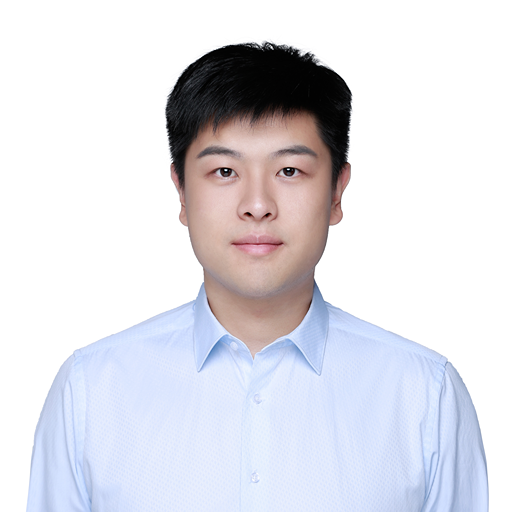
 Huan Yang
· 4 previous affiliations
- Kuaishou (China)Since 2025
- Senior Algorithm Expert · Since 2025
- Current
- 01.AI (China)2023–2025
- Senior Algorithm Expert · 2023–2025
- Microsoft (United States)2019–2023
- Senior Researcher · 2019–2023
- Shanghai Jiao Tong University2010–2019
- PhD student · 2014–2019
- Undergrad student · 2010–2014
4 other authors named Huan Yang: Huan Yang (Central South University · 5 papers), Huan Yang (1 paper), Huan Yang (1 paper), Huan Yang (1 paper)
Research Overview
Huan Yang focuses on generative content creation, multi-modal video synthesis, and image and video restoration. His trajectory spans from foundational work in spatiotemporal feature learning and super-resolution to the development of large-scale diffusion models for high-fidelity video generation. Most recently, his research addresses long-duration video understanding, multi-concept personalization, and maintaining temporal consistency in generative architectures.
Research Trajectory
Yang’s early research explored video understanding and feature extraction. In 2015, he participated in developing Unsupervised Extraction of Video Highlights via Robust Recurrent Auto-Encoders, which utilized user-edited social media videos to identify significant sub-events without relying on heuristic rules or supervised labels.
He subsequently made significant contributions to image and video restoration, focusing on recovering fine details from degraded inputs. He introduced the Learning Texture Transformer Network for Image Super-Resolution (2020), a novel architecture that formulated texture recovery as a joint learning task across scales to transfer high-resolution textures from reference images. Expanding this focus to video and complex degradations, he developed the Learning Spatiotemporal Frequency-Transformer for Compressed Video Super-Resolution (2022), which operated in the frequency domain to distinguish real visual textures from compression artifacts. That same year, he addressed blind super-resolution with the Degradation-Guided Meta-Restoration Network for Blind Super-Resolution (2022), a framework that dynamically adjusted its internal parameters based on estimated image degradation to handle unknown blur and noise.
His work on image enhancement evolved to incorporate context-aware transformations and generative priors. With collaborators, he developed 4D LUT: Learnable Context-Aware 4D Lookup Table for Image Enhancement (2023), which moved beyond uniform color transformations to achieve content-dependent enhancement. Concurrently, he began leveraging diffusion models for restoration tasks. In Solving Diffusion ODEs with Optimal Boundary Conditions for Better Image Super-Resolution (2023), he demonstrated that treating the diffusion sampling process as a deterministic ordinary differential equation could consistently yield high-quality images from pre-trained models without additional training. This intersection of physical priors and generative modeling culminated in Zero-Reference Low-Light Enhancement via Physical Quadruple Priors (2024), a framework that combined an illumination-invariant prior with diffusion models to brighten images while training exclusively on normal-light photos.
As his research expanded into large-scale video generation—aligning with his roles at 01.AI and later Kuaishou Kling—Yang focused heavily on temporal coherence and motion dynamics. He co-developed ConsistI2V: Enhancing Visual Consistency for Image-to-Video Generation (2024), which introduced spatiotemporal attention mechanisms to maintain spatial and motion consistency, directly addressing challenges in the research area of Artifact Inheritance and Noise Propagation in Generative Models. He also explored human motion synthesis in Fleximo: Towards Flexible Text-to-Human Motion Video Generation (2024), bridging text-to-3D motion models with motion-to-video generation to preserve identity and complex movements. To close the performance gap between open-source tools and proprietary systems, he oversaw the development of Allegro: Open the Black Box of Commercial-Level Video Generation Model (2024), releasing a comprehensive methodology for a text-to-video diffusion transformer model.
In 2025, Yang’s focus shifted toward extending the temporal and narrative capabilities of video models. He introduced VISTA: Enhancing Long-Duration and High-Resolution Video Understanding by Video Spatiotemporal Augmentation (2025), a data-centric framework that synthesized complex videos from short clips to improve training data, advancing the broader area of Synthetic Video Concatenation for Long Form Temporal Reasoning. He further addressed long-range coherence with Long Video Diffusion Generation with Segmented Cross-Attention and Content-Rich Video Data Curation (2025), proposing a segmented cross-attention strategy to generate diverse, 15-second videos. Additionally, he explored narrative-driven synthesis in DreamStory: Open-Domain Story Visualization by LLM-Guided Multi-Subject Consistent Diffusion (2025), leveraging large language models to direct multi-subject consistency across generated frames.
Most recently, his work has tackled fine-grained control and personalization in generative models. He contributed to TexEditor: Structure-Preserving Text-Driven Texture Editing (2026), which utilized reinforcement learning to alter object textures without warping their underlying geometry. He also co-developed Mod-Adapter: Tuning-Free and Versatile Multi-concept Personalization via Modulation Adapter (2026), introducing a tuning-free approach for customizing both concrete objects and abstract concepts in text-to-image diffusion transformers.
Current Directions
Based on his most recent publications, Yang’s current research investigates the scalability and controllability of diffusion transformers for complex video and image generation. A primary focus is long-duration video synthesis, where he is developing architectural modifications—such as segmented cross-attention and spatiotemporal data augmentation—to maintain narrative coherence and visual fidelity over extended time horizons. Concurrently, his work addresses the challenge of multi-concept personalization and precise editing in generative models. By designing tuning-free adapters and structure-preserving reinforcement learning strategies, he aims to allow users to seamlessly inject custom subjects, lighting, and textures into generated content without requiring computationally expensive test-time fine-tuning or sacrificing geometric integrity.
Profile updated
Loading new papers…
Other researchers whose papers cluster into the same research directions — a proxy for overlapping technical interests and shared intellectual neighborhoods.
See something wrong? Report a mistake