

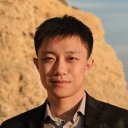
 Huan Song
· 3 previous affiliations
- Amazon (United States)Since 2022
- Researcher · Since 2022
- Robert Bosch (Germany)2018–2022
- Researcher · 2018–2022
- Arizona State University2013–2018
- PhD student · 2013–2018
Research Overview
Huan Song focuses on time-series analysis, representation learning, and the integration of deep neural networks with kernel methods. His early work addressed sensor fusion and clinical sequence modeling using attention mechanisms to improve interpretability and computational efficiency. More recently, his research investigates reasoning and data augmentation strategies for large language and vision-language models, alongside advanced architectures for time-series forecasting.
Research Trajectory
Song’s early collaborative work involved applying time-series analysis to environmental data, contributing to educational tools for Earth systems science in Interactive tools for global sustainability and Earth systems: Sea level change and temperature.
He subsequently developed methods for fusing complex features in visual and sensor data. He introduced an auto-context modeling approach that leveraged multiple kernel learning within a Reproducing Kernel Hilbert Space (RKHS). By using marginal probabilities to approximate context models, this work provided a computationally tractable solution for fusing high-level context with image appearance models in Auto-context modeling using multiple Kernel learning. Expanding on robust representation learning, he designed a two-stage recognition system for mobile phone sensors, utilizing linear graph embeddings to fuse complementary sensor data for activity recognition in Consensus inference on mobile phone sensors for activity recognition.
Recognizing the optimization challenges of traditional multiple kernel learning, he proposed creating dense data embeddings from kernel similarities and fusing them via deep neural networks, utilizing a kernel dropout regularization strategy in A deep learning approach to multiple kernel fusion. This effort to unify nonparametric models with deep learning culminated in Optimizing Kernel Machines Using Deep Learning, which provided a framework for end-to-end learning of kernel machines with task-specific objectives, overcoming traditional computational bottlenecks.
In 2018, his focus expanded to sequence modeling and attention mechanisms across diverse domains. For audio processing, he developed an end-to-end approach for speaker diarization that bypassed traditional i-vector extraction. This work, Triplet Network with Attention for Speaker Diarization, utilized attention to learn speech segment embeddings and contributed to the broader areas of Adaptive Margins for Deep Metric Learning and Deep Metric Learning with Triplet Loss, as well as the research direction of Diarization Performance in High-Density Multi-Party Conversations.
Addressing the inefficiencies of recurrent neural networks for processing long sequences, he introduced purely attention-based architectures for clinical time-series predictions in Attend and Diagnose: Clinical Time Series Analysis Using Attention Models. This research advanced several methodological fronts, including the area of 1D Convolutions for Local Temporal Feature Extraction and the research direction of Enforcing Temporal Causality with Causal Attention Masking. Crucially, it also demonstrated how attention weights could highlight clinically relevant time steps, contributing to the domain of Attention Mechanisms as a Bridge to Model Interpretability. Alongside sequence modeling, he continued advancing graph-based representations. In Improved Community Detection using Deep Embeddings from Multilayer Graphs, he presented a method for capturing relationships across multi-layered networks, improving performance on node classification and community detection tasks.
Following these advancements in representation learning, his focus shifted toward the reasoning capabilities and efficient adaptation of foundation models. In 2024, he collaborated on integrating knowledge graphs with large language models to improve grounded generation in Graph Neural Prompting with Large Language Models. Addressing the challenge of fine-tuning smaller, more efficient models, he introduced a multi-agent framework that systematically analyzes validation errors to generate targeted data augmentations in Learning from Generalization Patterns: An Evaluation-Driven Approach to Enhanced Data Augmentation for Fine-Tuning Small Language Models. This approach directly targets generalization gaps rather than merely correcting training errors, proving particularly effective in low-data scenarios.
Parallel efforts extended these reasoning enhancements to multimodal domains, where he participated in developing a self-distillation framework utilizing diverse reasoning traces to improve Vision-Language Models in SDRT: Enhance Vision-Language Models by Self-Distillation with Diverse Reasoning Traces. Finally, returning to his foundational interest in sequence data, his collaborative work in 2026 addresses the heterogeneity of time-series data at scale. AME-TS: Anchored Mixture-of-Experts for Time Series Forecasting investigates Mixture-of-Experts (MoE) architectures for forecasting, specifically tackling the problem of "expert drift" to ensure stable specialization across diverse temporal datasets.
Current Directions
The most recent work in the evidence centers on enhancing the reasoning, grounding, and efficiency of foundation models. A major theme is the development of structured prompting and self-distillation techniques to elicit better reasoning traces from both large language models and vision-language models. Additionally, recent research investigates evaluation-driven data augmentation to bridge generalization gaps when fine-tuning smaller language models, enabling high performance even in low-data regimes. Alongside these efforts in natural language and multimodal processing, there is an ongoing focus on scaling time-series forecasting through Mixture-of-Experts architectures, addressing the inherent heterogeneity of temporal data by stabilizing expert specialization.
Profile updated
| Paper | Venue | Year |
|---|---|---|
| Graph Neural Prompting with Large Language ModelsGitHubmeettyj/ | Unknown | 2023 |
Loading new papers…
Other researchers whose papers cluster into the same research directions — a proxy for overlapping technical interests and shared intellectual neighborhoods.
See something wrong? Report a mistake