

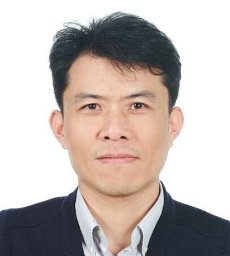
 Hsin-Min Wang
· 2 previous affiliations
- Academia SinicaSince 1995
- Research Fellow · Since 1995
- National Taiwan University1985–1995
- PhD student · 1989–1995
- Undergrad student · 1985–1989
Research Overview
Hsin-Min Wang focuses on speech processing, acoustic modeling, and music information retrieval. His work spans from early translingual speech retrieval and music emotion modeling to modern deep learning approaches for speech enhancement and automatic music generation. Recently, he investigates self-supervised representation learning and advanced neural architectures for robust multichannel speech processing and emotion preservation.
Research Trajectory
Early in his career, Wang's work addressed cross-lingual speech applications. He participated in the development of Mandarin-English Information: Investigating Translingual Speech Retrieval (2001), a project exploring the complexities of retrieving information across language barriers. This early research intersects with the research direction of Semantic Disambiguation through Cross-Lingual Triangulation and the broader area of Machine Transliteration for Out of Vocabulary Entities. Furthermore, the work touched upon foundational challenges in areas such as Robust Language Understanding for Noisy Speech Transcripts and Character Level Representations for Robust Natural Language Processing.
Moving into the 2010s, Wang established a significant research thread in music information retrieval (MIR) and the computational modeling of musical emotion. He contributed to The acoustic emotion gaussians model for emotion-based music annotation and retrieval (2012), which introduced a generative probabilistic framework designed to capture the subjective nature of emotion perception in music. He expanded on this foundation in Affective Music Information Retrieval (2017), a work that further formalized the Acoustic Emotion Gaussians (AEG) framework to enable personalized emotion recognition. This work also contributed to the research direction of Mitigating Western Bias in Generative Music Models. Concurrently, he directed efforts in music classification and structural segmentation. He developed ensemble learning techniques tailored for temporal signals in Improving music auto-tagging by intra-song instance bagging (2014), proposing intra-song instance bagging to bootstrap samples directly from short-time features. In the same year, he addressed macro-level structural analysis in Automatic Set List Identification and Song Segmentation for Full-Length Concert Videos (2014).
In subsequent years, Wang's focus broadened to include generative models for music and deep learning architectures for speech enhancement. In the domain of automatic music generation, he investigated transfer learning to overcome data scarcity in specific musical genres, as detailed in Improving Automatic Jazz Melody Generation by Transfer Learning Techniques (2019). This approach utilized a recurrent variational autoencoder to transfer common features from a genre-unspecified dataset to the under-resourced jazz domain. He also explored symbolic melody harmonization, utilizing orderless Neural Autoregressive Distribution Estimation (NADE) and blocked Gibbs sampling to generate coherent and interesting chord progressions in Melody Harmonization Using Orderless Nade, Chord Balancing, and Blocked Gibbs Sampling (2021).
Parallel to his music research, Wang directed substantial efforts toward robust speech processing and enhancement. To address the critical issue of noise type mismatch between training and testing conditions in deep learning-based systems, he proposed a novel architecture utilizing domain adversarial training in Noise Adaptive Speech Enhancement Using Domain Adversarial Training (2019). He also participated in large-scale community evaluations of speech spoofing countermeasures, contributing to the foundational dataset described in ASVspoof 2019: A large-scale public database of synthesized, converted and replayed speech (2020). Continuing his work on speech enhancement for downstream tasks, he investigated transformer-based models fine-tuned with two-stage training schemes to improve end-to-end recognition in Investigation of a Single-Channel Frequency-Domain Speech Enhancement Network to Improve End-to-End Bengali Automatic Speech Recognition Under Unseen Noisy Conditions (2021).
More recently, Wang has collaborated on integrating speech enhancement with downstream acoustic models and exploring self-supervised representations. He contributed to D4AM: A General Denoising Framework for Downstream Acoustic Models (2023), which fine-tunes enhancement models using backward gradients from specific acoustic models. This methodology aligns with the research direction of Dynamic Balancing of Competing Training Objectives. In 2024, his collaborative work has increasingly leveraged advanced neural architectures. This includes participation in SpeechCLIP+: Self-Supervised Multi-Task Representation Learning for Speech Via Clip and Speech-Image Data, which extends visually grounded speech models using Continuous Integrate-and-Fire modules and hybrid multi-task architectures. He also contributed to Leveraging Joint Spectral and Spatial Learning with MAMBA for Multichannel Speech Enhancement (2024), exploring state-space models to capture complex temporal dependencies in dynamic acoustic environments. Finally, he participated in evaluating the emotion preservation capacity of neural and legacy codecs in EMO-Codec: An In-Depth Look at Emotion Preservation Capacity of Legacy and Neural Codec Models with Subjective and Objective Evaluations (2024), bridging his long-standing interests in both speech processing and affective computing.
In 2026, Wang co-authored Fooling the Mind Twice: Human Detection of Audiovisual Deepfakes Under Repeated Exposure and Corrective Feedback, which examined how repeated exposure and corrective feedback affect human perception when detecting audiovisual deepfakes across datasets like FakeAVCeleb and DFDC.
Current Directions
The most recent papers in the evidence indicate a focus on advanced neural architectures for robust speech processing and self-supervised representation learning. Recent work investigates the integration of speech enhancement front-ends with downstream acoustic models, optimizing them jointly for complex acoustic environments. Additionally, current research explores the application of state-space models, such as Mamba, for multichannel speech enhancement to better capture spatial and spectral dependencies. Another active area of investigation involves visually grounded speech models, the evaluation of neural codecs, and human perceptual factors in audiovisual deepfake detection under repeated exposure and corrective feedback.
Profile updated
Loading new papers…
Other researchers whose papers cluster into the same research directions — a proxy for overlapping technical interests and shared intellectual neighborhoods.
See something wrong? Report a mistake