

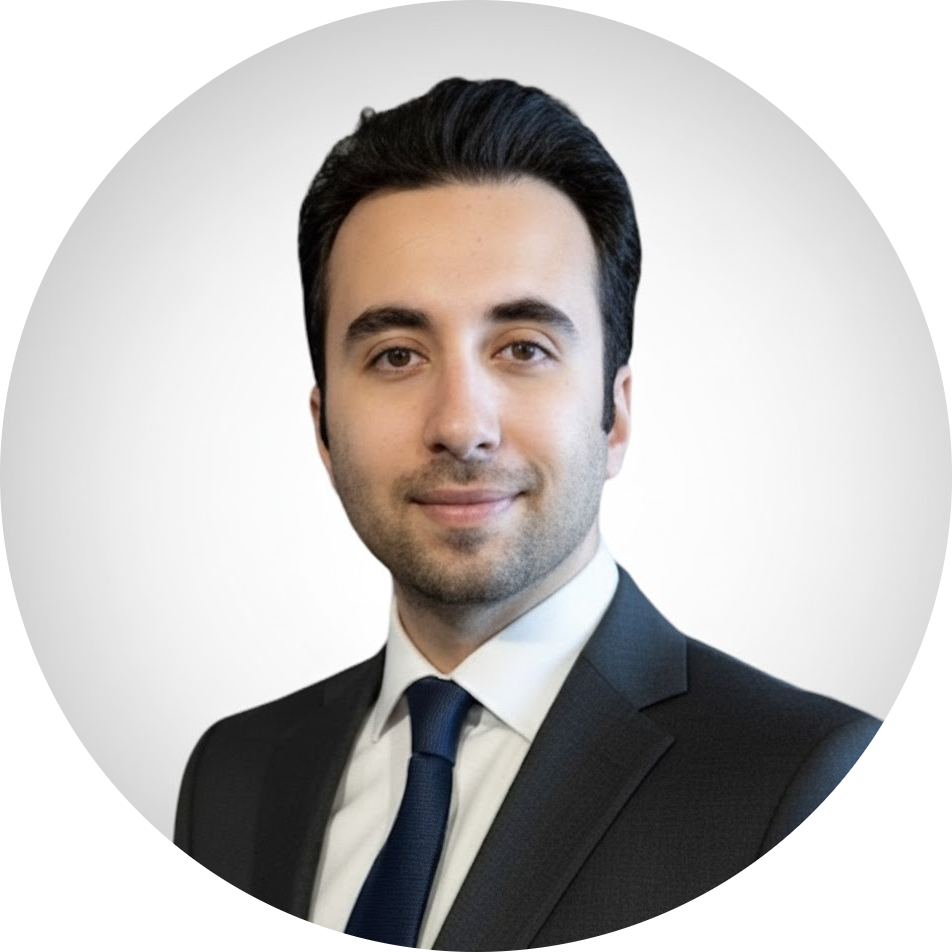
 Hossein Kashiani
· 4 previous affiliations
- Utah State UniversitySince 2026
- Assistant Professor · Since 2026
- Clemson University2024–2026
- Researcher · 2026
- Graduate Research Assistant · 2024–2026
- West Virginia University2022–2024
- Graduate Research Assistant · 2022–2024
- Graduate Research Assistant at Computer Vision Laboratory · 2017–2021
- Master's degree, Electrical Engineering - Digital Electronics · 2015–2018
Research Overview
Hossein Kashiani focuses on improving the generalization and adaptability of vision-language models, multimodal in-context learning, and deepfake detection. His work addresses critical challenges in model overfitting and spectral bias through novel prompt learning and debiasing frameworks. Recently, he has investigated the use of hyperbolic geometry to enhance the stability and efficiency of multimodal large language models.
Research Trajectory
Kashiani’s research trajectory is primarily centered on enhancing the robustness and generalization capabilities of deep learning models across various modalities. In 2025, he contributed to multiple efforts aimed at improving how pre-trained vision-language models adapt to downstream tasks. A major challenge in prompt learning is the tendency for models to overfit to seen data distributions, which degrades their performance on novel classes or unseen domains. To address this, he collaborated on Style-Pro: Style-Guided Prompt Learning for Generalizable Vision-Language Models, which introduced a style-guided framework to mitigate overfitting and preserve the original generalization behaviors of the models. In a complementary effort, he helped develop DiSa: Directional Saliency-Aware Prompt Learning for Generalizable Vision-Language Models. This work integrated cross-interactive regularization and a saliency-aware masking strategy to guide image encoders, fostering better cross-modal alignment and further preventing performance degradation on novel data.
Alongside his work on vision-language models, Kashiani has investigated generalization in the context of digital forensics. He led the development of FreqDebias: Towards Generalizable Deepfake Detection via Consistency-Driven Frequency Debiasing. This research identified "spectral bias"—a phenomenon where detectors over-rely on specific frequency bands—as a key limitation in identifying novel forgery types. By introducing a dynamic frequency augmentation technique called Forgery Mixup alongside dual consistency regularization, the framework successfully diversified the frequency characteristics of training samples to improve detection on unseen deepfakes.
Continuing into 2026, Kashiani’s focus expanded to multimodal large language models (MLLMs) and the efficiency of in-context learning. He collaborated on Hyper-ICL: Attention Calibration with Hyperbolic Anchor Distillation for Multimodal In-Context Learning, a training-based framework designed to enable in-context learning without requiring demonstrations at inference time. By leveraging attention calibration and feature alignment in non-Euclidean spaces, this work intersects with the broader research direction of Hyperbolic Embeddings for Hierarchical Representation Learning. The approach significantly reduced inference latency while improving the accuracy and stability of MLLMs.
Current Directions
Based on his most recent work in 2026, Kashiani’s current research investigates the efficiency and stability of multimodal large language models. A primary focus is optimizing in-context learning paradigms so that models can perform complex reasoning tasks without the high latency typically associated with processing inference-time demonstrations. To achieve this, his recent efforts explore advanced geometric representations—specifically hyperbolic geometry—to better align multimodal features and calibrate attention distributions. This suggests an ongoing interest in bridging architectural efficiency with robust generalization, ensuring that large-scale multimodal systems remain both accurate and computationally tractable.
Profile updated
Loading new papers…
Other researchers whose papers cluster into the same research directions — a proxy for overlapping technical interests and shared intellectual neighborhoods.
See something wrong? Report a mistake