

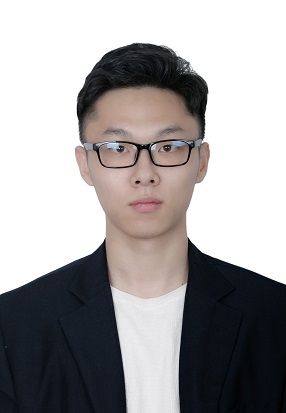
 Hongyu Zang
1 previous affiliation
- Meituan (China)2024–2025
- Researcher · 2024–2025
Research Overview
Hongyu Zang focuses on deep reinforcement learning, representation learning, and offline reinforcement learning. His trajectory spans from early work in graph neural networks and continuous control to developing robust state abstractions for visual and goal-conditioned environments. Most recently, his research investigates efficient scaling and knowledge editing for large language models.
Research Trajectory
Zang’s early research involved graph neural networks and continuous control optimization. In 2019, he participated in developing A Vectorized Relational Graph Convolutional Network for Multi-Relational Network Alignment, which introduced a framework for embedding entities and relations simultaneously to align knowledge graphs. Shifting toward reinforcement learning, he introduced TEAC: Intergrating Trust Region and Max Entropy Actor Critic for Continuous Control (2020), an off-policy algorithm that formulates the reinforcement learning objective as a constraint optimization problem to balance stability and exploration in continuous environments.
In 2022, his focus expanded to state abstractions and representation learning for complex environments. He developed SimSR: Simple Distance-Based State Representations for Deep Reinforcement Learning, which proposed a stochastic approximation method to learn robust encoders from image-based observations, addressing the computational complexities of bisimulation metrics. Concurrently, he explored goal-conditioned reinforcement learning through the lens of discrete representations. This work includes Discrete Compositional Representations as an Abstraction for Goal Conditioned Reinforcement Learning and the closely related Discrete Factorial Representations as an Abstraction for Goal Conditioned Reinforcement Learning. By introducing a discretization bottleneck, these methods decompose complex visual goals into discrete codes, improving generalization and sub-goal communication. This research contributes to broader areas such as the research direction of Mitigating Codebook Collapse in Vector Quantization, the area of Factorizing Representations for Compositional Generalization, and work in Grounding Hierarchical Planning in Low-Level Reachability. During this period, he also applied representation learning to spatial-temporal data, proposing CHA: Categorical Hierarchy-based Attention for Next POI Recommendation to improve point-of-interest predictions using category hierarchy knowledge graphs and spatial-temporal decay mechanisms.
Zang’s subsequent work heavily emphasized offline reinforcement learning and the refinement of latent state spaces. He investigated self-supervised representation learning in Representation Learning in Deep RL via Discrete Information Bottleneck (2023) to recover underlying latent structures from rich observations. To tackle the challenges of offline reinforcement learning in noisy environments, he introduced Behavior Prior Representation learning for Offline Reinforcement Learning, a method that pre-trains state representations via behavior cloning before policy training. This aligns with his contributions to the area of Action Conditioned Representations for Robust Reinforcement Learning. He further addressed representation collapse in offline datasets with Understanding and Addressing the Pitfalls of Bisimulation-based Representations in Offline Reinforcement Learning, deploying an expectile-based operator and tailored reward scaling. Extending these principles to model-based reinforcement learning, he collaborated on Learning Latent Dynamic Robust Representations for World Models (2024), which seeks to prevent internal simulators from being distracted by irrelevant visual noise, advancing the research direction of Task Relevant Latent Dynamics for Visual Reinforcement Learning.
The most recent phase of his trajectory demonstrates a pivot toward the architecture and refinement of large language models. In 2025, he detailed a 560-billion parameter Mixture-of-Experts architecture in the LongCat-Flash Technical Report, which utilizes zero-computation experts and shortcut connections to achieve high inference efficiency for agentic tasks. Following this, he contributed to Fine-tuning Done Right in Model Editing (2026), demonstrating that standard epoch-based mini-batch fine-tuning, when targeted at specific layers, can outperform specialized algorithms for scaling knowledge edits in massive models.
Current Directions
The most recent papers in the evidence indicate a shift toward the efficiency, scaling, and post-training modification of large language models. Recent work investigates high-efficiency Mixture-of-Experts (MoE) architectures designed to accelerate inference for agentic tasks without sacrificing performance. Additionally, current research addresses the challenge of model editing at scale, exploring how foundational techniques like targeted, epoch-based fine-tuning can be optimized to reliably update knowledge in models with tens of billions of parameters.
Profile updated
Loading new papers…
Other researchers whose papers cluster into the same research directions — a proxy for overlapping technical interests and shared intellectual neighborhoods.
See something wrong? Report a mistake