

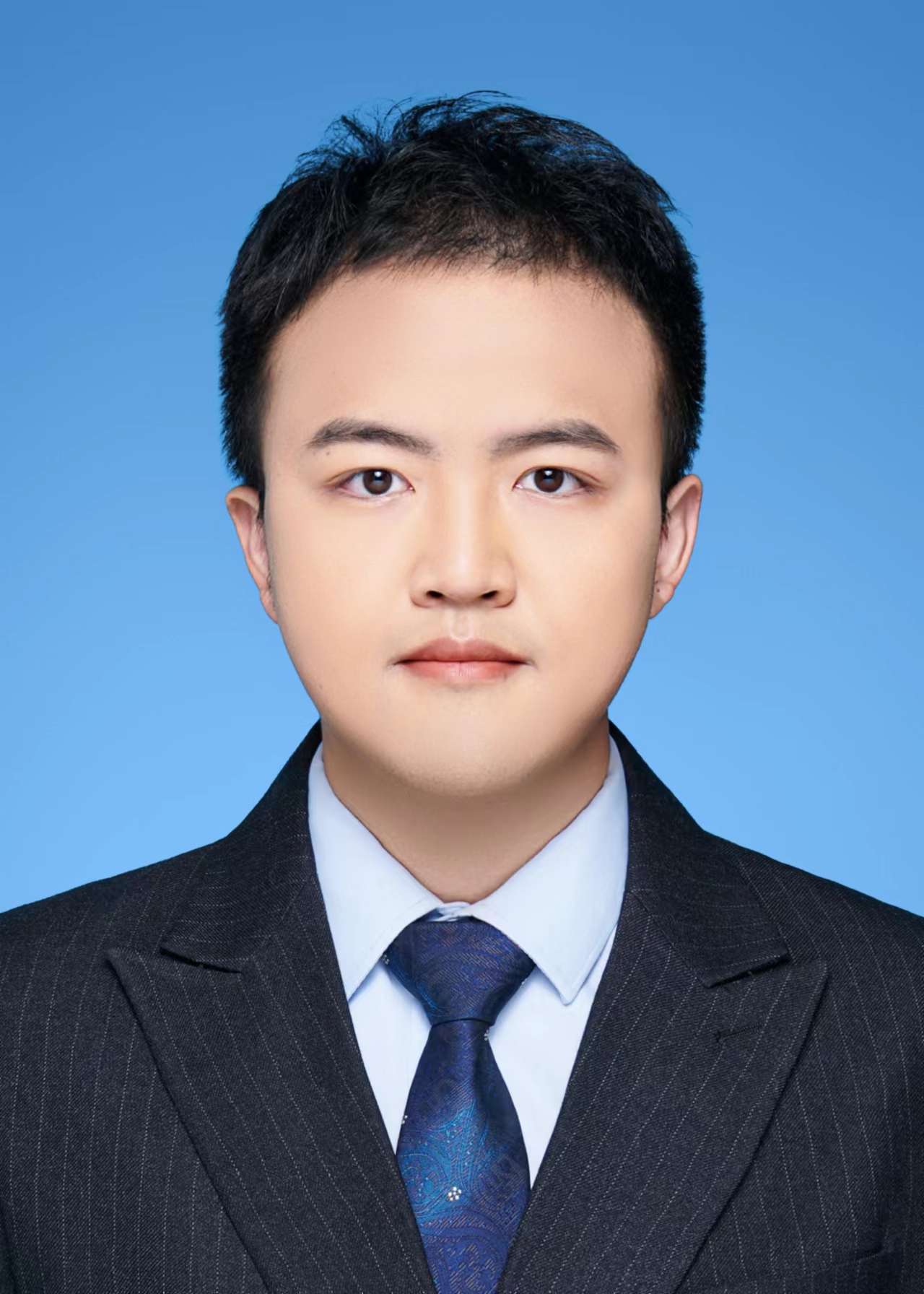
 Hongyu Wang
· 2 previous affiliations
- Chinese Academy of SciencesSince 2022
- PhD student · 2022–2027
- Undergrad student · 2018–2022
8 other authors named Hongyu Wang: Hongyu Wang (Dalian University of Technology · 4 papers), hongyu wang (Hunan University · 2 papers), Hongyu Wang (Chinese Academy of Sciences · University of Chinese Academy of Sciences · 2 papers), Hongyu Wang (1 paper), Hongyu Wang (1 paper), and 3 more
Research Overview
Hongyu Wang focuses on efficient architectures for large-scale foundation models, low-bit precision training, and multimodal reasoning. His work addresses the computational and stability bottlenecks of scaling deep neural networks, introducing novel normalization techniques and ultra-low precision quantization methods. Most recently, his research investigates native 1-bit and ternary large language models to drastically reduce inference costs while maintaining performance.
Research Trajectory
Hongyu Wang's research trajectory initially centered on the architectural stability and efficient scaling of deep neural networks. In 2022, he contributed to the development of TorchScale: Transformers at Scale, an open-source toolkit designed to overcome the challenges of training massive models by integrating advanced modeling techniques and a novel gradient clipping method. Building on this focus, he investigated the structural impediments to training deep networks across different modalities. This led to the architecture proposed in Magneto: A Foundation Transformer (2023), which introduced a Sub-LayerNorm (Sub-LN) structure and a theoretically grounded initialization strategy. By unifying performance across language, vision, and speech tasks, this work advanced the broader research direction of Normalization Placement for Stable Deep Transformers.
The challenge of maintaining stable signal propagation in increasingly deep architectures culminated in DeepNet: Scaling Transformers to 1,000 Layers (2024). By designing a novel normalization function called DeepNorm and deriving a corresponding initialization scheme, the method bounded model updates to ensure stable training. This allowed Transformers to scale to 1,000 layers—comprising 2,500 attention and feed-forward network sublayers—without the typical optimization difficulties. Combining the performance benefits of Post-LN with the stability of Pre-LN, this work made significant contributions to the area of Balancing Stability and Expressivity in Deep Transformers.
Concurrently, Wang's focus expanded toward extreme quantization to address the severe computational and memory bottlenecks of large language models (LLMs). In 2023, he introduced BitNet: Scaling 1-bit Transformers for Large Language Models. Rather than relying on post-training quantization, this architecture trained weights from scratch by replacing standard linear layers with a novel BitLinear module. The approach achieved performance competitive with full-precision models while reducing energy consumption by up to 38.8x and significantly shrinking the memory footprint. This established a foundation for the research area of Low-Bit Precision Training for Large Language Models and advanced the broader field of Scaling Laws for Low Precision Models.
This quantization paradigm was further refined in 2024 with The Era of 1-bit LLMs: All Large Language Models are in 1.58 Bits. By adopting ternary weights ({-1, 0, 1}), the BitNet b1.58 model matched the perplexity and task accuracy of FP16 models at the 3-billion parameter scale. This shift replaced expensive matrix multiplications with simple integer additions, driving progress in the field of Multiplierless Architectures for Energy Efficient Deep Learning. Alongside weight quantization, Wang also explored activation efficiency. He co-developed Q-Sparse: All Large Language Models can be Fully Sparsely-Activated (2024), a technique that enforces full activation sparsity during both training and inference. By retaining only the "top-K" most important activations and utilizing a Straight-Through Estimator during training, Q-Sparse models matched dense baselines while substantially reducing computational overhead and memory I/O.
Current Directions
The most recent papers in the evidence address the hardware-aware optimization of ultra-low precision models. Recent work investigates methods to smooth activation outliers in 1-bit LLMs, enabling them to fully leverage next-generation hardware accelerators. Specifically, the development of BitNet v2: Native 4-bit Activations with Hadamard Transformation for 1-bit LLMs (2025) introduces an H-BitLinear layer that applies an online Hadamard transformation within the network. This allows models to transition from 8-bit to native 4-bit activations with negligible performance loss, aligning algorithmic design with the 4-bit acceleration capabilities of modern GPU architectures like the NVIDIA Blackwell.
Profile updated
Loading new papers…
Other researchers whose papers cluster into the same research directions — a proxy for overlapping technical interests and shared intellectual neighborhoods.
See something wrong? Report a mistake