

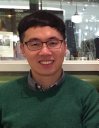
 Hongyang Chen
· 7 previous affiliations
- Senior Research Expert · Since 2020
- Adjunct Professor · 2021–2025
- Zhejiang LabSince 2020
- Deputy Director/Senior Research Expert, Research Center for Scientific Data Hub · Since 2020
- Zhejiang UniversitySince 2020
- Adjunct Professor · Since 2022
- Senior Research Expert · Since 2020
- IETSince 2024
- IET Fellow · Since 2024
- The University of Tokyo2008–2023
- Visiting Researcher (Adjunct position) · 2020–2023
- Ph. D, Electronical and information Theory · 2008–2011
- Fujitsu (Japan)2011–2020
- Researcher · 2011–2020
- Southwest Jiaotong University2003–2006
- Master, Communication and information system · 2003–2006
1 other author named Hongyang Chen: Hongyang Chen (China Mobile Research Institute · 3 papers)
Research Overview
Hongyang Chen focuses on graph representation learning, adversarial robustness in machine learning, and computational methods for molecular and biological modeling. His trajectory spans early foundational work in wireless sensor network localization to recent advancements in graph neural networks and large language model integration. Currently, his research emphasizes scalable dynamic graph learning, few-shot drug discovery, and the evaluation of autonomous agents in complex environments.
Research Trajectory
Hongyang Chen’s early research concentrated on signal processing and localization within wireless sensor networks (WSNs). He initially explored methods to improve position estimation using received signal strength, as detailed in A Novel Localization Scheme Based on RSS Data for Wireless Sensor Networks (2006), which combined hyperbolic position location with extended Kalman filtering. Expanding on this, he investigated distributed approaches in Distributed wireless sensor network localization via sequential greedy optimization algorithm (2010). A major focus during this period was addressing the challenges of non-line-of-sight (NLOS) environments. In Non-Line-of-Sight Node Localization Based on Semi-Definite Programming in Wireless Sensor Networks (2012), he introduced a relaxation algorithm that bypassed the need to explicitly identify and discard corrupted signals. This work contributed significantly to the research direction of Semidefinite Relaxations for Globally Optimal Geometric Estimation, as well as the broader areas of Robust Coordinate Estimation via Geometric Intersection and Mitigating Non-Line-of-Sight Errors in Wireless Localization. He continued to refine these convex relaxation techniques for time-of-arrival localization in NLOS Error Mitigation for TOA-Based Localization via Convex Relaxation (2014).
As his research evolved, Chen expanded into broader domains of machine learning, signal processing, and network optimization. In the area of speech processing, he contributed to the development of specialized datasets, participating in the creation of the Mandarin Lombard Grid: a Lombard-grid-like corpus of Standard Chinese (2022). This line of inquiry into how speakers adjust vocal effort in noisy environments later culminated in Unveiling Lombard speech flavors: A comprehensive categorization based on perceived intelligibility beyond loudness (2025), advancing the research direction of Semantic Context and Vocal Adaptation in Noise. Concurrently, he addressed resource constraints in mobile networks, leading the development of joint resource allocation and link selection mechanisms in Communication and Energy Efficient Decentralized Learning Over D2D Networks (2023).
In 2023, Chen’s work increasingly emphasized adversarial robustness and advanced graph neural networks (GNNs). He co-authored multiple studies on the vulnerabilities of natural language processing models, focusing on the challenging scenario where attackers only have access to final predicted labels. This included SSPAttack: A Simple and Sweet Paradigm for Black-Box Hard-Label Textual Adversarial Attack (2023) and HQA-Attack: Toward High Quality Black-Box Hard-Label Adversarial Attack on Text (2023). The latter introduced a gradient-free optimization strategy to generate adversarial examples with fewer queries, contributing to the research areas of Decision Based Optimization with Hard Label Feedback and Semantic Preservation Constraints for Textual Adversarial Attacks.
Simultaneously, Chen sought to improve the architectural foundations of Graph Transformers. He proposed integrating local structural metrics into self-attention mechanisms in Circle Feature Graphormer: Can Circle Features Stimulate Graph Transformer? (2023). He later expanded on this by incorporating attribute-aware quantum walks to balance global reach with local structural nuances in GQWformer: A Quantum-based Transformer for Graph Representation Learning (2024). His expertise in graph structures was also applied to systems security, as seen in his work on Graph neural network based robust anomaly detection at service level in SDN driven microservice system (2024).
More recently, Chen has focused on integrating large language models (LLMs) with structured knowledge and applying deep learning to complex biological data. In Two Heads Are Better Than One: Integrating Knowledge from Knowledge Graphs and Large Language Models for Entity Alignment (2024), he developed a framework that combines structural graph embeddings with LLM semantic reasoning to merge disparate knowledge graphs. In the biomolecular domain, his group introduced a neural network capable of capturing multi-body interatomic relationships for de novo molecule generation in Geometric-Facilitated Denoising Diffusion Model for 3D Molecule Generation (2024). This was followed by UniMatch: Universal Matching from Atom to Task for Few-Shot Drug Discovery (2025), a dual-matching framework designed to predict molecular properties from minimal examples.
Chen’s latest work continues to push the boundaries of scalable learning and complex system evaluation. He addressed the computational overhead of dynamic graph neural networks by integrating Hawkes processes into message-passing mechanisms in Input Snapshots Fusion for Scalable Discrete-Time Dynamic Graph Neural Networks (2025). In the realm of continual learning, he co-authored CKDF-V2: Effectively Alleviating Representation Shift for Continual Learning With Small Memory (2026), proposing feature boosting calibration to mitigate catastrophic forgetting. His biological modeling research also advanced with NC-Bench and NCfold: A Benchmark and Closed-Loop Framework for RNA Non-Canonical Base-Pair Prediction (2026), which iteratively refines sequence data using structural priors. Finally, he led the development of ComplexMCP: Evaluation of LLM Agents in Dynamic, Interdependent, and Large-Scale Tool Sandbox (2026), establishing a rigorous benchmark to test the limits of autonomous agents in noisy, multi-tool environments.
Current Directions
The most recent papers in the evidence indicate a strong focus on the intersection of foundation models, complex structured data, and autonomous systems. A primary direction is the rigorous evaluation and deployment of Large Language Model agents. Recent work investigates how these agents perform in highly dynamic, interdependent environments, highlighting the gap between current model capabilities and human performance when managing hundreds of interconnected tools.
Additionally, Chen is actively advancing computational biology and chemistry through deep learning. This includes developing closed-loop frameworks that fuse sequence data with structural priors to predict rare RNA interactions, as well as hierarchical matching techniques for few-shot drug discovery. Finally, he continues to address fundamental challenges in machine learning infrastructure, specifically focusing on scalable architectures for dynamic temporal graphs and memory-efficient methods for continual learning that prevent representation shift over time.
Profile updated
Loading new papers…
Other researchers whose papers cluster into the same research directions — a proxy for overlapping technical interests and shared intellectual neighborhoods.
See something wrong? Report a mistake