

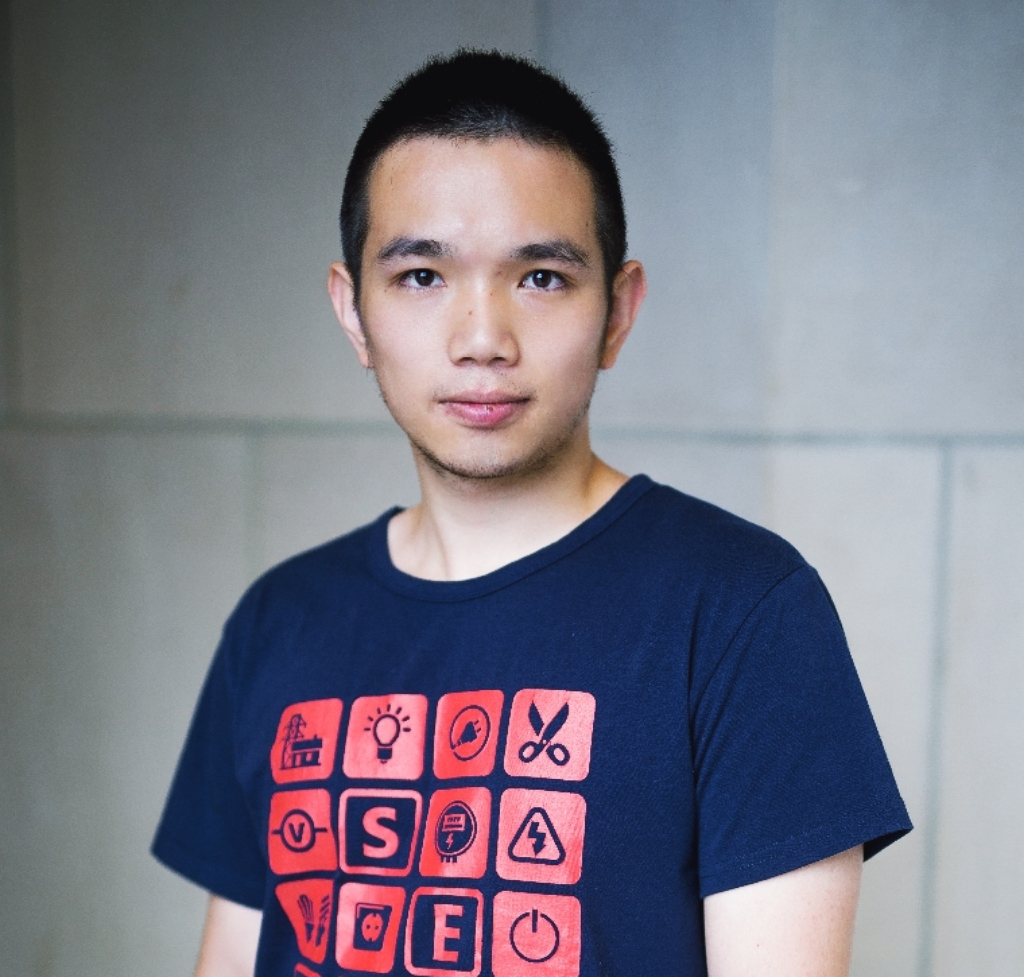
 Hongwu Peng
7 previous affiliations
- Adobe Systems (United States)2024–2025
- Research Scientist/Engineer II (Senior) · 2025
- Research Scientist/Engineer Intern · 2024
- Microsoft (United States)2023–2024
- Research Intern · 2023–2024
- University of Connecticut2020–2024
- Lead Teaching Assistant · 2022–2024
- Research Assistant · 2020–2024
- PhD student · 2021–2024
- PhD Research Intern · 2022
- MS student · 2018–2020
- Doctorate Degree, Computer Engineering · 2020
- Undergrad student · 2014–2018
Research Overview
Hongwu Peng focuses on efficient machine learning systems, secure artificial intelligence, and the optimization of large language models. His trajectory spans hardware-aware acceleration and privacy-preserving neural network inference using cryptographic protocols. More recently, his research addresses foundation model pretraining, exploring efficient attention mechanisms, mixture of experts, and multi-agent collaborative reasoning.
Research Trajectory
His early work concentrated on hardware acceleration and the systematic evaluation of emerging computing architectures. He developed Optimizing FPGA-based Accelerator Design for Large-Scale Molecular Similarity Search, creating FPGA architectures that optimized both exhaustive and approximate search algorithms to outperform standard CPU and GPU implementations. He subsequently conducted a comprehensive evaluation of specialized AI hardware, presenting Evaluating Emerging AI/ML Accelerators: IPU, RDU, and NVIDIA/AMD GPUs. This study compared dataflow architectures against industry-standard GPUs, highlighting the performance advantages of specialized hardware in specific workloads alongside their compiler and memory constraints.
By 2023, his focus expanded significantly into the research direction of Mitigating the Computational Overhead of Encrypted Machine Learning. A major challenge in secure machine learning is the computational overhead of non-linear operations, such as ReLU activations, during cryptographic protocols. To address this, he introduced RRNet: Towards ReLU-Reduced Neural Network for Two-party Computation Based Private Inference, a framework that jointly optimizes network architecture and hardware acceleration to minimize ReLU usage. He expanded on this methodology with AutoReP: Automatic ReLU Replacement for Fast Private Network Inference, an automated system that replaces expensive activations with crypto-friendly polynomial approximations, drastically reducing the computational budget while maintaining model accuracy.
Continuing in the broader area of Securing Collaborative Learning Against Malicious Participants, he contributed to several frameworks optimizing two-party computation (2PC). This included PASNet: Polynomial Architecture Search Framework for Two-party Computation-based Secure Neural Network Deployment and AQ2PNN: Enabling Two-party Privacy-Preserving Deep Neural Network Inference with Adaptive Quantization, which further refined the deployment of secure neural networks through architecture search and quantization techniques. He also applied cryptographic techniques to graph learning, contributing to the area of Neural Network Inference on Homomorphically Encrypted Data. He developed LinGCN: Structural Linearized Graph Convolutional Network for Homomorphically Encrypted Inference, which utilized structural linearization and teacher-guided polynomial replacement to achieve substantial latency speedups for private, cloud-based inference. His work on graph neural networks extended to hardware optimization with MaxK-GNN: Extremely Fast GPU Kernel Design for Accelerating Graph Neural Networks Training, addressing computational bottlenecks in the area of Balancing Power Law Workloads in Parallel Graph Processing.
In 2025, his research shifted toward the optimization and scaling of large language models (LLMs) and multi-agent systems. He introduced RankFlow: A Multi-Role Collaborative Reranking Workflow Utilizing Large Language Models, which decomposed document reranking into specialized agent roles—such as rewriting, answering, and summarizing—to distill noisy passages before final ranking. He further explored collaborative reasoning in Two Heads are Better Than One: Test-time Scaling of Multi-agent Collaborative Reasoning, proposing an adaptive framework that dynamically manages team size and reasoning depth to scale multi-agent performance at test time. Concurrently, he developed APEER : Automatic Prompt Engineering Enhances Large Language Model Reranking, contributing to research areas such as Textual Gradient Backpropagation for Compound AI Systems and Iterative Optimization via Textual Feedback Loops.
Most recently, in 2026, his work has focused on the foundational architecture of large models. With collaborators, he investigated efficient decoding mechanisms in Multi-Head Low-Rank Attention, which decomposes compressed latent heads into independent low-rank branches to enable efficient tensor parallelism and accelerate autoregressive decoding. He also contributed to DTop-p MoE: Sparsity-Controlled Dynamic Top-p MoE for Foundation Model Pre-training, introducing a dynamic routing mechanism for Mixture-of-Experts models that adapts to token difficulty while strictly adhering to computational budgets.
Current Directions
The most recent papers in the evidence indicate a strong focus on the efficiency and scaling of foundation models, particularly in the context of pretraining and inference architectures. Recent work investigates advanced attention mechanisms, such as multi-head low-rank attention, to overcome sharding bottlenecks and accelerate decoding in distributed environments. Additionally, there is an ongoing emphasis on optimizing Mixture-of-Experts (MoE) architectures through dynamic, sparsity-controlled routing that adapts to token complexity without exceeding computational budgets. Alongside these architectural improvements, current research also explores test-time scaling for multi-agent collaborative reasoning, seeking to enhance the complex problem-solving capabilities of large language models through adaptive, multi-role frameworks.
Profile updated
Loading new papers…
Other researchers whose papers cluster into the same research directions — a proxy for overlapping technical interests and shared intellectual neighborhoods.
See something wrong? Report a mistake