

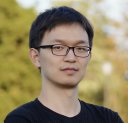
 Hongwei Wang
· 6 previous affiliations
- Meta (United States)Since 2025
- Staff Research Scientist · Since 2025
- TikTok2025
- Researcher · 2025
- Tencent (China)2022–2025
- Researcher · 2022–2025
- Research Fellow · 2021–2022
- Stanford University2019–2021
- Postdoc · 2019–2021
- Shanghai Jiao Tong University2010–2018
- Doctor of Philosophy, Computer Science · 2014–2018
- Bachelor of Engineering, Computer Science (ACM class) · 2010–2014
3 other authors named Hongwei Wang: Hongwei Wang (Zhejiang University · University of Illinois Urbana-Champaign · 212 papers), Hongwei Wang (22 papers), Hongwei Wang (1 paper)
Research Overview
Hongwei Wang focuses on graph representation learning, recommender systems, and natural language processing. His research trajectory spans from early work on integrating knowledge graphs into recommendation algorithms to developing multi-agent systems and molecular representations. Most recently, his work addresses long-term memory and reasoning capabilities in conversational AI assistants.
Research Trajectory
Hongwei Wang’s early research explored the intersection of social networks, semantic information, and recommendation algorithms. In 2017, he investigated how to model social and semantic factors for specialized domains in Joint Topic-Semantic-aware Social Recommendation for Online Voting. The following year, he collaborated on SHINE: Signed Heterogeneous Information Network Embedding for Sentiment Link Prediction, a project that touched upon the research direction of Social Context as a Proxy for Individual Behavior and the broader area of Weighted Loss Functions for Sparse Graph Reconstruction.
Recognizing the limitations of traditional collaborative filtering, Wang began integrating external knowledge bases into recommendation frameworks. He developed DKN: Deep Knowledge-Aware Network for News Recommendation, a content-based model that incorporates knowledge graph representations to discover latent connections among highly condensed news items. Concurrently, he advanced foundational graph embedding techniques by introducing GraphGAN: Graph Representation Learning With Generative Adversarial Nets. This work proposed a minimax game framework unifying generative and discriminative models for graph embedding, a concept he later expanded upon in the 2021 journal article Learning Graph Representation With Generative Adversarial Nets. Returning to recommender systems, he designed RippleNet: Propagating User Preferences on the Knowledge Graph for Recommender Systems, an end-to-end framework that propagates user interests through a knowledge graph to mitigate data sparsity and cold-start problems.
In 2019, Wang deepened his focus on knowledge-aware recommendation architectures. He introduced Multi-Task Feature Learning for Knowledge Graph Enhanced Recommendation, which utilized cross-compress units to automatically share latent features between recommendation tasks and knowledge graph embedding tasks. He further advanced the research direction of Personalizing Knowledge Graph Aggregation for Recommendation with Knowledge Graph Convolutional Networks for Recommender Systems. This framework sampled entity neighbors to capture high-order structural and semantic information, effectively mining inter-item relatedness. During this period, he also contributed to Knowledge-aware Graph Neural Networks with Label Smoothness Regularization for Recommender Systems, aligning with the area of Automated Reasoning over Knowledge Graph Paths to better contextualize user preferences.
Beyond recommendation, Wang explored sequence modeling in natural language processing. He collaborated on Modeling Local Dependence in Natural Language with Multi-Channel Recurrent Neural Networks, which employed a staggered, multi-block design to capture local semantic structures like phrases. This work contributed to the research direction of Hierarchical Inductive Biases for Sequence Modeling and the area of Hierarchical Softmax for Logarithmic Vocabulary Scaling.
Entering 2020, Wang’s research diversified across session-based modeling, graph theory, and multi-agent systems. He explored temporal dynamics in user behavior with Recurrent memory networks: modeling long short-term user preferences for session-based recommendation, unifying historical session data with immediate interactions. On the theoretical front, he provided a formal analysis linking message-passing algorithms in Unifying Graph Convolutional Neural Networks and Label Propagation. He also addressed complex dependencies in reinforcement learning environments by developing Multi-Agent Imitation Learning with Copulas, utilizing statistical copulas to explicitly model coordination among agents.
In recent years, Wang has applied representation learning to new domains and optimized existing architectures. In 2022, he shifted toward computational chemistry with Chemical-Reaction-Aware Molecule Representation Learning, proposing a method that preserves the equivalence of molecules with respect to chemical reactions in the embedding space, thereby improving upon traditional SMILES-based or purely structural graph neural networks. Returning to natural language processing in 2023, he analyzed the efficiency of language models in On the Dimensionality of Sentence Embeddings, identifying the optimal dimensions required to compress embeddings while minimizing performance degradation. Most recently, he collaborated on LongMemEval: Benchmarking Chat Assistants on Long-Term Interactive Memory, evaluating the capacity of large language models to recall and reason over lengthy interaction histories.
Current Directions
The most recent papers in the evidence indicate a focus on the evaluation, architecture, and efficiency of large language models. Current work investigates the persistent memory capabilities of conversational AI systems, specifically addressing the architectural gaps that cause modern chat assistants to struggle when retrieving historical context from long-term user interactions. Additionally, recent research explores the optimization of natural language representations, analyzing the dimensionality of sentence embeddings to balance computational compression with semantic performance.
Profile updated
Loading new papers…
Other researchers whose papers cluster into the same research directions — a proxy for overlapping technical interests and shared intellectual neighborhoods.
See something wrong? Report a mistake