

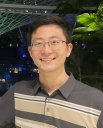
 Hongpeng Cao
· 4 previous affiliations
- Technical University of MunichSince 2020
- Research Assistant · Since 2020
- Doctor of Philosophy - PhD, Computer Science · 2020–2025
- PUTEDY2020
- Research And Development Intern · 2020
- Zhejiang University2017–2020
- MS student · 2017–2020
- Shandong University2013–2017
- Undergrad student · 2013–2017
Research Overview
Hongpeng Cao focuses on safe reinforcement learning, cyber-physical systems, and sim-to-real transfer for autonomous robotics. His early work developed formal sandboxing architectures to guarantee the safety of unverified neural controllers in stochastic environments. Currently, he investigates physics-regulated learning frameworks and runtime adaptation methods that enable robots to operate reliably in unpredictable real-world conditions.
Research Trajectory
Cao’s early research addressed the challenge of deploying unverified artificial intelligence in safety-critical environments. With collaborators, he contributed to the research direction of Enforcing Temporal Logic Constraints in Autonomous Systems by developing runtime monitoring frameworks. This is exemplified by Safe-visor architecture for sandboxing (AI-based) unverified controllers in stochastic cyber–physical systems (2021), which introduced a history-based supervisor to provide probabilistic safety guarantees for physical plants driven by unpredictable AI decisions. This work also engaged with the broader area of The State Space Discretization Bottleneck in Formal Verification. He later expanded on these concepts in Towards Safe AI: Sandboxing DNNs-Based Controllers in Stochastic Games (2023), advancing methods in the area of Formal Symbolic Shielding for Safe Neural Execution.
Parallel to his work on formal safety, Cao investigated the practical deployment of reinforcement learning on physical hardware, focusing on the sim-to-real reality gap. He proposed a distributed approach in Cloud-Edge Training Architecture for Sim-to-Real Deep Reinforcement Learning (2022), aiming to mitigate performance deterioration when policies trained in simulation are transferred to real-world dynamics. Extending this focus on physical deployment to computer vision tasks, he explored robotic grasping in 6IMPOSE: bridging the reality gap in 6D pose estimation for robotic grasping (2023), contributing to the research direction of Bypassing the 3D Pose Annotation Bottleneck.
By 2023, these dual interests in rigorous safety and physical deployment converged into a major focus on physics-regulated deep reinforcement learning. Cao introduced the Phy-DRL framework in Physical Deep Reinforcement Learning: Safety and Unknown Unknowns. This architecture embeds physical laws directly into neural network designs and reward functions to achieve mathematically provable safety guarantees. He formalized this approach further in Physics-Regulated Deep Reinforcement Learning: Invariant Embeddings (2024), demonstrating that physics-model-guided neural network editing could yield smaller, faster-training models. This work intersected with techniques in the area of Dataset Pruning and Core Subset Selection for Efficient Learning. To address rare but catastrophic failures, he developed Physics-model-guided Worst-case Sampling for Safe Reinforcement Learning (2024), a strategy that systematically identifies boundary conditions of a safety envelope to train agents on danger recovery. Together, these contributions significantly advanced the research direction of Safe Reinforcement Learning via Constrained Markov Decision Processes.
Moving into 2024 and 2025, Cao's trajectory shifted toward continuous, runtime adaptation in unpredictable environments. He proposed a "Teacher-Student" architecture based on Simplex logic in Simplex-enabled Safe Continual Learning Machine (2024), pairing a high-performance learning agent with a verified, physics-based teacher to guarantee safety during real-time adaptation. This paradigm was applied to complex locomotion in Runtime Learning of Quadruped Robots in Wild Environments (2025), enabling robots to learn new skills on the fly without catastrophic failures. Concurrently, he explored continuous-time formulations for stability in NLBAC: A neural ODE-based algorithm for state-wise stable and safe reinforcement learning (2025).
His recent work also addresses the fundamental optimization and representation challenges underlying policy generalization. In Observations Meet Actions: Learning Control-Sufficient Representations for Robust Policy Generalization (2025), Cao introduced a framework that separates observation sufficiency from control sufficiency using information-theoretic principles, accelerating generalization to unseen environments. Additionally, he developed Bregman Centroid Guided Cross-Entropy Method (2025), a lightweight optimization upgrade designed to maintain search diversity and prevent premature convergence in complex reinforcement learning tasks.
Current Directions
The most recent papers in the evidence indicate a strong focus on runtime adaptation and robust policy generalization for autonomous systems operating in unstructured environments. Cao is actively investigating how to safely adapt reinforcement learning policies on the fly, utilizing "Teacher-Student" architectures and neural ordinary differential equations to maintain stability during continuous learning. Additionally, his current work addresses the underlying optimization mechanisms of reinforcement learning, exploring information-theoretic approaches to extract control-sufficient representations and developing advanced cross-entropy methods to improve search diversity and convergence in complex control tasks.
Profile updated
Loading new papers…
Other researchers whose papers cluster into the same research directions — a proxy for overlapping technical interests and shared intellectual neighborhoods.
See something wrong? Report a mistake