

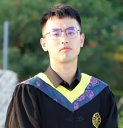
 Honglin He
· 3 previous affiliations
- University of California, Los AngelesSince 2024
- PhD student · Since 2025
- Current
- Researcher · 2024–2025
- Tsinghua University2021–2024
- MS student · 2021–2024
- Xiamen University2017–2021
- Undergrad student · 2017–2021
Research Overview
Honglin He focuses on embodied artificial intelligence, scalable urban simulation, and the safety evaluation of autonomous systems. His early work addressed the efficient testing of connected vehicles and high-fidelity human-centric neural rendering. More recently, his research emphasizes building procedural simulation platforms and leveraging reinforcement learning to train robust navigation models for autonomous micromobility in complex environments.
Research Trajectory
Honglin He’s early research focused on the rigorous and efficient evaluation of autonomous systems, particularly in the area of Accelerated Safety Validation for Autonomous Vehicles. Testing connected and automated vehicles (CAVs) in complex, high-dimensional scenarios presents significant computational challenges. To address this, he participated in developing Adaptive Testing for Connected and Automated Vehicles with Sparse Control Variates in Overtaking Scenarios (2022), which introduced a method to evaluate CAVs without relying solely on the adaptive generation of testing scenarios. This approach was subsequently expanded in Adaptive Safety Evaluation for Connected and Automated Vehicles With Sparse Control Variates (2024). By intelligently focusing on critical variables and stratifying driving scenarios, the sparse control variates (SCV) method dramatically reduces the number of tests required to achieve reliable safety performance estimates. Further contributions to this domain include Few-Shot Testing of Autonomous Vehicles With Scenario Similarity Learning (2025), which optimizes a fixed set of tests by learning scenario similarity, providing a budget-friendly and efficient evaluation framework suitable for third-party evaluators.
In 2023, his focus expanded to 3D computer vision and generative modeling. He introduced OrthoPlanes: A Novel Representation for Better 3D-Awareness of GANs (2023), a hybrid explicit-implicit representation designed to generate realistic, view-consistent images with fine geometry. By encoding fine-grained 3D information into feature maps and modifying 2D StyleGANs, the method handles challenging view angles and synthesizes articulated objects with a high spatial degree of freedom. Concurrently, he presented DNA-Rendering: A Diverse Neural Actor Repository for High-Fidelity Human-centric Rendering (2023). This large-scale dataset provides over 1,500 human subjects, 5,000 motion sequences, and 67.5 million frames captured at up to 4K resolution, offering unprecedented diversity in clothing, motion, and human-object interaction to advance human-centric neural rendering.
Moving into 2025 and 2026, the trajectory shifts toward the intersection of simulation and robotics, specifically targeting urban micromobility—such as delivery robots and electric wheelchairs navigating pedestrian-heavy environments. Contributing to the broader area of Environment Scaling for Generalization in Reinforcement Learning, he collaborated on Towards Autonomous Micromobility through Scalable Urban Simulation (2025). This work introduced the URBAN-SIM platform to assist AI agents in maneuvering safely through unpredictable urban spaces. This focus on procedural environments continued with MetaUrban: An Embodied AI Simulation Platform for Urban Micromobility (2025). MetaUrban utilizes a compositional approach to generate infinite interactive scenes and employs a vision-language model (VLM) pipeline to populate them with tens of thousands of real-world objects, providing a rigorous testing ground for embodied AI.
To bridge the gap between simulated environments and real-world deployment, he co-authored UrbanVerse: Scaling Urban Simulation by Watching City-Tour Videos (2026). UrbanVerse is a "real-to-sim" framework that transforms passive city-tour videos into interactive, physics-aware 3D simulation environments using an automated reconstruction pipeline and a massive library of annotated 3D assets. Building on these advanced simulation capabilities, he developed From Seeing to Experiencing: Scaling Navigation Foundation Models with Reinforcement Learning (2026). This framework connects passive video pre-training with active robotic navigation. By combining an anchor-guided pre-training strategy with a residual-attention reinforcement learning module, the work demonstrates that interactive experience in simulation allows navigation models to overcome the performance plateaus typical of traditional offline scaling.
Current Directions
The most recent papers in the evidence address the scaling of embodied AI agents through advanced simulation and reinforcement learning. Current work investigates "real-to-sim" pipelines that convert passive video data into interactive, physics-aware 3D environments, enabling robots to learn complex urban navigation policies that transfer directly to real-world streets. Additionally, recent research explores methods to bridge the gap between offline video pre-training and active navigation. By utilizing reinforcement learning and novel attention mechanisms, these approaches enable foundation models to learn from interactive experience, pushing beyond the limitations of passive data scaling in autonomous micromobility and robotic navigation.
Profile updated
Loading new papers…
Other researchers whose papers cluster into the same research directions — a proxy for overlapping technical interests and shared intellectual neighborhoods.
See something wrong? Report a mistake