

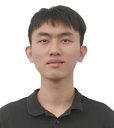
 Hongjun Wang
· 3 previous affiliations
- The University of TokyoCurrent
- Current
- PhD student · 2023–2026
- MS student · 2020–2023
- Undergrad student · 2015–2019
1 other author named Hongjun Wang: Hongjun Wang (University of Hong Kong · Ant Group (China) · 16 papers)
Research Overview
Hongjun Wang focuses on spatiotemporal modeling, urban computing, and traffic prediction. His trajectory spans from early network traffic control to the development of advanced graph neural networks and transformer architectures for understanding complex urban dynamics. Currently, his work addresses the resilience of transportation systems, causal inference in human mobility, and the environmental impacts of urban infrastructure.
Research Trajectory
The earliest work in the provided evidence begins in 2005 with a focus on network routing and traffic management. In Interdomain Traffic Control over Multiple Links Based on Genetic Algorithm, he and his collaborators proposed a genetic algorithm approach to balance traffic across Autonomous Systems, aiming to minimize transit costs and configuration changes for network operators.
Following a gap in the published record, his focus shifted significantly toward intelligent transportation systems and urban mobility, with a strong emphasis on leveraging trajectory data. In 2022, he addressed the privacy challenges inherent in mobile user data by developing a federated learning approach in Generative Personalized Federated Learning Framework for Travel Time Estimation. He expanded on this domain in 2023 with Multi-Task Weakly Supervised Learning for Origin-Destination Travel Time Estimation, which estimates travel times using more accessible origin-destination data when dense GPS trajectories are unavailable. To handle the uncertainty and missing values common in crowdsourced trajectory data, he participated in developing a multi-view framework for Missing Road Condition Imputation Using a Multi-View Heterogeneous Graph Network From GPS Trajectory, which incorporates complex road network structures and temporal heterogeneity.
A major theme in his 2023 and 2024 research is the advancement of spatiotemporal graph neural networks for traffic prediction. Recognizing that citywide traffic consists of mixed patterns driven by different functional zones (such as commercial or educational areas), he introduced ST-ExpertNet: A Deep Expert Framework for Traffic Prediction. To improve the training stability of these complex models, he proposed a curriculum learning strategy in Easy Begun Is Half Done: Spatial-Temporal Graph Modeling with ST-Curriculum Dropout, which exposes models to graph nodes in order of modeling difficulty. This line of architectural innovation culminated in STGformer: Efficient Spatiotemporal Graph Transformer for Traffic Forecasting, which unifies graph and temporal attention mechanisms to reduce computational costs. This work contributes to broader research areas such as Scalable Graph Transformers for Large Networks and Unified Spatio-Temporal Self-Attention. He also critically examined the robustness of these architectures in Evaluating the Generalization Ability of Spatiotemporal Model in Urban Scenario, proposing a benchmark to test models across diverse, evolving urban environments rather than relying solely on immediate post-training data.
In parallel, his research has incorporated causal inference and behavioral modeling to understand human mobility during specific events and crises. In How to Be a Well-Prepared Organizer: Studying the Causal Effects of City Events on Human Mobility, he utilized a neural network-based causal framework to estimate the individual treatment effects of city events. By accounting for unobserved confounders, this tool helps urban planners predict and prevent crowd disasters, advancing the research direction of Causal Inference in the Presence of Unobserved Confounders. He applied similar mobility analysis to disaster response in Returning Home Strategy Analysis Using Mobile Sensing Data in Tohoku Earthquake, modeling how historical behavior predicts whether individuals will walk, wait, or stay in place during a crisis. This aligns with work in the area of Individual-Level Modeling for Urban Infrastructure.
Most recently, in 2025, his work has broadened to include macro-environmental analysis and foundational computer vision techniques. He contributed to an analysis of the environmental impact of urban infrastructure in China's housing boom creates systematic oversupply across all provinces with major carbon costs, a study intersecting with the area of Lifecycle Carbon Accounting for Large Scale AI. Additionally, he participated in research on implicit neural representations with Robustifying Fourier Features Embeddings for Implicit Neural Representations, which uses bias-free MLPs as adaptive linear filters to suppress high-frequency noise, advancing the direction of High Frequency Learning in Coordinate Based Neural Networks.
Current Directions
Recent work investigates the intersection of urban infrastructure, environmental sustainability, and advanced neural representations. The most recent papers in the evidence address the macro-level environmental consequences of urban development, specifically analyzing the carbon costs associated with housing oversupply and construction materials. Alongside these macro-urban studies, current research also explores foundational improvements in computer vision and coordinate-based neural networks, focusing on robustifying implicit neural representations through adaptive linear filtering to enhance image regression, 3D shape fitting, and neural radiance fields.
Profile updated
Loading new papers…
Other researchers whose papers cluster into the same research directions — a proxy for overlapping technical interests and shared intellectual neighborhoods.
See something wrong? Report a mistake