

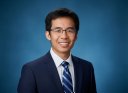
 Honghao Wei
· 4 previous affiliations
- Washington State UniversitySince 2023
- Assistant Professor · Since 2023
- Weber State UniversitySince 2023
- Assistant Professor · Since 2023
- University of Michigan2019–2023
- PhD student · 2019–2023
- Arizona State University2017–2019
- 2017–2019
Research Overview
Honghao Wei focuses on constrained reinforcement learning, online decision-making, and stochastic optimization. His early work developed model-free algorithms with strict theoretical guarantees for safe exploration and non-stationary environments. More recently, his research addresses offline safe reinforcement learning and the reliable alignment of large language models through preference optimization.
Research Trajectory
He began by investigating optimal stopping problems, developing QuickStop: A Markov Optimal Stopping Approach for Quickest Misinformation Detection to identify misinformation in networks. His focus subsequently shifted toward safe reinforcement learning and the broader area of Why Constrained Reinforcement Learning Requires Randomized Policies. He introduced Triple-Q: A Model-Free Algorithm for Constrained Reinforcement Learning with Sublinear Regret and Zero Constraint Violation, which provided the first model-free, simulator-free approach for CMDPs that avoids constraint violations during training. This work contributed to the research direction of Closing the Regret Gap in Model Free Control. Concurrently, he extended these theoretical guarantees to infinite-horizon settings in A Provably-Efficient Model-Free Algorithm for Infinite-Horizon Average-Reward Constrained Markov Decision Processes. In parallel with his reinforcement learning research, he participated in developing algorithms for online convex optimization with hard constraints, contributing to Online Convex Optimization with Hard Constraints: Towards the Best of Two Worlds and Beyond. This work advanced the theoretical understanding of areas such as How Curvature Accelerates Online Convex Optimization and Constrained Online Optimization Beyond Slater Conditions.
Expanding on his foundational CMDP work, he addressed environments with shifting dynamics. He designed Provably Efficient Model-Free Algorithms for Non-stationary CMDPs, contributing to the broader field of Non-Stationary Learning Without Prior Variation Budgets. He also explored sample efficiency in systems where random events drive deterministic state changes, such as queueing networks, proposing an augmented sample generator in Sample Efficient Reinforcement Learning in Mixed Systems through Augmented Samples and Its Applications to Queueing Networks.
His research then tackled more stringent safety requirements and practical applications. He investigated environments requiring strict step-by-step safety in Safe Reinforcement Learning with Instantaneous Constraints: The Role of Aggressive Exploration, generalizing constraint functions to Reproducing Kernel Hilbert Spaces. Applying these decision-making frameworks to large-scale infrastructure, he developed A Reinforcement Learning and Prediction-Based Lookahead Policy for Vehicle Repositioning in Online Ride-Hailing Systems, which balances real-time supply-demand mismatches with long-term system stability. In the offline reinforcement learning setting, he introduced Adversarially Trained Weighted Actor-Critic for Safe Offline Reinforcement Learning, framing the learning process as a Stackelberg game to guarantee safety improvements over baseline behavior policies.
Most recently, his work has focused on accelerating safe online learning and aligning foundation models. He collaborated on Towards Fast Safe Online Reinforcement Learning via Policy Finetuning, which leverages offline pre-training to minimize unsafe interactions during online adaptation. He also led the development of An Optimistic Algorithm for online CMDPS with Anytime Adversarial Constraints, achieving optimal regret bounds without requiring a pre-known safe policy. Extending his optimization expertise to large language models, his group introduced Keep the Best, Forget the Rest: Reliable Alignment with Order-Aware Preference Optimization, a method that dynamically filters untrustworthy training samples to improve generalization and safety in LLM alignment.
Current Directions
Recent work investigates the intersection of safe reinforcement learning and the alignment of large language models. The most recent papers in the evidence address the challenge of maintaining strict safety guarantees under anytime adversarial constraints, developing optimistic mirror descent algorithms that achieve optimal regret without relying on strict feasibility assumptions. Additionally, this research extends to robust preference optimization for foundation models, focusing on dynamic filtering mechanisms that discard noisy or untrustworthy training samples to ensure reliable and safe alignment with human preferences.
Profile updated
Loading new papers…
Other researchers whose papers cluster into the same research directions — a proxy for overlapping technical interests and shared intellectual neighborhoods.
See something wrong? Report a mistake