

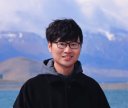
 Hongbo Liu
· 2 previous affiliations
- BYD (China)Since 2023
- Researcher · Since 2023
- Tsinghua University2020–2023
- MS student · 2020–2023
3 other authors named Hongbo Liu: Hongbo Liu (Tongji University · 231 papers), Hongbo Liu (University of Electronic Science and Technology of China · 43 papers), Hongbo Liu (1 paper)
Research Overview
Hongbo Liu focuses on computer vision and machine learning, with a specific emphasis on video quality assessment and unsupervised anomaly detection. Recent work addresses the challenge of limited annotated training data by leveraging knowledge distillation and diverse pretrained models to extract robust feature representations.
Research Trajectory
Hongbo Liu’s research trajectory demonstrates a consistent focus on overcoming data scarcity and annotation bottlenecks in computer vision tasks. Beginning in the early 2020s, Liu investigated methods for training robust models in environments where perfectly curated datasets are unavailable. As the first author of Unsupervised Anomaly Detection with Self-Training and Knowledge Distillation (2022), Liu addressed the practical limitations of standard anomaly detection frameworks, which typically assume the availability of a completely clean, anomaly-free training set. Recognizing that real-world industrial data often contains hidden defects, Liu proposed a Self-Training and Knowledge Distillation (STKD) model designed to iteratively isolate and combat anomalies within mixed training sets, allowing for effective unsupervised anomaly detection in noisy environments.
Concurrently, Liu applied similar principles of knowledge transfer to the domain of Video Quality Assessment (VQA). VQA is notoriously challenging due to the subjective nature of human perception, the complex interplay of content attractiveness, distortion types, and motion patterns, and the high cost of generating large-scale annotated datasets. To bypass this annotation bottleneck, Liu led the development of a transfer learning approach in In-the-wild Pretrained Models Are Good Feature Extractors for Video Quality Assessment (2022). Rather than training a VQA model from scratch on limited data, this work utilized various pretrained models with frozen weights to extract features. By transforming and integrating these features, the research demonstrated that representations learned from diverse pretext tasks could be effectively repurposed to evaluate video quality.
Building on this foundation, Liu expanded the approach to account for the complex, multi-dimensional nature of video degradation. In the 2023 ACM Multimedia paper Ada-DQA: Adaptive Diverse Quality-aware Feature Acquisition for Video Quality Assessment, Liu introduced a framework that explicitly models video distribution diversity across content, distortion types, and motion. As the lead author, Liu designed the Ada-DQA framework to adaptively acquire features from a heterogeneous ensemble of pretrained models—varying in architecture, pre-training datasets, and pretext tasks. This methodology aligns closely with the broader research direction of Synergizing Diverse Experts via Multi-Teacher Knowledge Distillation, utilizing the distinct "perspectives" of different models to form a comprehensive understanding of video quality without requiring massive new annotated datasets.
Current Directions
The most recent papers in the evidence indicate a continuing focus on Video Quality Assessment and representation learning under severe data constraints. Current work investigates how to optimally combine features from diverse, pre-existing models to evaluate complex visual media. A central open problem in this domain is dynamically selecting and weighting the most relevant features from an ensemble of frozen models to account for varying types of video distortion and motion. By framing VQA as an adaptive feature acquisition problem, Liu's recent research seeks to build highly generalizable quality assessment systems that do not rely on exhaustive, domain-specific human annotation, instead maximizing the utility of models pretrained "in the wild."
Profile updated
Loading new papers…
Loading research neighbors…
See something wrong? Report a mistake