

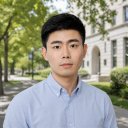
 Hong Li
· 1 previous affiliation
- Beihang UniversityCurrent
- Current
- PhD student · 2021–2026
- MS student · 2018–2021
6 other authors named Hong Li: Hong Li (Shanghai Jiao Tong University · 19 papers), Hong Li (3 papers), Hong Li (1 paper), Hong Li (1 paper), Hong Li (1 paper), and 1 more
Research Overview
Hong Li focuses on 3D generation, neural rendering, and video generation. His research trajectory spans from early work in face animation and latent diffusion models to recent advancements in dynamic 3D scene synthesis and interactive content creation. Currently, he investigates coupled neural asset-renderer architectures and discrete diffusion for high-fidelity 3D modeling.
Research Trajectory
Hong Li’s research arc began with a focus on face animation, neural rendering, and model interpretability, gradually expanding into sophisticated 3D generation and video diffusion frameworks. In 2022, he participated in the development of FNeVR: Neural Volume Rendering for Face Animation. This work addressed the challenges of sophisticated motion deformation and facial detail modeling by combining 2D motion warping with 3D volume rendering in a unified network. By designing a 3D Face Volume Rendering module to enhance facial details, this research contributed to the broader area of Recovering High Frequency Details in Neural 3D Reconstruction.
Continuing his work in facial synthesis in 2023, he collaborated on Face Animation with an Attribute-Guided Diffusion Model. This project adapted the modeling capacity of diffusion models for photorealistic talking-head generation, utilizing an Attribute-Guided Conditioning Network to adaptively combine coarse animation features with 3D face reconstruction results. During this period, he also explored the interpretability of deep neural networks, co-developing Bandit Interpretability of Deep Models via Confidence Selection. This work formulated model interpretation as a bandit problem, using an Upper Confidence Bound approach to guarantee the fair selection of critical image features without relying on prior assumptions.
In 2024, his focus broadened to include latent diffusion models, medical imaging reconstruction, and algorithmic clustering. He introduced UV-IDM: Identity-Conditioned Latent Diffusion Model for Face UV-Texture Generation, a framework designed to generate high-fidelity, photo-realistic facial textures based on the Basel Face Model while preserving identity information and handling occlusions. He also participated in LaDiffGAN: Training GANs with Diffusion Supervision in Latent Spaces, which leveraged diffusion supervision to improve the style transfer quality of Generative Adversarial Networks for unsupervised image-to-image translation. In the medical domain, he contributed to DiffuX2CT: Diffusion Learning to Reconstruct CT Images from Biplanar X-Rays, utilizing an implicit conditioning mechanism and tri-plane representations to reconstruct structurally accurate 3D CT volumes from orthogonal 2D X-rays. Additionally, he collaborated on Algorithm 1038: KCC: A MATLAB Package for k-Means-based Consensus Clustering, which reformulated consensus clustering as a k-means problem to provide scalable and robust clustering solutions.
By 2025, his research heavily emphasized advanced 3D generation, video diffusion priors, and the co-design of rendering pipelines. He developed NeAR: Coupled Neural Asset-Renderer Stack, which bridged the traditionally disjoint paradigms of neural asset authoring and neural rendering. By introducing a Lighting-Homogenized SLAT and leveraging a rectified-flow model, this work lifted casually lit single images into robust assets, advancing the research direction of Converting Neural Representations into Engine Ready 3D Meshes. He also introduced PartDiffuser: Part-wise 3D Mesh Generation via Discrete Diffusion, a semi-autoregressive framework that generates high-fidelity 3D meshes "part-by-part" to maintain global structural integrity while capturing intricate local details.
His collaborative efforts in 2025 further explored the physical understanding embedded in generative models. He contributed to Diffusion Knows Transparency: Repurposing Video Diffusion for Transparent Object Depth and Normal Estimation, which repurposed large-scale video diffusion priors to achieve zero-shot generalization for transparent and reflective objects. This research intersected with multiple areas, including Temporal Consistency in Video Depth Estimation, Bridging the Synthetic to Real Gap in Depth Estimation, and Joint Latent Diffusion of Appearance and Geometry. In the realm of video editing, he participated in UniTransfer: Video Concept Transfer via Progressive Spatio-Temporal Decomposition, a framework that decoupled video generation into distinct spatial components and hierarchical temporal stages using a Large Language Model-guided mechanism. He also contributed to IPDreamer: Appearance-Controllable 3D Object Generation with Complex Image Prompts, which utilized distillation sampling and spatial alignment to map intricate textures onto 3D models. Continuing his medical imaging research, he co-authored D3T: Dual-Domain Diffusion Transformer in Triplanar Latent Space for 3D Incomplete-View CT Reconstruction.
Moving into 2026, his work continued to address complex lighting and geometry challenges. He co-developed Light of Normals: Unified Feature Representation for Universal Photometric Stereo, a framework that explicitly decoupled lighting information from surface geometry. By combining specialized Light Register Tokens with a wavelet-based architecture, this method successfully recovered high-frequency surface details that previous photometric stereo methods typically smoothed away.
Current Directions
Recent work investigates the intersection of generative models and physical rendering pipelines to produce high-fidelity 3D and video content. The most recent papers in the evidence address the decoupling of lighting and geometry for universal photometric stereo, as well as the co-design of neural asset representations and renderers. This includes exploring semi-autoregressive frameworks and discrete diffusion to generate 3D meshes that maintain both global structural integrity and intricate local details. Additionally, ongoing research examines the repurposing of video diffusion priors to understand complex light physics, enabling consistent depth and normal estimation for challenging materials like transparent and reflective objects.
Profile updated
Loading new papers…
Other researchers whose papers cluster into the same research directions — a proxy for overlapping technical interests and shared intellectual neighborhoods.
See something wrong? Report a mistake