

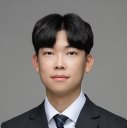
 Hoki Kim
· 2 previous affiliations
- ChungAng UniversitySince 2024
- Assistant Professor · Since 2024
- Seoul National University2018–2024
- Postdoc · 2023–2024
- PhD student · 2018–2023
Research Overview
Hoki Kim focuses on trustworthy artificial intelligence, specifically addressing adversarial robustness, machine unlearning, and privacy-preserving optimization. His early work investigated the dynamics of adversarial training and the geometry of robust generalization in deep neural networks. More recently, he has expanded into the stability of sharpness-aware minimization, proactive defenses against generative manipulation, and uncertainty-aware interpretability.
Research Trajectory
Kim’s early research concentrated on the safety and security of machine learning models, particularly their vulnerability to adversarial attacks. In 2020, he developed Torchattacks : A Pytorch Repository for Adversarial Attacks to provide a standardized framework for evaluating model robustness. He subsequently investigated the failure modes of efficient robust optimization, specifically addressing the area of Stabilizing Single Step Adversarial Training in Understanding Catastrophic Overfitting in Single-step Adversarial Training.
This interest in adversarial robustness naturally extended to the underlying geometry of loss landscapes and how it dictates generalization. In Fantastic Robustness Measures: The Secrets of Robust Generalization, he conducted a large-scale empirical study across more than 1,300 deep learning models. The findings challenged prevailing assumptions that flatter loss landscapes or larger margins inherently guarantee robustness, revealing instead that the norm of input gradients serves as a surprisingly reliable predictor of robust performance against adversarial attacks. During this period, he further explored adversarial training methodologies and regularization strategies in Bridged adversarial training and GradDiv: Adversarial Robustness of Randomized Neural Networks via Gradient Diversity Regularization.
Concurrently, Kim began investigating Sharpness-Aware Minimization (SAM) as a tool for improving model generalization. He examined the optimization dynamics of this approach in Exploring the Effect of Multi-step Ascent in Sharpness-Aware Minimization. Applying these geometric insights to the domain of data privacy, he contributed to the research direction of Navigating Flat Landscapes for Differentially Private Deep Learning with Differentially Private Sharpness-Aware Training. This work introduced DP-SAT, a training method designed to locate flat minima that make models more resilient to the noise injection and gradient clipping required for differential privacy. By doing so without increasing the privacy budget, this work advanced the broader areas of Flat Loss Landscapes for Differentially Private Learning and Information Recycling for Iterative Differential Privacy.
In 2024, his research broadened to encompass sequence modeling and model explainability. Addressing the research direction of Modeling Cross-Variable Dependencies in Multivariate Time Series, his lab developed the Cross-Attention-only Time Series transformer (CATS) in Are Self-Attentions Effective for Time Series Forecasting?. The paper demonstrated that replacing self-attention with a cross-attention mechanism for future time steps significantly reduces memory overhead while maintaining high forecasting accuracy. In the domain of interpretability, he introduced BayesNAM: Leveraging Inconsistency for Reliable Explanations. By combining Bayesian Neural Networks with feature dropout, BayesNAM provides uncertainty-aware interpretations for Neural Additive Models, effectively turning inconsistent explanations into a diagnostic tool for identifying data gaps and structural flaws.
Moving into 2025 and 2026, Kim’s focus on trustworthy AI expanded into machine unlearning and proactive security measures. He introduced Unlearning-Aware Minimization to address the complex optimization challenges associated with selectively erasing data from trained models. Returning to the area of Seeking Flat Minima via Sharpness-Aware Minimization, he published Stability Analysis of Sharpness-Aware Minimization. This analysis revealed that SAM can become trapped at saddle points in non-convex loss landscapes, and demonstrated how adjusting momentum and batch size can mitigate this convergence instability.
He has also continued to apply his methodological insights to specific forecasting and security domains. He contributed to Pattern-guided forecasting framework for metal price prediction with grouping decomposed series, utilizing multi-scale signal decomposition for financial time series analysis. Finally, addressing the growing threat of generative manipulation, his group established the Proactive Defense Benchmark against Deepfake Generation. This work highlighted how existing image immunization techniques often overfit to specific generative models and introduced the Calibrated Identity Ratio (CIDR) to more accurately evaluate how well a defense protects personal identity.
Current Directions
The most recent papers in the evidence address the evolving challenges of trustworthy AI, particularly in the contexts of machine unlearning, optimization stability, and proactive security. Recent work investigates the dynamics of selective knowledge erasure, seeking optimization methods that can efficiently remove specific data influences from trained models without degrading their overall utility. Concurrently, his research addresses the stability of flat-minima search algorithms in non-convex landscapes, analyzing how techniques like Sharpness-Aware Minimization navigate saddle points during deep learning training. In the domain of security, he is actively developing proactive defenses against generative manipulation, establishing benchmarks and calibrated metrics to evaluate how effectively image immunization techniques protect user identity against deepfake generation.
Profile updated
Loading new papers…
Other researchers whose papers cluster into the same research directions — a proxy for overlapping technical interests and shared intellectual neighborhoods.
See something wrong? Report a mistake