

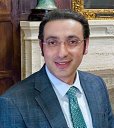
 Hojjat Salehinejad
· 2 previous affiliations
- Mayo ClinicSince 2022
- Assistant Professor · Since 2022
- University of Toronto2021–2022
- Postdoc · 2021–2022
Research Overview
Hojjat Salehinejad focuses on deep neural network optimization, time series classification, and privacy-preserving machine learning architectures. Early work explored distributed encoding frameworks and comprehensive evaluations of dropout techniques for model regularization. More recently, the focus has shifted toward efficient feature extraction and structured pruning methods to reduce the computational complexity of time series models.
Research Trajectory
In 2019, Salehinejad contributed to the development of distributed machine learning frameworks designed to protect data owner privacy. As a second author on Privacy Preserving Deep Learning with Distributed Encoders, Salehinejad helped design a system where encoders are deployed directly on end-user devices. Rather than transmitting raw data to a centralized server, these local encoders extract high-level features and send only the representations and annotations for training and inference. This approach allows users to participate in model training while maintaining the confidentiality of their original datasets.
During the same period, Salehinejad also investigated regularization and model compression techniques, participating as second author in a comprehensive Survey of Dropout Methods for Deep Neural Networks. This work synthesized the history and applications of stochastic dropout techniques, examining their utility not only for standard regularization but also for measuring uncertainty and compressing models. The survey extended beyond traditional dense layers to cover adaptations for convolutional and recurrent architectures, aligning with the broader research direction of Structured Dropout for Convolutional Neural Networks.
By 2022, Salehinejad’s focus shifted toward efficient feature extraction and the optimization of time series models. Leading the research as first author on S-Rocket: Selective Random Convolution Kernels for Time Series Classification, Salehinejad addressed the computational inefficiencies inherent in the Random Convolution Kernel Transform (Rocket) approach. While Rocket is effective for time series feature extraction using randomly initialized kernels, many of these kernels do not positively contribute to model performance. To resolve this, Salehinejad framed kernel selection as a combinatorial optimization problem, proposing a method to identify the most important kernels while pruning redundant ones. This work significantly reduces computational complexity and accelerates inference, contributing to the broader area of Differentiable Selection for Structured Network Pruning.
Current Directions
Based on the most recent paper in the evidence from 2022, Salehinejad's current research investigates the optimization of time series classification models through selective pruning and feature extraction. A primary focus is reducing the computational overhead of models that rely on large sets of randomly initialized convolution kernels. By treating kernel selection as an optimization problem, this work aims to accelerate inference times and minimize redundancy without sacrificing classification accuracy. This trajectory suggests an ongoing interest in model efficiency and the practical deployment of lightweight architectures for time series analysis.
Profile updated
Loading new papers…
Loading research neighbors…
See something wrong? Report a mistake