

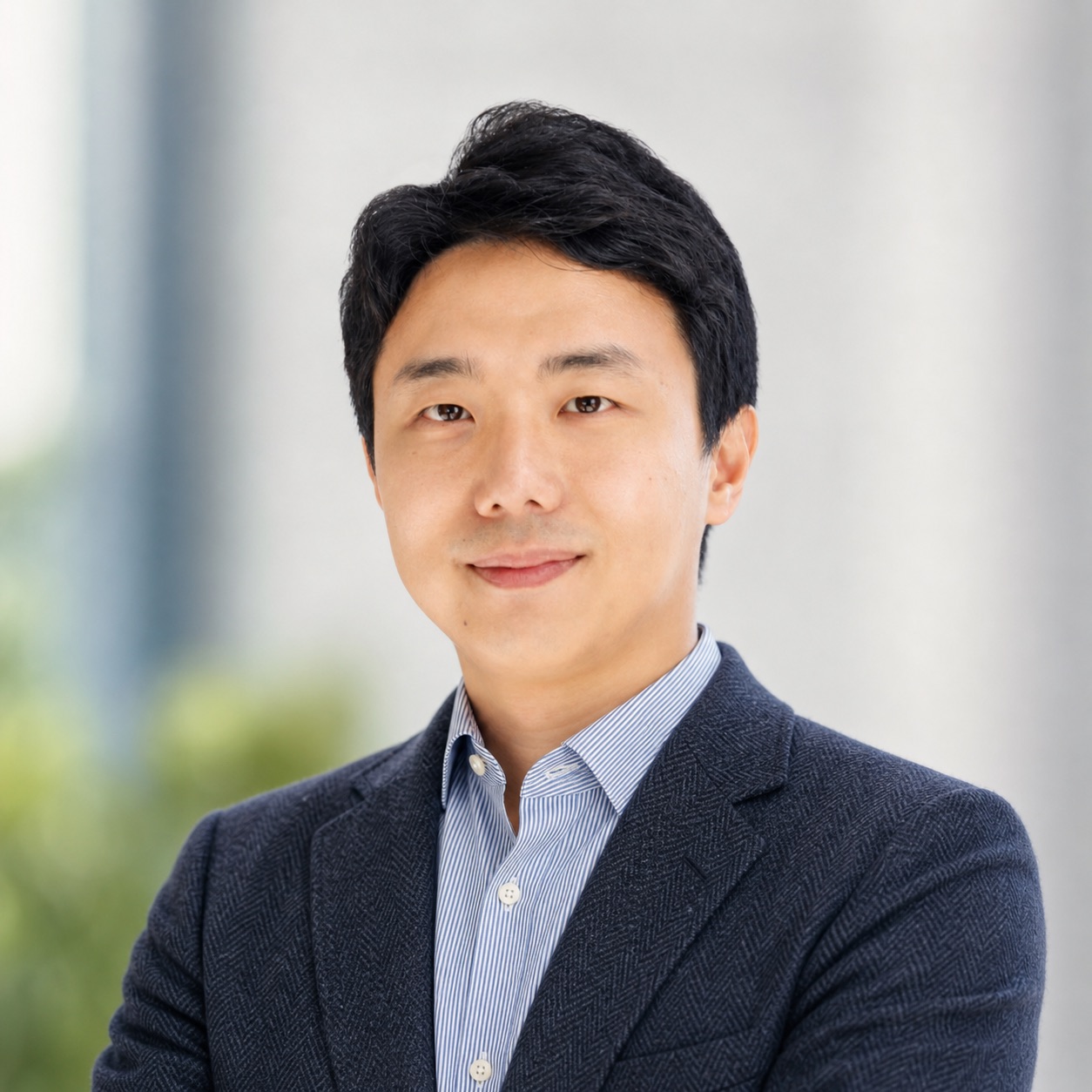
 Hoin Jung
· 6 previous affiliations
- Purdue University West LafayetteSince 2023
- Research Assistant · Since 2023
- PhD student · 2023
- Los Alamos National LaboratorySince 2026
- Advancing Machine Learning for Scientific Discovery Fellowship · Since 2026
- Research Scientist · 2025
- Seoul National University2020–2022
- Research Assistant · 2020–2022
- Lecturer · 2021–2022
- Samsung Electronics (South Korea)2017–2020
- Engineer · 2017–2020
- Korea Aerospace University2010–2014
- Undergrad student · 2010–2014
Research Overview
Hoin Jung focuses on trustworthy artificial intelligence, emphasizing the reliability, factuality, and fairness of multimodal foundation models. His research trajectory spans from applied computer vision in remote sensing to the development of lightweight, post-hoc debiasing methods that align model behavior without full-scale retraining. Currently, he investigates surgical bias mitigation and efficient inference techniques for both general-purpose vision-language models and domain-specific intelligent agents.
Research Trajectory
Hoin Jung’s early research focused on applied computer vision, specifically addressing challenges in remote sensing. In 2022, he published Boundary Enhancement Semantic Segmentation for Building Extraction From Remote Sensed Image, which proposed a method to improve the precision of building footprints extracted via U-Net-like convolutional neural networks. By elaborating the edges of detected structures, this work aimed to enhance applications in urban development and natural disaster monitoring.
By 2024, his focus shifted significantly toward algorithmic fairness and the development of trustworthy foundation models. He introduced A Unified Debiasing Approach for Vision-Language Models across Modalities and Tasks, addressing how models like CLIP and Stable Diffusion often reflect and amplify societal stereotypes present in their training data. This work contributed to the specific area of Neutralizing Demographic Bias in Vision-Language Models and advanced the broader research direction of Efficient Bias Mitigation Without Full Model Retraining. In parallel, he explored fairness in dynamic environments with Fairness-Aware Online Positive-Unlabeled Learning (FOPU). This approach integrated a convex fairness constraint into text classification tasks where only positive and unlabeled data are available, improving fairness metrics without sacrificing classification accuracy.
During the same period, he also investigated graph-based recommendation systems. He developed Revealing and Utilizing In-group Favoritism for Graph-based Collaborative Filtering, which introduced a model-agnostic Co-Clustering Wrapper framework. By partitioning users and items into co-clusters to train specialized local models alongside a global architecture, this research advanced the direction of Bridging the Local Global Gap in Graph Representation Learning and touched upon the area of Adaptive Gating for Multi-Scale Interest Fusion.
Moving into 2025, his work on fairness deepened with the introduction of Adversarial Latent Feature Augmentation for Fairness (ALFA). This method identifies unfair regions in a model's latent space where demographic bias is most pronounced, utilizing adversarial attacks to intentionally push features into these regions. By fine-tuning the classifier on this data, the model learns to correct its decision boundary across tabular, image, and text datasets. This contribution is situated within the broader research area of Intersectional Fairness for Multi-Attribute Machine Learning. He also tackled dynamic classification challenges in Towards On-the-Fly Novel Category Discovery in Dynamic Long-Tailed Distributions, addressing the realistic scenario where new categories continuously emerge and data distributions exhibit long-tailed biases, moving beyond previous assumptions of fixed incremental stages.
Alongside his foundational machine learning research, he has actively applied foundation models to complex, domain-specific engineering problems. He developed TVAgent: A lightweight Vision-Language-Model for TV GUI Agent, a system designed for real-time Smart TV interaction. To handle diverse app layouts, the system integrated a fine-tuned lightweight vision-language model trained on a synthetic data generation pipeline. Additionally, he collaborated on IMPACT: Industrial Machine Perception via Acoustic Cognitive Transformer, a foundation model pretrained on diverse manufacturing sounds using a self-supervised approach. This model set new benchmarks for predictive maintenance and anomaly detection, contributing to the field of Efficient Transformer Inference for Edge Devices.
In 2026, he continued refining post-hoc debiasing techniques with Adaptive Logit Adjustment for Debiasing Multimodal Language Models. This method surgically adjusts token probabilities during text generation to fix gender and racial biases in multimodal models like LLaVA and PaliGemma. Unlike previous methods that alter the model's internal representations, this approach preserves overall model utility while achieving fairness with negligible computational overhead.
Current Directions
The most recent papers in the evidence indicate a sustained focus on the deployment of trustworthy and efficient foundation models in both general and domain-specific contexts. A primary direction is the development of lightweight, post-hoc debiasing techniques for multimodal language models. This work seeks to ensure fairness across demographic attributes without incurring the computational burden of full-scale retraining, often by intervening at the inference stage via logit adjustment or latent space augmentation. Concurrently, recent research extends to applied machine perception, exploring how vision-language models and acoustic transformers can be optimized for real-time interaction, graphical user interface parsing, and predictive maintenance in edge environments and consumer electronics.
Profile updated
Loading new papers…
Other researchers whose papers cluster into the same research directions — a proxy for overlapping technical interests and shared intellectual neighborhoods.
See something wrong? Report a mistake