

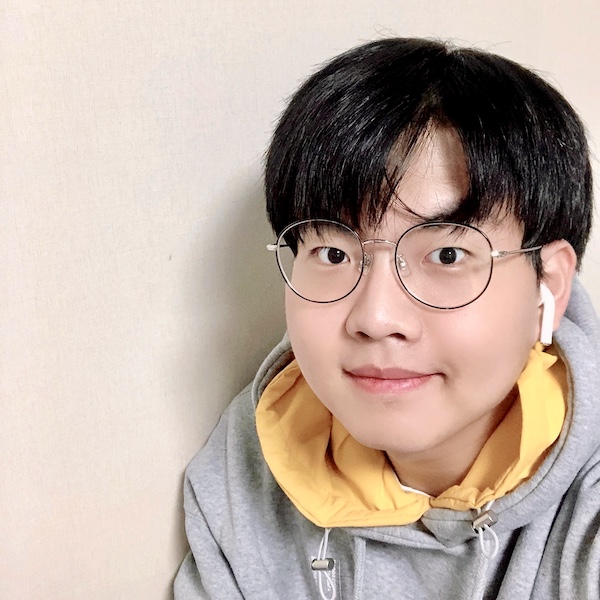
 Hoigi Seo
· 2 previous affiliations
- Seoul Nat'l UniversityCurrent
- Current
- Seoul National UniversitySince 2018
- PhD student · 2024–2030
- Undergrad student · 2018–2024
Research Overview
Hoigi Seo focuses on multimodal language-vision systems, diffusion-based generation, and robust visual representation learning. Early work addressed high-resolution scene synthesis and 3D model generation using diffusion priors. More recently, his research emphasizes improving the computational efficiency of generative models and mitigating object hallucinations in large vision-language architectures.
Research Trajectory
In 2023, Seo contributed to advancing high-resolution image synthesis from complex text prompts. With collaborators, he developed Detailed Human-Centric Text Description-Driven Large Scene Synthesis, a framework utilizing large language models for scene layout and pixel perturbation for upscaling. This work addressed challenges in the area of Spatial Attention Masking in Generative Diffusion Models and contributed to the broader field of Eliminating Seam Discontinuities in Tiled Image Processing by preventing object duplication and color bleeding in large-scale synthesis.
Concurrently, he introduced DITTO-NeRF: Diffusion-based Iterative Text To Omni-directional 3D Model, a pipeline for generating 360-degree 3D models from single images or text prompts. By employing an iterative inpainting strategy and progressive view sampling, this method improved visual fidelity and addressed core problems in the research direction of Mitigating Multi View Inconsistency in Generative 3D Modeling. The approach also advanced techniques in the area of Completing Unobserved Geometry with Generative Diffusion Priors and the related field of Eliminating Per-Scene Optimization with Feed-Forward 3D Reconstruction.
Continuing his focus on large-scale generation, Seo participated in the development of BeyondScene: Higher-Resolution Human-Centric Scene Generation with Pretrained Diffusion in 2024. This training-free framework enables pretrained diffusion models to synthesize ultra-high-resolution images of multi-human scenes by staging a base image creation followed by instance-aware upscaling, overcoming standard token and resolution constraints. That same year, his research expanded into embodied AI and spatial reasoning. He co-developed INTRA: Interaction Relationship-Aware Weakly Supervised Affordance Grounding, which addresses the complexities of teaching intelligent agents to perceive object affordances from exocentric images without relying on costly pixel-level annotations or paired egocentric datasets.
In 2025, Seo's work increasingly targeted the internal mechanics and efficiency of generative models. He investigated text-image misalignment in complex scenes with On Geometrical Properties of Text Token Embeddings for Strong Semantic Binding in Text-to-Image Generation. This research provided empirical and theoretical analysis demonstrating how the angular distances and norms of token embeddings influence cross-attention maps, thereby improving semantic binding. Addressing the computational burden of these systems, he proposed Skrr: Skip and Re-use Text Encoder Layers for Memory Efficient Text-to-Image Generation. This pruning strategy intelligently recycles transformer layers to reduce text encoder memory usage significantly while maintaining image quality.
He further explored model acceleration by co-developing Upsample What Matters: Region-Adaptive Latent Sampling for Accelerated Diffusion Transformers. This training-free framework accelerates inference along the spatial dimension through mixed-resolution sampling, mitigating the heavy computational costs of diffusion transformers. Continuing the theme of resource-constrained deployment, Seo led work on Efficient Personalization of Quantized Diffusion Model without Backpropagation. This approach enables memory-efficient fine-tuning on edge devices by bypassing traditional backpropagation, contributing to the broader area of Optimizing Non-Differentiable Discrete Neural Network Weights.
Beyond diffusion models, Seo also addressed reliability in multimodal architectures. He authored On Epistemic Uncertainty of Visual Tokens for Object Hallucinations in Large Vision-Language Models, which identifies a link between uncertain visual tokens and hallucinated outputs. By using adversarial perturbations as a proxy for epistemic uncertainty and masking confused tokens, the method reduces hallucinations without requiring expensive modifications to the underlying language model.
Most recently, in 2026, Seo participated in research on inverse problems in computer vision. His collaborative work on Triadic Dynamics Aware Diffusion Posterior Sampling for Inverse Problems: Optimizing Guidance and Stochasticity Schedules explores how to balance data consistency, classifier-free guidance, and stochasticity to achieve high-quality image reconstructions.
Current Directions
The most recent papers in the evidence address the reliability and efficiency of multimodal AI systems. Recent work investigates methods for deploying large diffusion models under strict computational constraints, utilizing techniques such as layer pruning, region-adaptive latent sampling, and backpropagation-free personalization of quantized models. Additionally, Seo's current research explores the internal mechanics of vision-language models, specifically focusing on how epistemic uncertainty in visual tokens contributes to object hallucinations. His latest collaborative efforts also examine the optimization of guidance and stochasticity schedules to improve diffusion posterior sampling for complex inverse problems.
Profile updated
Loading new papers…
Other researchers whose papers cluster into the same research directions — a proxy for overlapping technical interests and shared intellectual neighborhoods.
See something wrong? Report a mistake