

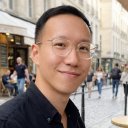
 Hogun Park
· 6 previous affiliations
- Sungkyunkwan UniversitySince 2020
- Associate Professor · Since 2024
- Current
- Assistant Professor · 2020–2024
- University of California San DiegoSince 2026
- Visiting Scholar · Since 2026
- Purdue University West Lafayette2013–2020
- PhD student · 2013–2020
- Research Intern · 2017
- Research Intern · 2016
- Master's degree, Computer Science · 2006–2008
Research Overview
Hogun Park focuses on data mining, graph neural networks, and multimodal reasoning systems. His early work explored relational machine learning and temporal graph representations, establishing foundations for complex node classification. More recently, his research has expanded to address federated learning for recommendation systems and the integration of large multimodal models with knowledge graphs for advanced reasoning tasks.
Research Trajectory
Park's early research included participation in robotics planning, contributing to Designing a Cognitive Case-Based Planning Framework for Home Service Robots in 2007. His focus subsequently shifted toward relational machine learning and graph neural networks (GNNs). In 2019, he introduced TSGNet in Exploiting Interaction Links for Node Classification with Deep Graph Neural Networks, a neural architecture designed to jointly capture temporal and static interaction patterns for node classification. By leveraging a static neighbor encoder alongside a graph neural network-based recurrent unit, this architecture effectively models complex interaction dynamics over time.
Building on these foundations in graph representations, his work expanded into complex logical reasoning over knowledge graphs. He developed methods to address First-Order Logic queries, as detailed in Improving Multi-hop Logical Reasoning in Knowledge Graphs with Context-Aware Query Representation Learning, which overcomes the limitations of linear sequential operations by better capturing the logical structure of queries and relation-induced information. During this period, he also applied graph-based techniques to educational data mining, utilizing concept maps and multiple-choice response disentanglement to model student knowledge states in Enhancing knowledge tracing with concept map and response disentanglement. This approach introduced unchosen responses to better understand student intent, improving the interpretability and prediction performance of personalized learning systems.
In 2025, Park continued to refine graph learning methodologies. He addressed the "smoothness polarization" problem in graph self-supervised learning with the BSG framework in Balancing Graph Embedding Smoothness in Self-supervised Learning via Information-Theoretic Decomposition, using information theory to decompose learning objectives. This approach allows models to find an optimal balance of embedding smoothness that performs well across diverse downstream tasks, such as both node classification and link prediction. He further explored graph representations in CIMAGE: Exploiting the Conditional Independence in Masked Graph Auto-encoders. Concurrently, he advanced knowledge graph question answering with the Aqua-QA framework in Enhancing Complex Reasoning in Knowledge Graph Question Answering through Query Graph Approximation, enabling robust multi-hop reasoning and negation handling over incomplete knowledge graphs. By approximating query graphs, the framework bridges the gap between traditional question answering and complex logical queries without requiring perfect formal logic translation.
Park's research trajectory also demonstrates a strong engagement with multimodal and generative AI systems. He introduced adaptive tokenization and module selection for video captioning in MAMS: Model-Agnostic Module Selection Framework for Video Captioning. By dynamically tailoring the caption generation process rather than relying on fixed frame extraction, the framework significantly boosts performance across various architectures. He also tackled the transparency of generative models with AudioGenX, an explainable AI method detailed in AudioGenX: Explainability on Text-to-Audio Generative Models. This method optimizes an explainer using factual and counterfactual objective functions to highlight the importance of specific input tokens at the audio token level. His work in this domain extends to the research direction of Multimodal Graph Retrieval Augmented Generation, where he contributed to M3KG-RAG: Multi-hop Multimodal Knowledge Graph-enhanced Retrieval-Augmented Generation, addressing the challenge of retrieving external facts to support complex audio-visual scene understanding in large multimodal models.
By 2026, a significant portion of Park's work focused on decentralized machine learning, specifically advancing the area of Federated Recommendation for Data-Sparse Clients. He developed FedGDVE, a framework utilizing reinforcement learning-based data valuation to selectively incorporate global interactions for small e-commerce platforms, as presented in Federated recommender system with data valuation for E-commerce platform. By filtering out noise and aligning global data with specific local preferences, the system achieves substantial performance gains over existing baselines. He also addressed subgraph structural imbalance in federated settings with LPSFed, detailed in Low-pass Personalized Subgraph Federated Recommendation, which uses low-pass spectral filtering to align diverse client models while preserving local characteristics.
In parallel with his federated learning research, Park has continued to push the boundaries of applied multimodal reasoning. He developed the JUDO framework in JUDO: A Juxtaposed Domain-Oriented Multimodal Reasoner for Industrial Anomaly QA, which trains large multimodal models to explicitly compare defective images against normal templates for industrial anomaly detection. By internalizing domain-specific knowledge through a multi-stage pipeline that includes reinforcement learning, the system outperforms general-purpose models on complex industrial tasks. Additionally, he participated in research on computational efficiency for autonomous systems, contributing to SToRM: Supervised Token Reduction for Multi-modal LLMs toward efficient end-to-end autonomous driving, which introduces token reduction strategies to lower the computational costs of deploying multimodal models in vehicles, maintaining driving performance while significantly reducing processing requirements.
Current Directions
The most recent papers in the evidence indicate two primary current directions in Park's research. The first is the development of robust, personalized federated learning frameworks for recommendation systems. This work addresses the challenges of data sparsity and structural imbalance across heterogeneous clients, utilizing techniques such as reinforcement learning-based data valuation and low-pass spectral filtering to improve recommendation accuracy without compromising local client characteristics.
The second major direction involves optimizing large multimodal models (LMMs) for specialized, complex reasoning tasks. Recent work investigates how to equip these models with domain-specific knowledge—such as industrial anomaly detection through comparative visual reasoning—and how to integrate them with multimodal knowledge graphs for retrieval-augmented generation. Furthermore, this research explores token reduction strategies to make massive multimodal models computationally viable for real-time applications like autonomous driving.
Profile updated
Loading new papers…
Other researchers whose papers cluster into the same research directions — a proxy for overlapping technical interests and shared intellectual neighborhoods.
See something wrong? Report a mistake