

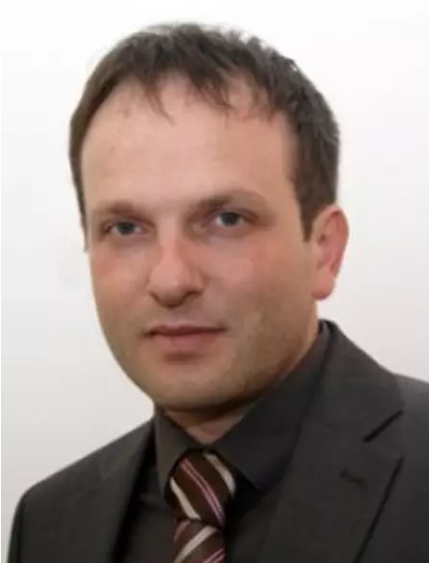
 Hervé Le Borgne
· 3 previous affiliations
- Researcher · Since 2006
- Dublin City University2004–2006
- Postdoc · 2004–2006
- Institut polytechnique de Grenoble2000–2003
- PhD student · 2000–2003
Research Overview
Hervé Le Borgne focuses on computer vision, cross-modal representation learning, and the interpretability of generative models. His earlier work addressed zero-shot learning and semantic alignment between visual and textual data. More recently, his research investigates disentangled control in latent spaces, algorithmic fairness, and unsupervised methods for extracting interpretable features from neural networks.
Research Trajectory
Hervé Le Borgne’s early research concentrated on improving visual feature representations for classification tasks. In 2012, he contributed to Locality-constrained and spatially regularized coding for scene categorization, which integrated local spatial context into coding strategies for bag-of-words feature design. This foundational interest in robust visual representations naturally extended into cross-modal learning, where visual content must be aligned with textual descriptions. In Aggregating Image and Text Quantized Correlated Components (2016), he and his collaborators demonstrated that direct subspace alignment via kernelized canonical correlation analysis often yields coarse translations between modalities, proposing a novel aggregation method to refine this process. This work contributed to the research direction of The Modality Gap in Joint Embedding Spaces. Continuing in this domain, he supervised the development of AMECON: Abstract Meta-Concept Features for Text-Illustration (2017), which approached cross-media retrieval by mapping visual modalities to textual ones through abstract meta-concepts rather than relying solely on parallel common-space learning. Concurrently, he explored how human categorization knowledge could improve transfer learning in MuCaLe-Net: Multi Categorical-Level Networks to Generate More Discriminating Features (2017), designing architectures that separate generic categories while distinguishing specific ones.
By 2019, Le Borgne’s focus had expanded significantly into Zero-Shot Learning (ZSL), addressing the challenge of recognizing visual classes with no available training data. In Modeling Inter and Intra-Class Relations in the Triplet Loss for Zero-Shot Learning, he helped identify and mitigate limiting assumptions in triplet loss applications for fine-grained datasets, advancing work in the area of Mahalanobis Distance Metric Learning. He further scaled ZSL capabilities in Using Sentences as Semantic Representations in Large Scale Zero-Shot Learning (2020), exploring how short natural language descriptions could replace rigid attribute vectors, intersecting with the broader areas of Enriching Sparse Labels with Detailed Visual Descriptions and Multi-Source Semantic Fusion for Zero-Shot Learning. To handle large-scale scenarios with noisy data, his group proposed Webly Supervised Semantic Embeddings for Large Scale Zero-Shot Learning (2020), which extracted semantic class prototypes from web-sourced textual metadata. Alongside these ZSL advancements, he continued to refine transfer learning methodologies, co-authoring Learning More Universal Representations for Transfer-Learning (2020) to create visual representations that generalize across diverse tasks with minimal need for new annotated data.
In 2020, Le Borgne’s trajectory also incorporated the study of deep generative models, specifically focusing on the interpretability and control of their latent spaces. He co-authored Controlling generative models with continuous factors of variations, introducing methods to find meaningful directions in latent spaces to guide the generative process, touching upon the research directions of Riemannian Geometry of Latent Manifolds and Hierarchical Semantic Control in Generative Networks. This interest in latent space manipulation led to targeted solutions for disentanglement in Generative Adversarial Networks (GANs). In Multi-attribute balanced sampling for disentangled GAN controls (2022), his team proposed a balanced sampling technique to prevent the manipulation of one attribute from unintentionally altering others. They expanded on semantic editing in Wasserstein loss for Semantic Editing in the Latent Space of GANs (2023), leveraging optimal transport concepts to guide edits robustly without relying on brittle classifiers.
During this period, he also maintained his involvement in multimodal and zero-shot challenges. He participated in the creation of a benchmark for knowledge-grounded multimodality in ViQuAE, a Dataset for Knowledge-based Visual Question Answering about Named Entities (2022). Bridging his expertise in generative models and ZSL, he co-authored Learning semantic ambiguities for zero-shot learning (2023), which utilized generative models to synthesize features for ambiguous semantic prototypes, thereby regularizing the model and mitigating bias toward seen classes.
Most recently, Le Borgne has applied his expertise in generative control and representation learning to address algorithmic fairness, temporal robustness, and model interpretability. In Fairer analysis and demographically balanced face generation for fairer face verification (2025), his group developed a controlled face generation pipeline to create demographically balanced synthetic training data, improving fairness metrics in verification systems. He also investigated how AI models handle evolving visual appearances over time, introducing a fine-grained dataset and time-incremental pretraining strategies in CaMiT: A Time-Aware Car Model Dataset for Classification and Generation (2025). Pushing further into representation engineering, he oversaw The Deleuzian Representation Hypothesis (2026), which proposed an unsupervised method of clustering activation differences to extract interpretable concepts across vision, text, and audio, enabling precise steering of model behavior.
Current Directions
Recent work investigates the interpretability and steering of neural network representations, alongside challenges in algorithmic fairness and temporal robustness. The most recent papers in the evidence address representation engineering by clustering activation differences to extract interpretable concepts across modalities, enabling precise, unsupervised control over model behavior without relying on complex sparse autoencoders. Concurrently, this research explores the use of controlled, demographically balanced synthetic data generation to mitigate bias in face verification systems. Another active area involves evaluating and improving how models adapt to fine-grained visual shifts over time, ensuring robust classification and generation performance as data distributions naturally evolve.
Profile updated
Loading new papers…
Other researchers whose papers cluster into the same research directions — a proxy for overlapping technical interests and shared intellectual neighborhoods.
See something wrong? Report a mistake