

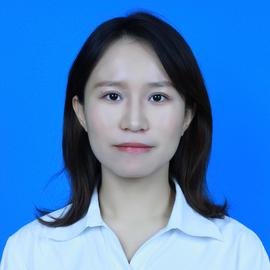
 Heqian Qiu
· 1 previous affiliation
- Associate Professor · Since 2025
- Postdoc · 2022–2024
Research Overview
Heqian Qiu focuses on computer vision and machine learning, with specific emphasis on object detection, referring expression comprehension, and vision-language integration. Her early work addressed fundamental challenges in multi-scale feature representation and precise localization for complex visual scenes. More recently, her research has expanded into continual learning, open-vocabulary detection, and egocentric video understanding.
Research Trajectory
Qiu’s early research concentrated on foundational improvements in object detection and localization. In 2019, she introduced A2RMNet: Adaptively Aspect Ratio Multi-Scale Network for Object Detection in Remote Sensing Images, a deep learning architecture that addressed the challenge of diverse object sizes by adaptively fusing multi-scale features. This work advanced multi-scale architectures for extreme scale variance in remote sensing and aspect ratio preserving visual representation learning. She further improved detection accuracy by proposing an Offset Bin Classification Network for Accurate Object Detection, which optimized bounding box regression with a cross-entropy loss to avoid gradient explosion. Expanding into vision-language tasks, she developed Language-Aware Fine-Grained Object Representation for Referring Expression Comprehension. This approach utilized language-aware deformable regions to capture fine-grained object information, such as shapes and poses, which are often lost in traditional rectangular bounding boxes.
Continuing to refine object localization, she developed CrossDet: Crossline Representation for Object Detection, an anchor-free framework that represents objects using adaptive cross lines rather than discrete points or boxes. This contributed to precise localization for arbitrarily oriented objects and decoupled heads for object detection. She also guided research on refining detection paradigms, addressing imbalanced optimization in recurrent detection with Bal-R$^2$CNN: High Quality Recurrent Object Detection With Balance Optimization. In the multi-modal domain, she introduced RefCrowd: Grounding the Target in Crowd with Referring Expressions, a challenging dataset designed specifically for complex, real-world crowd understanding and multi-modal target grounding.
In 2023, Qiu collaborated on several projects addressing catastrophic forgetting in continual learning. She participated in developing Optimizing Mode Connectivity for Class Incremental Learning, a method that finds low-loss paths connecting neural network parameters across sequential tasks, supporting linear mode connectivity for neural network merging and preserving knowledge in class incremental learning. She also contributed to Contrastive Continuity on Augmentation Stability Rehearsal for Continual Self-Supervised Learning, advancing contrastive prototype separation and stability selection for robust model discovery. Further work in this domain included CafeBoost: Causal Feature Boost to Eliminate Task-Induced Bias for Class Incremental Learning, which applied causal interventions via backdoor adjustment to mitigate recency bias and stabilize feature spaces. Additionally, she explored continual learning in video contexts with Confusion Mixup Regularized Multimodal Fusion Network for Continual Egocentric Activity Recognition.
Returning to vision-language integration and object detection in 2024, she participated in Class Incremental Learning with Multi-Teacher Distillation, which tackled catastrophic forgetting by learning from diverse and complementary teacher models. She then led the development of Region Prompt Tuning: Fine-grained Scene Text Detection Utilizing Region Text Prompt, adapting vision-language models for high-precision scene text detection and disentangling dense, overlapping text instances. In the video domain, she introduced Cognition Transferring and Decoupling for Text-supervised Egocentric Semantic Segmentation, distilling knowledge from large-scale models to segment objects in first-person videos using only image-level text labels, thereby advancing compositional reasoning in vision-language models.
Her recent work heavily emphasizes egocentric vision and open-vocabulary detection. She introduced EgoMe: Follow Me via Egocentric View in Real World, a large-scale dataset capturing the "watch-then-do" process from an imitator's perspective, bridging the embodiment gap in robot learning from video. She also published a comprehensive overview, Challenges and Trends in Egocentric Vision: A Survey, which explored spatio-temporal scene graphs and stabilizing spatial reasoning in egocentric video. In few-shot and open-vocabulary detection, she developed a framework that disentangles objectness from classification in Attention-disentangled Uniform Orthogonal Feature Space Optimization for Few-shot Object Detection, contributing to class-agnostic localization for open-world object detection. She also guided research on Modulating CNN Features with Pre-Trained ViT Representations for Open-Vocabulary Object Detection, which injected high-level semantic cues from Vision Transformers into multi-scale CNN features to balance specialization and generalization. Most recently, her research has continued to explore these themes in Unleash and integrate the power of pre-trained ViTs via feature fusion for open-vocabulary object detection and Class extension logits distillation for few-shot object detection.
Current Directions
The most recent papers in the evidence indicate a strong focus on egocentric vision and open-vocabulary object detection. In the realm of first-person video understanding, recent work investigates how AI agents can learn through observation by bridging the embodiment gap between third-person demonstration and egocentric execution. Concurrently, her research addresses the challenge of detecting novel, unseen object categories by modulating traditional convolutional architectures with pre-trained Vision Transformer representations. This includes developing uniform orthogonal feature spaces and feature fusion techniques to balance broad semantic knowledge with precise spatial localization in few-shot and open-world environments.
Profile updated
Loading new papers…
Other researchers whose papers cluster into the same research directions — a proxy for overlapping technical interests and shared intellectual neighborhoods.
See something wrong? Report a mistake