

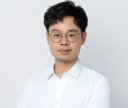
 Hengguan Huang
· 2 previous affiliations
- University of CopenhagenSince 2024
- Assistant Professor · Since 2024
- National University of Singapore2019–2024
- PhD student · 2019–2024
Research Overview
Hengguan Huang focuses on robust speech recognition, Bayesian machine learning, and the modeling of complex temporal sequences. His early work developed neural architectures for acoustic modeling and unsupervised domain adaptation in non-stationary environments. More recently, his research investigates the mechanistic interpretability of large language models, uncertainty calibration, and latent dynamic modeling for clinical diagnostics.
Research Trajectory
His early work investigated methods to improve the robustness of deep neural networks in speech recognition. He explored augmenting speaker representations in An investigation of augmenting speaker representations to improve speaker normalisation for DNN-based speech recognition, utilizing bottleneck speaker vectors to capture long-term information and estimate robust factors of speaker-level variations. He subsequently developed techniques To Improve the Robustness of LSTM-RNN Acoustic Models Using Higher-Order Feedback from Multiple Histories, addressing vulnerabilities to real-world noise and improving long-term dependency modeling in acoustic environments.
Shifting toward the modeling of complex temporal sequences, he introduced the Recurrent Poisson Process Unit for Speech Recognition, which conceptualizes human speech signals as discrete point patterns of acoustic events rather than arbitrarily discretized continuous inputs. He also collaborated on the Deep Graph Random Process for Relational-Thinking-Based Speech Recognition, integrating relational thinking mechanisms to process sensory signals. A major methodological advancement during this period was STRODE: Stochastic Boundary Ordinary Differential Equation. By treating event times as random variables within a stochastic boundary value problem, this neural ODE framework learns both underlying dynamics and hidden timings without requiring timing labels, advancing the research direction of Discovering Latent Sub-events in Complex Temporal Sequences.
In subsequent years, his focus expanded to Bayesian methods and model adaptation in non-stationary environments. To handle streaming data with lower latency, he proposed an Extrapolative Continuous-time Bayesian Neural Network for Fast Training-free Test-time Adaptation, formulating internal predictive modeling as a continuous-time Bayesian filtering problem and contributing to the area of Proactive Model Adaptation for Evolving Data Streams. Addressing cross-modal challenges, he co-authored Unsupervised Mismatch Localization in Cross-Modal Sequential Data with Application to Mispronunciations Localization, a hierarchical Bayesian approach that infers relationships between mismatched speech-text sequences. This work intersects with the broader areas of Forced Alignment for Non-Verbatim and Disfluent Speech and Linguistic Robustness in Automatic Speech Recognition. Additionally, he addressed non-IID data challenges in distributed settings through FedNP: Towards Non-IID Federated Learning via Federated Neural Propagation, enhancing local training with auxiliary tasks to estimate global data distributions.
By 2024, his research began addressing the capabilities and internal mechanisms of large language models (LLMs). He explored training-free Bayesian inference in LLMs via Verbalized Probabilistic Graphical Modeling with Large Language Models, enabling models to capture latent structures in complex compositional reasoning tasks. Concurrently, he conducted a mechanistic study, Tracking the Feature Dynamics in LLM Training: A Mechanistic Study, which maps how internal representations form over time, contributing to the research area of Developmental Trajectories of Neural Representations. Returning to robust speech processing, he developed Confidence-Enhanced Adaptation in Advancing Test-Time Adaptation in Wild Acoustic Test Settings, allowing recognition models to dynamically adjust to noisy or accented environments by prioritizing uncertain speech frames.
Most recently, his work has emphasized the reliability of foundation models and their application to clinical diagnostics. He contributed to auditing AI safety mechanisms in On Calibration of LLM-based Guard Models for Reliable Content Moderation, demonstrating how post-hoc calibration can mitigate the overconfidence of guard models facing jailbreak attacks. In the medical domain, he co-authored Improving Robustness and Reliability in Medical Image Classification With Latent-Guided Diffusion and Nested-Ensembles, combining Vision Transformers with diffusion models to handle noisy, low-resolution clinical images. His recent leadership in clinical modeling includes iLoRA: Bayesian Low-Rank Adaptation with Latent Interaction Graphs for Microbiome Diagnosis, which adapts LLMs for specialized medical tasks, and LERD: Latent Event-Relational Dynamics for Neurodegenerative Classification. The latter introduces a Bayesian framework that combines differentiable biophysical priors with stochastic event modeling to diagnose neurodegenerative diseases from noisy electroencephalogram signals.
Current Directions
Recent work investigates the reliability and clinical application of foundation models and latent dynamic systems. A major focus is on improving the robustness of AI systems in high-stakes environments, such as auditing and calibrating large language model guardrails to prevent overconfident failures during content moderation. In the medical domain, recent papers address diagnostic challenges by integrating advanced generative techniques—such as latent-guided diffusion and nested-ensembles—to enhance medical image classification. Additionally, ongoing research explores Bayesian adaptation methods, including low-rank adaptation with latent interaction graphs for microbiome diagnosis, and the development of latent event-relational dynamics to classify neurodegenerative diseases from noisy electrophysiological signals.
Profile updated
Loading new papers…
Other researchers whose papers cluster into the same research directions — a proxy for overlapping technical interests and shared intellectual neighborhoods.
See something wrong? Report a mistake