

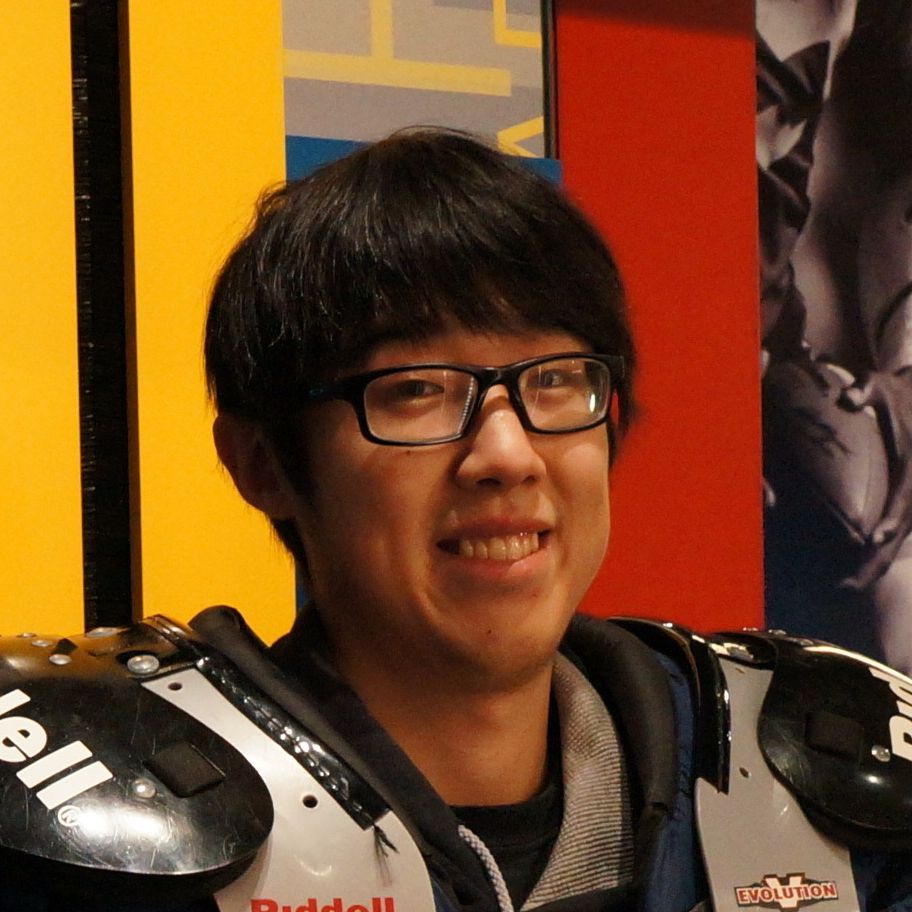
 Henggang Cui
· 7 previous affiliations
- Latitude AISince 2024
- Engineering Manager · Since 2024
- Motional2021–2024
- Principal Researcher · 2021–2024
- Uber AI (United States)2018–2021
- Senior Software Engineer · 2018–2021
- Advanced Technologies Group (United States)2017–2021
- Senior Software Engineer · 2018–2021
- Software Engineer II · 2017–2018
- Carnegie Mellon University2012–2017
- Graduate Research Assistant · 2012–2017
- Research Intern · 2014
- Tsinghua University2008–2012
- Bachelor of Engineering (BE), Electronic Engineering · 2008–2012
Research Overview
Henggang Cui focuses on distributed systems for machine learning, large-scale parameter servers, and asynchronous optimization. Early work addressed the straggler problem and bounded staleness to accelerate data-parallel training across distributed clusters and GPUs. More recently, his research trajectory encompasses multi-modal prediction and spatial forecasting for autonomous agents.
Research Trajectory
Henggang Cui’s research trajectory initially centered on the intersection of distributed systems and large-scale machine learning, specifically addressing the communication bottlenecks and synchronization overheads that plague distributed training. In 2013, Cui participated as a co-author in developing the Stale Synchronous Parallel (SSP) model, detailed in More Effective Distributed ML via a Stale Synchronous Parallel Parameter Server. This work contributed to the broader research direction of Staleness Mitigation in Asynchronous Federated Learning, demonstrating that allowing distributed workers to read slightly stale model parameters from a local cache could significantly reduce idle time while maintaining mathematical correctness guarantees.
Building on these foundational concepts, Cui led several first-author efforts to optimize parameter server architectures. In 2014, he published Exploiting iterative-ness for parallel ML computations, which demonstrated that the repeating access patterns inherent in iterative machine learning algorithms could be leveraged to replace dynamic caching with more efficient static data structures. That same year, he further explored these efficiency gains in Exploiting Bounded Staleness to Speed Up Big Data Analytics, reinforcing his focus on balancing computational throughput with model convergence.
As deep learning models grew in complexity, the need to scale training across specialized hardware became paramount. In 2016, Cui was the first author of GeePS: scalable deep learning on distributed GPUs with a GPU-specialized parameter server. This system addressed the specific challenges of distributed GPU training—such as data movement overheads, GPU stalls, and limited memory—by tailoring the parameter server architecture to manage GPU memory explicitly. Concurrently, he contributed to the area of Asynchronous Optimization for Non-Convex Distributed Learning as the second author of Addressing the straggler problem for iterative convergent parallel ML. This paper introduced FlexRR, a system that combined flexible synchronization with dynamic peer-to-peer work reassignment to mitigate the impact of transient worker slowdowns in cloud environments.
By 2018, Cui’s systems research culminated in automating the configuration of these complex distributed environments. As the first author of MLtuner: System Support for Automatic Machine Learning Tuning, he proposed a system that uses optimization-guided online trial-and-error to automatically tune critical training parameters, such as learning rates, mini-batch sizes, and data staleness bounds, during execution.
Current Directions
The most recent thematic evidence from 2018 indicates a shift in Cui’s research focus toward the domain of autonomous driving and robotics. This recent work investigates the complex challenges of predicting agent behavior in uncertain environments, contributing to the research area of Probabilistic Trajectory Forecasting for Autonomous Systems. Rather than relying on deterministic forecasting, this direction emphasizes the need to model diverse potential futures for dynamic actors like pedestrians and vehicles.
Associated themes in the evidence highlight a focus on Specialization Through Competitive Winner Take All Losses and the broader area of Modeling Multi-modal Action Distributions for Robotic Control. Additionally, the evidence points to work in the area of Rasterized Bird's-Eye View Representations for Spatial Forecasting, which involves treating complex road networks and agent movements as spatial maps to better predict the flow of traffic and pedestrian trajectories.
Profile updated
Loading new papers…
Other researchers whose papers cluster into the same research directions — a proxy for overlapping technical interests and shared intellectual neighborhoods.
See something wrong? Report a mistake