

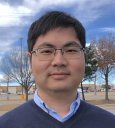
 Heng Fan
· 3 previous affiliations
- University of North TexasSince 2021
- Assistant Professor · Since 2021
- Stony Brook University2020–2021
- PhD student · 2020–2021
- Temple University2016–2019
- PhD student · 2016–2019
1 other author named Heng Fan: Heng Fan (1 paper)
Research Overview
Heng Fan focuses on visual object tracking, multimodal representation learning, and spatiotemporal video understanding. His early work established foundational frameworks and large-scale benchmarks for real-time tracking using convolutional and recurrent neural networks. More recently, his research investigates transformer-based architectures and vision-language integration to address complex motion learning and omni-object video grounding.
Research Trajectory
Heng Fan’s early research established robust frameworks for real-time visual tracking and scene understanding. In 2017, he introduced Parallel Tracking and Verifying: A Framework for Real-Time and High Accuracy Visual Tracking, which leveraged multithreading to decouple tracking and verification into separate processes, achieving super real-time performance. To address the challenge of similar distractors in convolutional neural network (CNN) trackers, he developed SANet: Structure-Aware Network for Visual Tracking, incorporating recurrent neural networks (RNNs) to model object self-structure across different convolutional levels. Expanding RNNs beyond single modalities, he also contributed to RGB-D Scene Labeling with Multimodal Recurrent Neural Networks, enabling memory sharing across RGB and depth channels for more discriminative pixel classification.
Continuing his focus on high-performance tracking architectures, he developed Siamese Cascaded Region Proposal Networks for Real-Time Visual Tracking. in 2019. This multi-stage framework utilized a feature transfer block to address scale variations and distractors, directly advancing the research direction of Efficient Feature and Search Management for Real-Time Tracking. Recognizing the critical need for rigorous evaluation platforms to drive the field forward, he led the creation of LaSOT: A High-quality Large-scale Single Object Tracking Benchmark in 2021, providing the community with millions of densely annotated frames across 85 diverse object classes.
As attention mechanisms gained prominence in computer vision, his work shifted toward fully-attentional architectures. In 2022, he participated in designing SwinTrack: A Simple and Strong Baseline for Transformer Tracking, which utilized transformers for both representation learning and feature fusion within a Siamese framework, moving beyond hybrid CNN-Transformer models.
By 2024, his research had expanded significantly into robust perception, multimodal integration, and domain adaptation. In the domain of video analysis, he proposed Local Compressed Video Stream Learning for Generic Event Boundary Detection, an end-to-end method that leverages compressed domain information—such as motion vectors, residuals, and group of pictures (GOP) structure—to bypass the computational cost of full video decoding. He also continued his benchmarking efforts, introducing Benchmarking the Robustness of UAV Tracking Against Common Corruptions to evaluate unmanned aerial vehicle trackers under 17 types of adversarial, sensor, and blur noise, and contributing to Correction: PIDray: A Large-Scale X-ray Benchmark for Real-World Prohibited Item Detection for security applications.
To unify disparate motion learning approaches, he developed ProMotion: Prototypes as Motion Learners, a prototypical transformer framework that uses a dual mechanism involving a feature denoiser and a prototypical learner. His work also addresses the broader area of Bridging the Domain Gap Without Target Labels; for instance, he collaborated on Robust Domain Adaptive Object Detection With Unified Multi-Granularity Alignment, encoding dependencies across pixel, instance, and category levels to learn domain-invariant features. In parallel, he explored the research direction of Cross-Modal Attention Fusion for Heterogeneous Data Integration, developing Efficient Multimodal Semantic Segmentation via Dual-Prompt Learning to adapt frozen pre-trained RGB models for RGB-Depth and RGB-Thermal segmentation with minimal training costs.
Further extending temporal representation learning, he introduced Cyclic Refiner: Object-Aware Temporal Representation Learning for Multi-view 3D Detection and Tracking, which uses a backward bridge to propagate model predictions (like object locations and sizes) to image and bird's-eye-view features, suppressing distractors in historical frames. He also addressed the integration of natural language into tracking with Divert More Attention to Vision-Language Object Tracking, proposing a general attribute annotation method to construct large-scale vision-language tracking databases.
His most recent trajectory focuses on complex video querying and grounding. In 2025, he developed PRVQL: Progressive Knowledge-guided Refinement for Robust Egocentric Visual Query Localization, a framework that continuously exploits target-relevant knowledge to refine queries in cluttered first-person videos. Building on this foundation, he collaborated on OmniSTVG: Toward Spatio-Temporal Omni-Object Video Grounding in 2026, introducing a novel task formulation and the OmniTube transformer architecture to localize all interacting entities mentioned in a textual query across space and time, supported by the release of the 10,018-video BOSTVG benchmark.
Also in 2026, Fan senior-authored Exploiting Textual Semantics for Robust Cross-View Object Correspondence, introducing TeSCo to fuse vision-language textual expressions with visual features via iterative refinement and text-conditioned modulation for target matching across extreme viewpoint variations. Broadening into model efficiency and biological imaging, Fan contributed to TileQuant: Tile as the Precision-Allocation Unit for LLM Mixed-Precision Post-Training Quantization, a training-free framework that assigns mixed precision to hardware-aligned 2D weight tiles in large language models, and participated in developing MitoWorld: A Stochastic World Model of the Single-Cell Cycle under Genetic Perturbation, which couples latent stochastic dynamics with division hazard modeling to generate single-cell trajectories under genetic knockdowns.
Current Directions
The most recent papers in the evidence address complex, multi-entity video understanding and egocentric query localization. Recent work investigates how to localize targets in space and time from first-person videos, using progressive knowledge-guided refinement to overcome severe appearance changes and background clutter. Additionally, his current research expands classic spatio-temporal video grounding into omni-object grounding, requiring models to localize all interacting entities mentioned in a textual query rather than a single target. These efforts align with the broader research direction of Scaling Spatiotemporal Attention Beyond Quadratic Complexity, as he continues to develop efficient transformer architectures capable of handling dense, long-term multimodal video sequences and complex vision-language interactions.
Profile updated
Loading new papers…
Other researchers whose papers cluster into the same research directions — a proxy for overlapping technical interests and shared intellectual neighborhoods.
See something wrong? Report a mistake