

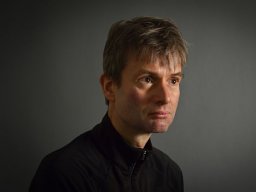
 Hendrik Hamann
· 7 previous affiliations
- National Academy of SciencesSince 2020
- Member of the National Science Mapping Committee of the National Research Council · Since 2020
- The Grainger College of EngineeringSince 2024
- Adjunct Professor · Since 2024
- Stony Brook UniversitySince 2025
- Full Professor · Since 2025
- Brookhaven National LaboratorySince 2025
- Chief AI Scientist for Innovation, Science and Security · Since 2026
- Principal Researcher · 2025–2026
- Yamagata UniversitySince 2021
- Visiting Professor · Since 2021
- Principal Researcher · 2021–2025
- University of Göttingen1988–1995
- Doctor of Philosophy (PhD), Natural Sciences · 1988–1995
Research Overview
Hendrik Hamann focuses on geospatial artificial intelligence, time series forecasting, and the integration of physical models with machine learning. His early work explored nanoscale thermal physics and scalable data analytics platforms before shifting toward dynamic model ensembling for environmental and energy applications. Recently, his research centers on developing large-scale foundation models for weather, climate, and multi-modal geospatial data.
Research Trajectory
The early phase of Hamann's research was grounded in the physical sciences, specifically investigating thermal phenomena at reduced dimensions. In 2008, he examined the behavior of thermal heat emission at the nanoscale in Coherence properties of infrared thermal emission from heated metallic nanowires. Using specialized interferometry, this work demonstrated that 125 nm wide nanowires exhibit coherence lengths exceeding 20 µm, revealing that thermal emission can become highly coherent and efficient when confined to nanoscale structures.
By 2015, his focus had transitioned toward large-scale data systems and applied machine learning. He contributed to the development of PAIRS: A scalable geo-spatial data analytics platform, which provided the necessary infrastructure for handling massive, complex geospatial datasets. Concurrently, he began exploring how machine learning could enhance predictions generated by physical simulations. This was evident in Machine learning based multi-physical-model blending for enhancing renewable energy forecast - improvement via situation dependent error correction, which applied data-driven error correction to multi-model blends to improve the reliability of renewable energy forecasts.
This interest in model blending matured into a sustained research program. In 2023, he formalized systems for intelligently combining independent predictive models. In Multi-model blending, he detailed a meta-learning approach that dynamically weights inputs from various models based on their historical performance against ground-truth observations. This work advanced the broader area of Instance Aware Dynamic Model Ensembling. He expanded on these concepts with Parameter-dependent model-blending with multi-expert based machine learning and proxy sites, introducing a method that identifies which environmental factors drive errors in individual physical models, allowing the system to dynamically select the optimal expert model for specific conditions. During this same period, he led applied AI research in materials science, introducing a suite of computational tools in MDLab: AI frameworks for carbon capture and battery materials. By combining high-throughput computational screening with novel molecular fingerprints, the framework successfully identified promising new amine solvents and evaluated metal-organic frameworks for carbon capture.
Moving into 2024, the trajectory expanded to encompass foundation models designed for complex physical and environmental systems. He proposed adapting self-supervised learning techniques for energy infrastructure in Foundation models for the electric power grid, contributing to research areas such as Managing Volatile Renewable Energy Production and Embedding Physical Laws into Neural Network Loss Functions. In parallel, he collaborated on Prithvi WxC: Foundation Model for Weather and Climate, a 2.3-billion-parameter model trained on 160 atmospheric variables from NASA’s MERRA-2 dataset. Using a mixed-objective approach, the model was designed to handle diverse tasks ranging from hurricane tracking to high-resolution climate downscaling. His work in applied geospatial AI also yielded significant archaeological applications; he participated in the AI-accelerated Nazca survey nearly doubles the number of known figurative geoglyphs and sheds light on their purpose. By utilizing custom AI pipelines to analyze high-resolution aerial imagery, the research team identified numerous new motifs and distinguished the functional purposes of large line-type and smaller relief-type geoglyphs.
In 2025 and 2026, his research has increasingly focused on scalable architectures and multi-modal data fusion. He contributed to the TimeFuse framework in Breaking Silos: Adaptive Model Fusion Unlocks Better Time Series Forecasting, which extracts lightweight meta-features to adaptively fuse state-of-the-art forecasting models at the individual sample level. Addressing the specific complexities of satellite imagery, he helped develop the LESS ViT (Low-rank Efficient Spatial-Spectral Vision Transformer) architecture, detailed in Towards Scalable Foundation Model for Multi-modal and Hyperspectral Geospatial Data and its companion paper Towards Scalable Foundation Model for Multi-modal and Multi-spectral Geospatial Data. This architecture decouples spatial and spectral attention and incorporates physical sensor properties directly into the model, significantly reducing computational overhead for data with large numbers of spectral channels. Most recently, he explored the intersection of natural language and temporal data in Language in the Flow of Time: Time-Series-Paired Texts Weaved into a Unified Temporal Narrative. This work demonstrated how paired text embeddings can act as auxiliary variables to capture periodic patterns shared with numerical data, driving progress in the research direction of Bridging Numerical Trends and Textual Narratives.
Current Directions
The most recent papers in the evidence indicate a strong focus on developing and scaling foundation models for complex, multi-modal physical systems. Recent work investigates efficient Vision Transformer architectures tailored for hyperspectral and multi-spectral satellite imagery, emphasizing the integration of physical sensor properties to reduce computational overhead and improve spatial-spectral attention mechanisms. Additionally, ongoing research addresses advanced time series forecasting through adaptive model fusion and the incorporation of auxiliary textual data. By treating paired text as temporal variables, these approaches seek to capture chronological resonances that improve predictive accuracy across diverse environmental, physical, and economic domains without requiring fundamental changes to underlying model architectures.
Profile updated
Loading new papers…
Other researchers whose papers cluster into the same research directions — a proxy for overlapping technical interests and shared intellectual neighborhoods.
See something wrong? Report a mistake