

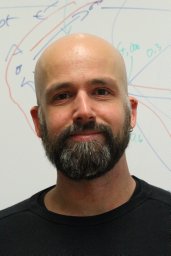
 Heiko Paulheim
· 4 previous affiliations
- University of MannheimSince 2013
- Full Professor · Since 2018
- Professor for Data Science · Since 2017
- Chief Information Officer (CIO) · 2024–2026
- Assistant Professor · 2014–2017
- Researcher and Lecturer · 2013–2014
- Technische Universität Darmstadt2005–2013
- Researcher and Lecturer · 2011–2013
- Ph.D., Computer Science · 2008–2011
- M.Sc., Informatik · 2005–2008
- Systems, Applications & Products in Data Processing (Germany)2008–2011
- Research Associate · 2008–2011
- literature.de2002–2009
- Freier Redakteur · 2002–2009
Research Overview
Heiko Paulheim focuses on the intersection of the Semantic Web and machine learning, specifically targeting knowledge graph representation, ontology reasoning, and taxonomy induction. His trajectory evolved from optimizing symbolic reasoning tasks with machine learning approximations to developing foundational embedding techniques for RDF graphs. Recent work investigates the integration of symbolic and sub-symbolic systems, alongside domain-specific applications in medical diagnosis.
Research Trajectory
Paulheim’s early trajectory in the mid-2010s addressed the computational bottlenecks inherent in traditional Semantic Web technologies. A primary challenge in ontology reasoning is the intensive computational cost required to guarantee soundness and completeness. In Fast Approximate A-Box Consistency Checking Using Machine Learning (2016), Paulheim demonstrated that machine learning models could effectively approximate A-box consistency checking. By training decision trees to mimic the behavior of a standard reasoner, this first-author work achieved high accuracy while reducing runtime to a fraction of the original cost, offering a pragmatic trade-off for use cases where absolute correctness is less critical than speed. During this period, he also participated in community-wide evaluations of semantic tasks, such as charting the strengths and weaknesses of existing datasets in Evaluating Entity Linking: An Analysis of Current Benchmark Datasets and a Roadmap for Doing a Better Job.
By 2017, Paulheim’s focus as a principal investigator shifted heavily toward representation learning for structured data, contributing significantly to the research direction of Relational Reasoning for Knowledge Graph Completion. A major theme of this era was adapting word embedding techniques to RDF graphs to support downstream data mining and machine learning tasks. In Biased graph walks for RDF graph embeddings, his team extended the RDF2Vec approach—which traditionally relies on local sequences generated for nodes—by using biased graph walks to harvest local substructure information, thereby improving the latent numerical representations of entities. Complementing this local approach, he led the development of Global RDF Vector Space Embeddings. This work successfully transferred global embedding techniques, conceptually similar to GloVe, to RDF data, providing a competitive alternative to local sequence-based methods.
Alongside graph embeddings, Paulheim directed research into automated knowledge organization to overcome the costs of manual curation. In Large-scale taxonomy induction using entity and word embeddings, his team proposed TIEmb, an unsupervised method for extracting class subsumption axioms from knowledge bases. By applying this approach to the WebIsA database—a massive collection of subsumption relations extracted from web corpora—they demonstrated how entity and text embeddings could be leveraged to automatically induce large-scale class hierarchies.
Moving into the 2020s, Paulheim’s work began applying these augmented knowledge structures to complex, domain-specific tasks requiring high reliability and explainability. As senior author on Refining Diagnosis Paths for Medical Diagnosis based on an Augmented Knowledge Graph (2022), he investigated how medical knowledge graphs—encoding diseases, symptoms, and diagnosis paths—could be refined to assist physicians. This research emphasized that while knowledge graphs can improve predictive accuracy, their deployment in clinical settings strictly requires transparent and explainable reasoning paths.
Current Directions
The most recent papers in the evidence, published in 2023, indicate a broad focus on systematizing the rapidly growing intersection of symbolic and sub-symbolic artificial intelligence. Paulheim has participated in extensive mapping studies analyzing Semantic Web Machine Learning (SWeML) systems, categorizing the processing patterns used to combine neural machine learning components with formal Semantic Web techniques. Additionally, recent collaborative work surveys the open challenges in knowledge graph embeddings. This includes tracking the field's evolution from models that rely primarily on structural information to next-generation approaches that incorporate multi-modal, temporal, semantic, and multilingual features to better capture the complexities of real-world data.
Profile updated
Loading new papers…
Other researchers whose papers cluster into the same research directions — a proxy for overlapping technical interests and shared intellectual neighborhoods.
See something wrong? Report a mistake